Seven days after a three-story brick building collapsed in Brooklyn, a casket landed in Quito. On Wednesday, November 18, 2026, officials from Ecuador's Ministry of Foreign Affairs handed the remains of 26-year-old José Luis Caguana Cosquillo to his grieving relatives. From the capital, his body traveled south into the central Andes to his rural hometown of Quisapincha.
Most news wire summaries reduce this story to a quick, tragic paragraph. They mention a construction worker killed in New York, note his homecoming in the mountains, and move on to the next headline. That kind of surface-level coverage misses the actual weight of what happened on Flatbush Avenue—and why two Ecuadorian families ended up burying young fathers before Thanksgiving.
The Human Toll Behind the Brooklyn Building Collapse
José Caguana wasn't just an anonymous statistic on a New York City Department of Buildings incident report. He was 26 years old, had emigrated from Ecuador roughly six years earlier, and was raising a four-year-old son while awaiting the birth of his second child.
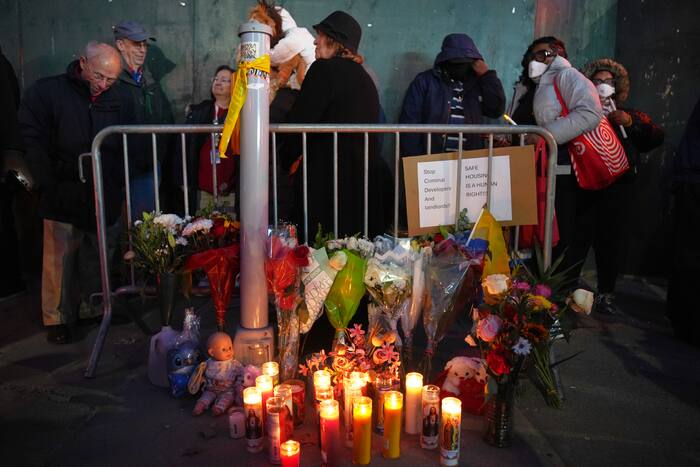
At roughly 4:01 p.m. on Wednesday, November 11, 2026, Caguana was working inside an open excavation pit at 2625 Bedford Avenue in the Flatbush neighborhood of Brooklyn. Without warning, the neighboring three-story structure at 1321 Flatbush Avenue—a nearly century-old residential and commercial building erected in 1930—gave way. Tons of brick, timber, and mortar slid directly into the active construction trench.
The collapse killed eight people and injured 18 others, including four firefighters who rushed into the unstable rubble. Six victims died immediately at the scene, while two succumbed to their injuries at nearby hospitals. Medical examiners later confirmed that every single victim died from mechanical asphyxiation—crushed beneath the sheer weight of the fallen structure.
Caguana was one of two Ecuadorian workers killed in that pit. The second was 22-year-old carpenter Gabriel Ariolfo Siguencia Yupa, another young father of a four-year-old boy who had been planning his wedding. Alongside them, the disaster claimed:
- Edgar Santiago Sapón Gutiérrez, 26, a quiet Guatemalan construction worker who left behind a wife and a six-year-old son.
- Juan Daniel Salvada Guzmán, 31, a Colombian father living in the apartment building.
- Nicole Daniela Salvada Rodríguez, 9, Juan Daniel's daughter, whom teachers remembered as a bright student.
- Kevin Santiago Reyes González, 10, Nicole's cousin, who lived on the building's second floor.
- Mamadou Bhoye N'diaye, 31, an Amazon worker from Guinea.
- Barry Mamadou, 23, N'diaye's cousin and roommate, a food delivery worker preparing for his night shift when the walls gave out.
Every single person who died at 1321 Flatbush Avenue was an immigrant. Some worked the shovels in the dirt below; others lived in the modest apartments above.
Why the Adjacent Excavation Site Is Under Intense Scrutiny
If you look closely at public city records, the November 11 collapse doesn't look like a random act of nature. It looks like a predictable failure preceded by months of red flags.
The lot at 2625 Bedford Avenue was being excavated to make way for a new nine-story, 64-unit residential development. Digging a 14-foot pit directly next to a 1930 masonry building requires strict engineering controls. Specifically, contractors must install proper underpinning and shoring—artificial retaining walls designed to hold the surrounding soil in place so neighboring foundations don't shift or undercut.
A Trail of Fines and Ignored Stop-Work Orders
Long before the November collapse, city inspectors flagged problems at the Bedford Avenue site. In March 2026, a pre-construction photographic survey explicitly documented that the north facade of 1321 Flatbush Avenue—the exact wall facing the excavation pit—was in poor condition with noticeable structural cracks and masonry misalignments.
Despite knowing the neighboring building was fragile, work next door proceeded recklessly:
- March 18, 2026: A 311 caller reported unsafe demolition and flying debris at 2625 Bedford Avenue.
- March 20, 2026: The Department of Buildings issued a partial stop-work order and a violation because crews were demolishing the prior structure without protective netting or overhead shielding for adjacent properties. The owner later paid a $2,500 fine.
- April 23, 2026: When inspectors returned, they discovered the contractor had illegally resumed demolition in defiance of the city's stop-work order. That triggered a second violation and a $10,000 penalty.
- May 8, 2026: Once the demolition was finished and the fines were paid, the city rescinded the stop-work order, clearing the path for deep foundation excavation.
Then came November 11. On the very day the building collapsed, a 311 complaint alleged that the excavation work didn't match the approved engineering drawings. Meanwhile, federal records from the Occupational Safety and Health Administration (OSHA) revealed that W.G. NY Construction—a contractor tied to the site—had already been hit with $132,410 in penalties back in August 2026 following a separate fatality and catastrophe inspection opened earlier in the year.
Look at those fine amounts: $2,500 and $10,000. In New York City real estate development, where a 64-unit building represents tens of millions of dollars in projected value, a five-figure fine isn't a deterrent. Developers treat it as a minor line item in the budget. Until city agencies enforce criminal liability or revoke builder licenses immediately upon stop-work violations, reckless excavation will keep endangering both workers in the pit and tenants next door.
The Reality of Repatriating Remains From the United States to Ecuador
When an immigrant worker dies on an American job site, the tragedy fractures across two countries. While New York officials debate engineering schematics and Mayor Zohran Mamdani orders Department of Buildings sweeps across similar sites, a family thousands of miles away faces a logistical and financial nightmare.
Bringing a body back from New York to a rural parish in the Ecuadorian Andes like Quisapincha isn't simple. Repatriation typically costs between $8,000 and $15,000 when you factor in specialized embalming, hermetically sealed zinc-lined caskets required by international aviation rules, consular apostilles, death certificate translations, and air cargo fees.
For families relying on weekly construction remittances, that sum is impossible to raise overnight. In Caguana's case, community members launched crowdfunding campaigns in Brooklyn to help his pregnant widow, while Ecuador's Ministry of Foreign Affairs stepped in to coordinate the diplomatic clearance and receive the casket at Mariscal Sucre International Airport in Quito.
What Families and Advocates Need to Know After a Cross-Border Workplace Death
If you ever find yourself helping a family navigate a fatal workplace accident involving a foreign national in the United States, standard advice falls short. Three concrete steps make an immediate difference:
- Contact the home country's consulate within 24 hours. Consular protection offices in cities like New York maintain emergency repatriation funds and can waive document authentication fees, cutting days off airport customs delays.
- Secure New York Workers' Compensation death benefits regardless of immigration status. Under New York law, undocumented workers and their surviving dependents—even spouses and children living abroad in Ecuador or Guatemala—are legally entitled to weekly cash death benefits and funeral expense reimbursement. Insurance carriers rarely volunteer this information, so families must file a claim (Form C-62) through a specialized workers' compensation attorney.
- Preserve third-party liability evidence early. While workers' compensation generally bars suing a direct employer, fatal construction collapses almost always involve third-party negligence—such as general contractors, property owners, excavation subcontractors, or structural engineers who failed to shore up adjacent walls. Attorneys can file emergency preservation letters to freeze site sensors, soil logs, and architectural drawings before debris removal erases physical proof.
Back in Quisapincha, none of New York's ongoing engineering probes or municipal code revisions can bring José Caguana back to his four-year-old son or the baby his wife was carrying. Accountability in Brooklyn will take years to wind through civil courts and OSHA dockets, leaving two communities—one in Flatbush, one high in the Andes—carrying the cost of shortcuts taken beside an aging brick wall.
To see how Ecuadorian media documented the repatriation process and the families' calls for accountability following the Brooklyn collapse, watch Ecuadorians killed in Brooklyn building collapse to be repatriated; families demand justice.