The North Shore is currently being strangled by its own lifeline. For decades, the Ironworkers Memorial Second Narrows Crossing has been a reliable, if crowded, artery connecting Vancouver to the North Shore and the Trans-Canada Highway. But new 2025 data from the Ministry of Transportation and Transit confirms what commuters have felt in their bones: the bridge has surpassed every other crossing in Metro Vancouver to become the region’s most congested bottleneck on a per-lane basis.
While the 10-lane Port Mann Bridge technically carries more raw volume, the Ironworkers is doing far more heavy lifting with significantly less muscle. With only six lanes to accommodate 130,700 vehicles daily, each lane is now forced to process approximately 21,800 vehicles. This isn't just a "busy" bridge; it is a structural anomaly operating at a breaking point that the rest of the province’s infrastructure has largely managed to avoid through expansion or diversion.
The Math of Gridlock
The crisis isn’t just about the number of cars. It is about a fundamental shift in how the region moves. Since 2019, traffic on almost every other major crossing—the Lions Gate, the Alex Fraser, and even the Massey Tunnel—has either stabilized or declined. People are working from home, or they are shifting to transit. Yet, the Ironworkers has seen a 6% spike in volume over the same period.
This divergence points to a grim reality: the North Shore is the only sub-region in Metro Vancouver where the "post-pandemic relief" never arrived. Because the Ironworkers is the primary route for heavy industry and logistics, it cannot benefit from the telecommuting trends that saved the Lions Gate from total collapse. You cannot move a 5-ton commercial truck or a shipping container via a Zoom call.
A Geography of No Escape
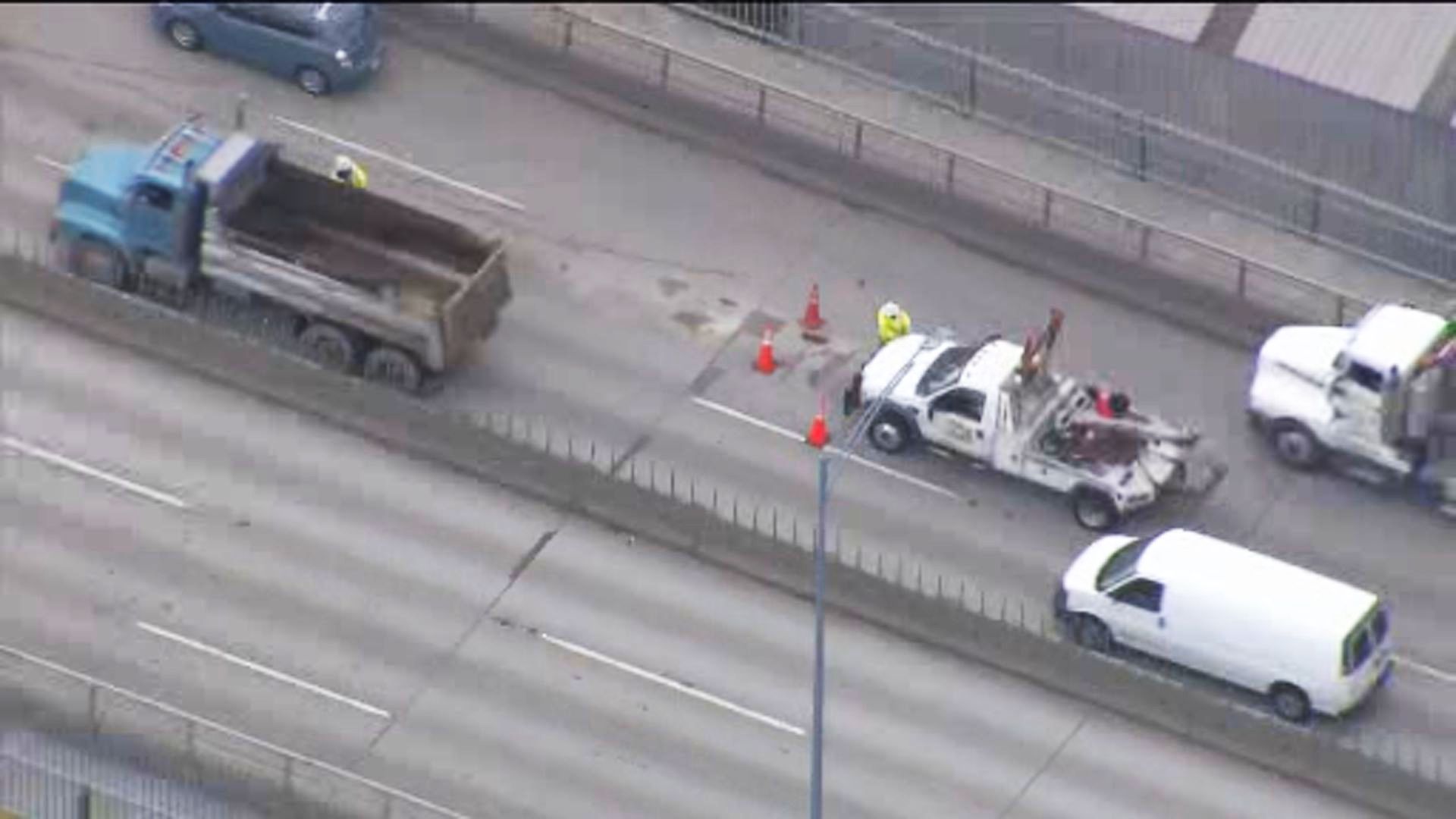
On the North Shore, geography is destiny. Hemmed in by the North Shore Mountains to the north and the Burrard Inlet to the south, the District of North Vancouver has almost no room to breathe. When a single stall or a minor fender-bender occurs on the bridge deck, the resulting "flush" of traffic doesn't just stay on the highway. It bleeds instantly into the municipal road network.
Local streets like Main Street and Keith Road were never designed to serve as a pressure valve for the Trans-Canada Highway. Yet, on an average Tuesday afternoon, these residential and commercial roads become an extension of the parking lot. The topography—jagged with creeks and steep hillsides—makes the traditional solution of "widening the road" a physical and financial impossibility. To expand the feeder routes, the province would have to seize billions of dollars in private property or bridge environmentally sensitive salmon streams, neither of which is on the table.
The Transit Paradox
There is a prevailing myth that better transit will solve the bridge crisis. While the 2025 North Shore Transportation Survey shows a modest uptick in "sustainable mode share," the actual impact on bridge congestion is negligible. The reason is simple: transit reliability is a prisoner of the bridge itself.
When the Ironworkers stalls, the buses stall with it. RapidBus lines and local feeders become trapped in the same molasses as single-occupant SUVs. While 44% of auto trips on the North Shore are technically "bikeable" at less than five kilometers, the bridge remains the ultimate psychological and physical barrier. Until there is a dedicated, grade-separated transit crossing—a "Third Narrows" for rail or bus—the North Shore is effectively locked in a cycle of car dependency where even the commuters who want to switch to transit are punished for doing so.
Economic Erosion
The cost of this failure is often measured in minutes lost, but the real bill is being paid by the regional economy. Estimates for the hidden economic cost of Metro Vancouver's congestion now hover well above $1.2 billion annually. A significant portion of that is concentrated right here.
Logistics companies are beginning to bake "North Shore surcharges" into their delivery fees. Tradespeople—plumbers, electricians, and contractors—are increasingly refusing jobs across the inlet because a two-hour round trip for a thirty-minute repair is a losing business proposition. We are seeing the slow-motion decoupling of the North Shore from the rest of the Lower Mainland's labor market.
The Provincial Silence
Perhaps the most damning aspect of the current situation is the lack of a plan. Despite the District of North Vancouver’s escalating pleas, the provincial government has no committed budget for a bridge replacement or a massive corridor upgrade.
The province has spent the last decade focused on the Massey Tunnel replacement and the Pattullo Bridge, projects that were arguably necessary but have left the North Shore as the "forgotten" corner of the provincial highway system. The current maintenance strategy—nighttime deck repairs and joint replacements—is the equivalent of putting a bandage on a compound fracture. These minor fixes do nothing to address the fact that the bridge design, dating back to 1960, is fundamentally incompatible with the 2026 population and the housing targets currently being mandated by that same provincial government.
The Ironworkers Memorial Bridge was named to honor those who died during its construction. Today, it stands as a monument to a different kind of tragedy: the slow, predictable strangulation of a community by an infrastructure that was outgrown twenty years ago. Without a definitive commitment to a total corridor redesign, the North Shore is no longer a place you "live in"—it is a place you are increasingly trapped in.
Demand for the crossing is projected to grow as the province pushes for higher density in Lower Lonsdale and Lynn Creek. We are building more homes while the only way to reach them is narrowing. The math does not work, the geography does not help, and the status quo is a recipe for a permanent, region-wide heart attack.