The directive issued from the White House late Tuesday was vintage Trump: a demand for an "extended blockade" of Iranian ports to squeeze the remaining life out of a regime the administration already claims is militarily defeated. This isn't a mere tightening of the screws. It is a desperate attempt to rectify a dual-blockade trap that has paralyzed global energy markets for two months and forced the United Arab Emirates into a radical economic pivot that threatens the very foundations of the Gulf’s security architecture.
By ordering aides to prepare for a long-term maritime siege, Trump is doubling down on a high-stakes gamble that Iranian resolve will crack before the global economy does. But beneath the "maximum pressure" rhetoric lies a more complex, and far more dangerous, reality. The United States is currently attempting to run a blockade against a country that has already effectively blockaded the world’s most important energy artery, the Strait of Hormuz.
The Dual Blockade Deadlock
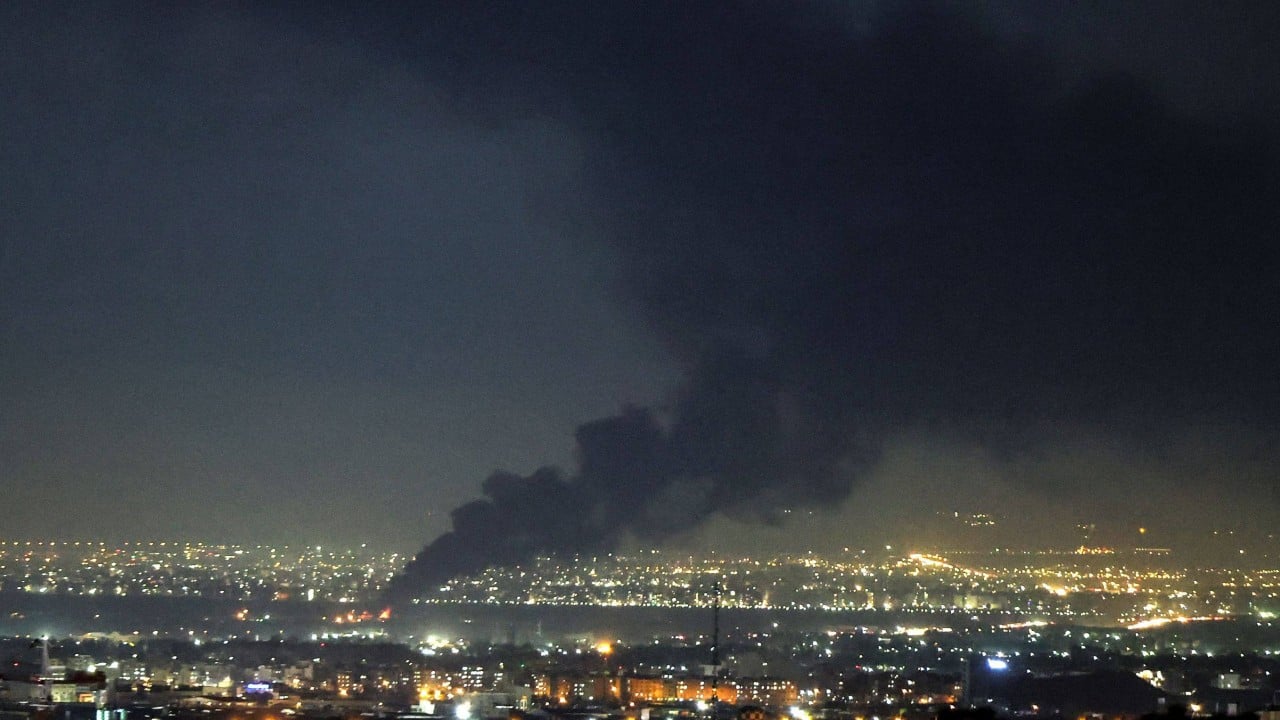
Since the joint U.S.-Israeli strikes on February 28, the Strait of Hormuz has transformed from a bustling transit point into a graveyard of merchant shipping. The killing of Ali Khamenei and the subsequent installation of his son, Mojtaba, sparked a retaliatory closure by the Islamic Revolutionary Guard Corps (IRGC). While the U.S. Navy maintains a formidable presence, the IRGC has utilized a "mosquito fleet" of drone boats and sea mines to keep commercial traffic at a standstill.
The U.S. counter-blockade, launched on April 13, was intended to punish Tehran for this closure. Instead, it has created a static front where neither side can blink. The U.S. prevents goods from reaching Iranian ports like Bandar Abbas, while Iran prevents oil from leaving the Gulf. This isn't a strategic victory; it is a stalemate that has reduced Hormuz traffic to roughly 5% of its pre-war levels.
The UAE Exit Strategy
The most significant tremor from the overnight developments isn't occurring in the Oval Office, but in Abu Dhabi. The United Arab Emirates has signaled a historic departure from the regional status quo, moving to exit OPEC+ and distancing itself from the U.S.-led maritime strategy.
For decades, the UAE has been the bedrock of regional stability, a bridge between Western security interests and global energy markets. That bridge is now buckling. The UAE’s statement, ostensibly about "strategic flexibility" and "national interest," is coded language for a terrifying realization: the American security umbrella can no longer protect the flow of oil. By withdrawing from production quotas, the UAE is preparing for a world where they must sell every drop they can, however they can, independent of a broken global system.
The "wartime" footing in Iran hasn't just hurt Tehran; it has terrified its neighbors. When Iranian missiles hit civilian infrastructure in Arab states earlier this year, the message was clear. If Iran goes down, the entire Gulf goes with it. The UAE is now choosing economic survival over ideological alignment.
The Myth of Unconditional Surrender
The administration’s insistence on "unconditional surrender" is the primary obstacle to the Pakistani-mediated talks in Islamabad. Recent reports indicate that while the U.S. claims the IRGC is a spent force, the Iranians are still successfully extorting the few ships that dare to cross the Strait, charging "tolls" exceeding $1 million per vessel.
This is not the behavior of a defeated nation. It is the behavior of a cornered insurgent state that has found a way to monetize the chaos. The U.S. blockade is designed to starve the regime, but as long as the IRGC can hold the Strait hostage and demand "protection money" from shadow-fleet tankers, the pressure remains lopsided.
The Oil Release Mirage
To blunt the impact of $150-a-barrel oil, the International Energy Agency has authorized the release of 400 million barrels from strategic reserves. This is a stopgap, not a solution.
- Russian Opportunism: By temporarily lifting sanctions on some Russian oil to offset the Iranian deficit, the U.S. has inadvertently funded another adversary.
- Infrastructure Threats: Trump has threatened to level Iran’s power plants and desalination facilities if the Strait isn't reopened. Such an escalation would trigger an environmental and humanitarian catastrophe that would permanently alienate the very regional allies the U.S. needs.
- The Insurance Gap: Even if the U.S. declares the Strait "open," no major commercial carrier will sail without affordable insurance. As long as sea mines and drone boats remain a threat, the "blockade" is effectively being enforced by the insurance industry as much as the Navy.
The Strategy of Uncertainty
We have moved past "maximum pressure" into what analysts are calling "maximum uncertainty." The President’s rhetoric shifts by the hour—one moment praising King Charles III for agreeing on Iranian defeat, the next ordering a permanent naval siege.
This volatility is a weapon, but it is a double-edged one. It keeps Tehran guessing, but it also drives allies like the UAE into the arms of neutral powers. If the extended blockade does not produce a breakthrough in the next 72 hours, we are no longer looking at a "wartime" incident; we are looking at the permanent restructuring of the Middle East, with the United States increasingly isolated in its own theater of operations.
The blockade is no longer a tool of diplomacy. It has become the conflict itself.