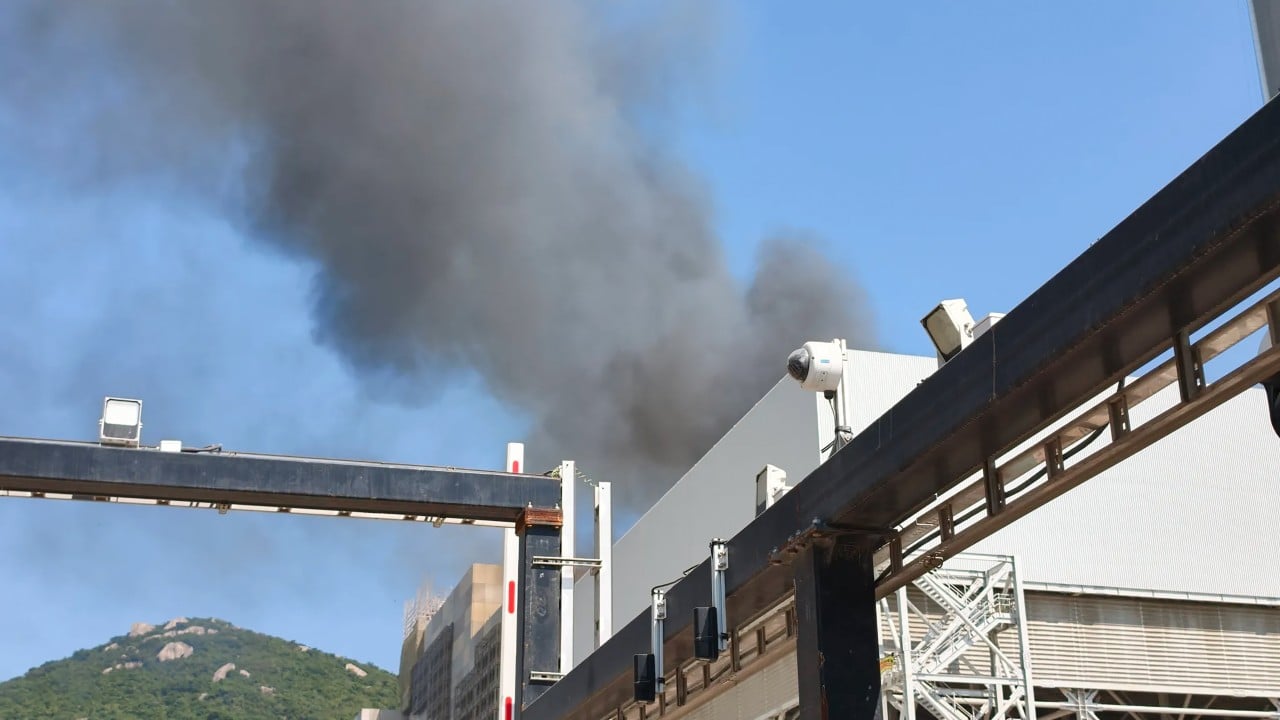
An official investigation into a major fire at a Hong Kong waste incinerator facility has narrowed the probable ignition source down to either discarded smoking materials or unauthorized welding sparks. That is the headline finding. It is also only half the story.
When a multi-billion-dollar waste infrastructure project catches fire before or during operations, blaming a stray cigarette butt or a hot-work spark feels almost insultingly simple. Yet anyone who has spent decades covering heavy civil engineering, industrial safety, and municipal waste management knows that catastrophic fires rarely start with exotic mechanical failures. They start when mundane, predictable human behaviors collide with highly combustible construction environments and fragmented subcontractor oversight.
Anatomy of an Industrial Ignition
Fire investigators operating on active construction or commissioning sites face an immediate problem. The fire itself destroys the cleanest physical evidence. When a blaze rips through scaffolding, plastic sheeting, electrical cabling, or stockpiled refuse, forensic teams have to work backward through char patterns, electrical arc mapping, and site access logs.
Narrowing a fire down to smoking or welding tells us two critical things about what investigators actually found on the ground. First, they ruled out systemic electrical faults and spontaneous chemical combustion in the immediate area of origin. Second, the fire started in a zone where workers had physical access and where combustible materials were sitting exposed without adequate thermal barriers.
Consider how both mechanisms work in practice.
The Physics of a Discarded Cigarette
A smoldering cigarette tip burns at temperatures high enough to ignite dry paper, cardboard, sawdust, and certain synthetic packaging materials, though it rarely ignites solid wood or heavy plastics on contact. The danger lies in smoldering combustion. A cigarette dropped into a pile of dry debris or foam insulation does not immediately burst into flames. It sits. It cooks the surrounding material, generating heat and carbon monoxide quietly for minutes or even hours until a draft introduces enough oxygen to trigger open flaming. By the time smoke alarms trip or a security guard smells burning plastic, the worker who dropped the butt is already off-site or three levels away.
The Mechanics of Hot Work
Welding, cutting, and grinding present a completely different thermal profile. An electric arc or oxy-acetylene torch throws molten slag and sparks at temperatures exceeding several thousand degrees. Those sparks can travel horizontally for meters, bounce off steel beams, and drop straight through unsealed floor penetrations or scaffolding gaps.
In industrial safety, this is why hot-work permits and fire watches exist. Standard protocol requires clearing all combustibles within a strict radius, wetting down surrounding surfaces, draping fire-retardant blankets over immovable hazards, and posting a dedicated fire watch who stays on-site for at least thirty to sixty minutes after the last spark flies. When an investigation points to welding as a likely culprit, it almost always indicates that one of those administrative controls broke down. Either someone struck an arc without a permit, or the fire watch walked away early.
Why Waste Facilities Are Unique Tinderboxes
People hear the word "incinerator" and assume the building itself is immune to fire. After all, the entire purpose of a waste-to-energy plant or municipal incinerator is to burn garbage at extreme temperatures.
That assumption is dead wrong.
An incinerator's furnace and boiler chambers are engineered with refractory brick and steel alloys designed to withstand continuous thermal stress. The rest of the facility is not. During construction, testing, or maintenance, an incinerator complex is packed with vulnerable materials:
- Temporary weatherproofing and scaffolding wraps made of polyethylene sheeting that melts and drips burning plastic.
- High-density electrical cable trays running through vertical shafts that act like chimneys once ignited.
- Unprocessed municipal solid waste in tipping halls and storage bunkers, which contains everything from dry cardboard to aerosol cans and lithium-ion batteries.
- Acoustic insulation and waterproofing membranes installed across roofs and mechanical rooms.
When a fire breaks out outside the furnace lining, the building behaves like any other industrial warehouse—except it is often taller, harder for firefighters to ventilate, and filled with dense smoke from synthetic materials.
The Subcontractor Blind Spot in Mega-Projects
Hong Kong's large-scale infrastructure sites rely on multi-tiered contracting structures. A main contractor wins the tender, then parcels out structural steel, mechanical installation, electrical wiring, and scaffolding to layers of specialized subcontractors. On peak days, thousands of workers move through a single site.
Enforcement breaks down in the gaps between those layers.
Site safety officers can post "No Smoking" signs in three languages and designate smoking booths at the perimeter. None of that stops a worker on a tight deadline from lighting up behind a concrete pillar twelve stories up if supervision is thin. Similarly, a welding crew rushing to finish a pipe joint before a shift change might skip moving a stack of packaging crates ten feet away because moving them takes twenty minutes and they only have five minutes of welding left.
In a hypothetical scenario common across major Asian construction sites, a subcontractor crew finishes grinding a bracket at 4:45 PM. The workers pack their tools to catch the 5:00 PM site shuttle. A single hot metal shaving lands inside a cardboard box of insulation fittings tucked beneath a stairwell. Nobody is assigned to watch the area after 5:00 PM. By 6:15 PM, the box ignites, catches the nearby scaffolding netting, and sends thick black smoke billowing across the harbor.
Investigators looking at the aftermath cannot always distinguish between a cigarette butt and a grinding spark because both leave behind the same result—a localized point of origin with no electrical equipment nearby. Hence the dual finding: smoking or welding.
What Official Probes Rarely Fix
When a government probe concludes that human carelessness—smoking or hot work—caused a major fire, the public response is usually a shrug. Contractors pay a fine, safety briefings get repeated, and management promises stricter enforcement.
That reaction misses the structural incentives driving the behavior.
Schedule Pressure Beats Safety Posters
Mega-projects in Hong Kong operate under intense financial and political pressure to hit commissioning milestones. Delays trigger liquidated damages and public scrutiny. When schedules slip, crews work overtime, trades overlap in cramped spaces, and supervisors prioritize physical progress over paperwork. Hot-work permit systems become rubber-stamp exercises rather than genuine physical inspections.
Fragmented Accountability
When a safety violation occurs three tiers down the subcontracting chain, penalties rarely hurt the decision-makers at the top. A frontline worker might be barred from the site, and a minor subcontractor might absorb a contractual deduction, but the bidding and procurement models that reward the lowest price and fastest timeline remain untouched.
Physical Design vs. Administrative Rules
Safety engineers rely on the hierarchy of controls. At the top is eliminating the hazard entirely or engineering it out of the environment. At the very bottom is administrative control—rules, signs, permits, and training. Relying on workers not to smoke or trusting welders to always follow permit checklists is an administrative control. It is the weakest line of defense in industrial safety because human attention fails under fatigue and time pressure.
The Real Cost of a Preventable Blaze
Even when an incinerator fire causes zero fatalities, the operational fallout ripples outward for months.
Fire and smoke damage to sensitive instrumentation, control cabling, and structural steel requires meticulous testing before commissioning can resume. Melted insulation and corrosive soot from burning plastics can ruin electronic switchgear that took eighteen months to manufacture and ship. Insurance claims stall work while adjusters and forensic engineers dispute liability across multiple contractors.
Meanwhile, the city's broader waste management timeline absorbs the delay. Every month a major waste treatment facility sits offline is another month that municipal solid waste keeps flowing into overstretched landfills.
How Sites Actually Stop These Fires
If Hong Kong's construction and waste sectors want to prevent the next headline-grabbing fire, repeating safety slogans will accomplish nothing. Stopping ignition at the source requires changing how sites operate on the ground.
- Mandatory Electronic Hot-Work Tracking. Paper permits get pencil-whipped. Modern industrial sites require digital permits tied to time-stamped photos showing cleared perimeters, fire extinguishers on-site, and a logged 60-minute post-work thermal camera scan before a permit can be closed out.
- Thermal Imaging Surveillance. Fixed infrared cameras mounted in high-risk zones and storage bays detect abnormal heat signatures long before open flames or dense smoke appear. A smoldering cigarette butt in a pile of debris shows up as a bright thermal anomaly within minutes.
- Zero-Tolerance Perimeter Access. Treating smoking materials like contraband inside active industrial zones—backed by bag checks at turnstiles and immediate, permanent site bans for violators—works far better than polite warnings.
- Strict Trade Separation. Prohibiting hot work in any zone where combustible packaging, scaffolding wrap, or temporary waterproofing has not been stripped back or physically shielded.
A cigarette butt and a welding spark are small, cheap, ordinary things. Left unchecked inside a billion-dollar piece of public infrastructure, they carry the exact same destructive power as a structural design flaw—and until contractors treat basic site discipline with the same rigor as engineering specs, investigators will keep writing the exact same report.


