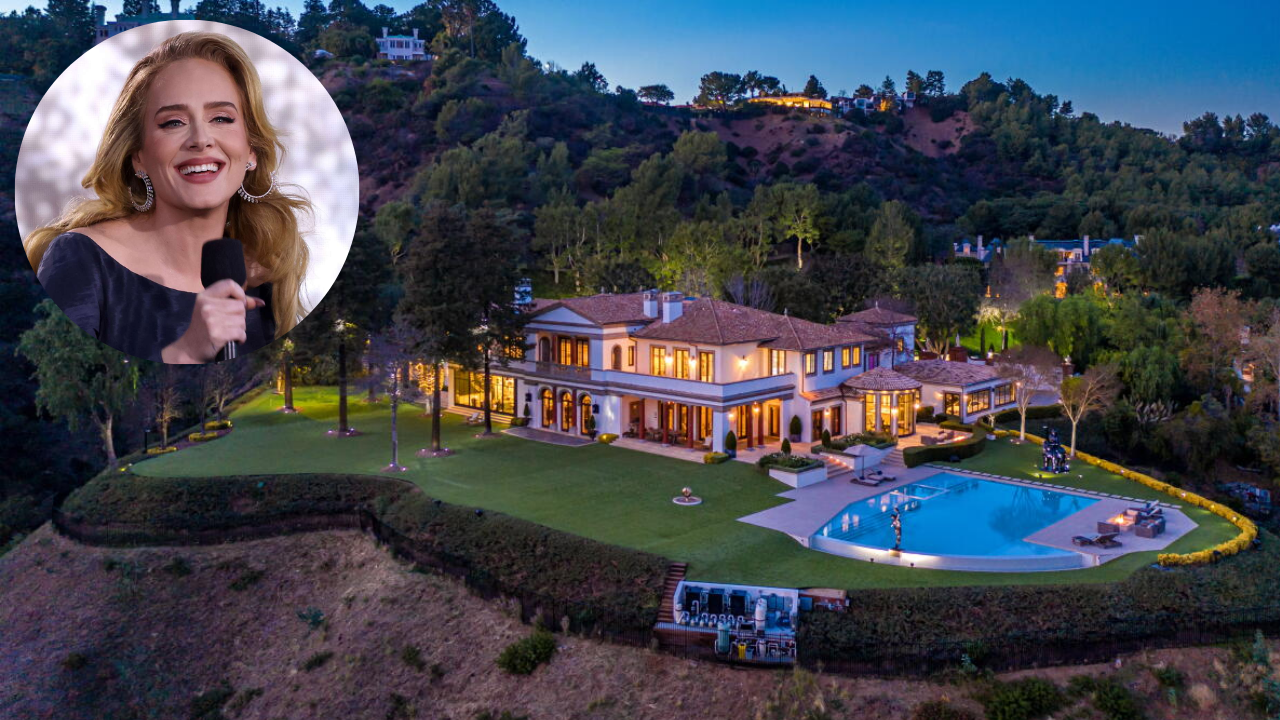
High-value real estate transactions within ultra-prime asset classes rarely conform to standard residential economics. When a high-profile principal acquires an estate at a nine-figure or high eight-figure valuation, the transaction functions less like a domestic purchase and more like an illiquid private equity allocation. The mechanics governing celebrity real estate holdings—exemplified by high-profile transfers such as Adele acquiring Sylvester Stallone’s Beverly Park compound for fifty-eight million dollars—reveal a complex interplay between liquidity management, portfolio diversification, and idiosyncratic asset depreciation. To understand the trajectory of these properties, one must deconstruct the financial engineering, market distortions, and opportunity costs inherent in ultra-luxury residential holdings.
The Liquidity Trap of Ultra-Prime Assets
Standard real estate valuation relies on comparable market analysis based on velocity, square footage, and hyper-local transactional history. In the ultra-prime tier—properties valued above twenty million dollars—this methodology breaks down entirely. The buyer pool contracts exponentially, transforming liquidity from a variable into a binary state: an asset is either uniquely desired by a peer-group buyer or effectively orphaned by the broader market.
When a principal purchases a compound in an enclave like Beverly Park, they absorb an extreme illiquidity premium. Traditional residential real estate offers an exit strategy mediated by regional median incomes and mortgage rate availability. Ultra-prime transactions operate on entirely disconnected parameters. The financing is frequently all-cash or structured via private banking asset-backed lines of credit, bypassing standard retail lending constraints.
This creates a structural imbalance. The cost of carrying a multi-acre estate—comprising property taxes, specialized security infrastructure, grounds maintenance, and insurance premiums—compounds annually irrespective of capital appreciation. When a property undergoes multiple price reductions before clearing the market, as observed in several high-profile celebrity divestments, it signals a failure of the initial pricing mechanism to account for architectural idiosyncratic risk. Highly customized compounds built to suit a specific celebrity’s aesthetic preferences carry severe market penalties upon resale because the renovation capital expended rarely translates into universal utility for a subsequent buyer.
Architectural Idiosyncrasy Versus Market Liquidity
The primary variable driving loss or modest gains in celebrity real estate portfolios is architectural specificity. Mass-market residential design optimizes for standardized utility to maximize the addressable buyer pool. Ultra-prime design frequently optimizes for personal privacy, specialized lifestyle integration, and ego expression.
Consider the structural components of the Beverly Park asset class: expansive footprint configurations, custom screening rooms, heavy security perimeters, and specialized recreational facilities. While these features justify construction outlays for the original occupant, they act as friction points during monetization. A prospective buyer purchasing an estate previously owned by another prominent figure faces a dual psychological and financial hurdle. They must reconcile the physical footprint with their own brand identity while accounting for the capital expenditure required to neutralize the previous owner's aesthetic footprint.
The financial penalty for hyper-customization manifests as a prolonged holding period. In high-net-worth portfolio management, capital tied up in a non-yielding, depreciating physical asset represents an explicit opportunity cost. Every month a compound sits vacant while awaiting a matching buyer, the net present value of the asset degrades under the weight of operational overhead and forgone yield from alternative investments.
The Microeconomics of Enclave Valuation
Enclaves like Beverly Park operate as closed-loop economic ecosystems. Supply is artificially constrained by zoning laws, topography, and the physical boundaries of gated perimeters. This creates an inelastic supply curve. However, demand is similarly volatile, tied directly to macroeconomic liquidity cycles, private equity performance, and the wealth generation velocity of the entertainment and technology sectors.
Sellers in these gated communities often anchor their pricing expectations to historical peak transactions rather than current macroeconomic liquidity. When a celebrity purchases an estate at a cyclical peak, they assume the risk of compression when broader wealth creation slows down. The transaction price of fifty-eight million dollars for a multi-acre Beverly Park estate reflects not just the intrinsic land value and square footage, but an intangible valuation layer driven by scarcity and social signaling.
The mechanics of these sales involve discrete negotiation channels. Family offices, business managers, and specialized real estate attorneys broker the transactions with strict confidentiality, bypassing public multiple listing services. This opacity distorts true price discovery. Without transparent order books, subsequent sellers misinterpret an outlier transaction as a new baseline for the entire micro-market, leading to widespread mispricing and prolonged inventory stagnation.
Capital Allocation and Portfolio Strategy
Analyzing a celebrity real estate acquisition through a strategic lens requires shifting focus away from lifestyle media narratives and toward asset-liability management. High-net-worth individuals frequently utilize trophy real estate as a wealth preservation vehicle or an inflation hedge, albeit an inefficient one.
Unlike equities or fixed-income instruments, residential real estate generates negative cash flow when factoring in total cost of ownership. The rationale for deployment into these assets typically stems from diversification away from volatile primary income streams—such as touring revenue, box office performance, or cyclical brand endorsements—into hard assets with perceived long-term floor value.
Yet, historical data across ultra-prime postal codes indicates that trophy assets underperform broad market indices when calculated on a total return basis net of maintenance and transaction costs (brokerage fees often approaching five to six percent). The strategic justification must therefore rely on non-financial utility or conservative capital preservation rather than aggressive alpha generation.
To optimize high-end residential holdings, principals must apply strict portfolio management principles:
- Quantify the total cost of ownership as an annualized percentage of acquisition cost to establish a baseline hurdle rate for capital appreciation.
- Avoid over-capitalizing on bespoke architectural upgrades that do not align with broader luxury buyer preferences.
- Evaluate the exit timeline prior to entry, recognizing that liquidity in the ultra-prime segment can evaporate rapidly during broader macroeconomic contraction.
The long-term trajectory of assets transferred between high-profile figures underscores the reality that real estate is ultimately bound by economic fundamentals. Even within exclusive enclaves protected by gates and acreage, capital discipline dictates outcomes. Those who treat residential compounds as pure lifestyle consumption without regard for structural liquidity dynamics expose themselves to significant capital drag when market conditions normalize.