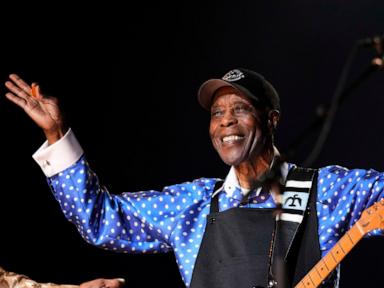
When the Mattie Music Group filed a federal copyright infringement suit against Capitol Records and Universal Music Group over Olivia Dean’s track "I've Seen It," the reaction across the industry was immediate and polarized. At the center of the dispute lies a striking melodic similarity between a passage in Dean's track and Bill Withers’ legendary 1981 soul standard "Just the Two of Us," written by Bill Withers, Ralph MacDonald, and William Salter. For months, the song had been streaming quietly as a fan favorite, but the legal machinery representing the Withers estate saw something else: an uncredited echo that crossed the fragile border separating homage from appropriation.
To understand why this case matters far beyond the corporate offices of major record labels, we have to look past the sensationalized headlines and examine how modern pop music consumes its own history.
The Anatomy of a Modern Melody Dispute
Copyright law in the United States has long wrestled with the finite nature of the musical scale. There are only twelve notes available in Western music, and a finite number of ways to arrange them into pleasing cadences. Yet, when listeners stream "I've Seen It," the resemblance in the vocal phrasing during key lyrical moments is difficult to dismiss as mere coincidence.
The estate, managed by Withers’ widow Marcia Johnson through an entity named after the crooner’s late mother Mattie, did not target Dean personally. Instead, the legal action names the heavy machinery of the industry—the publishers and distributors who commercialized the track. According to documents filed in a Los Angeles federal court, the plaintiffs argue that the melodic fragment in question shares too much structural DNA with the Grover Washington Jr. and Bill Withers classic.
This creates a tense dilemma for contemporary singer-songwriters. Artists raised on classic soul, R&B, and jazz absorb these cadences subconsciously. They grow up internalizing the syncopation of the late seventies and early eighties. When they sit down at a piano or pick up a guitar, those ancestral grooves bleed naturally into their fingers. But the law does not care about unconscious absorption or youthful reverence. It cares about access, substantial similarity, and commercial exposure.
The Shadow of Past Precedents
Every modern copyright trial operates under the long, heavy shadow of previous landmark judgments. The infamous "Blurred Lines" verdict established a perilous legal precedent by penalizing artists for capturing a song's "feel" rather than copying explicit sheet music. While that case involved a multi-million-dollar payout and sent shockwaves through the production community, subsequent legal challenges have shown that music publishers are increasingly willing to police the gray areas of composition.
In this instance, the dispute highlights a recurring friction point in the streaming era. Songs are written faster, consumed quicker, and analyzed by automated detection tools or litigious publishers faster than ever before. When an artist borrows an inflection or molds a vocal line that evokes a bygone era, the safety net of "interpolation" usually requires upfront clearance. Securing that clearance means negotiating percentages, splitting royalties, and cutting checks before the master ever hits streaming platforms.
When creators skip that administrative hurdle—whether out of oversight, hubris, or genuine ignorance of how close their pen has wandered to a classic—they leave an open door for estates to step in after the commercial momentum has already peaked.
The Chilling Effect on Creative Freedom
The broader conversation happening behind closed doors in publishing houses is about risk management. If every melodic coincidence or stylistic nod to a seventy-year catalog results in a federal lawsuit, writers will become paralyzed by caution. Pop music has always been a conversation across generations. Motown borrowed from gospel, disco borrowed from orchestration, and modern neo-soul borrows heavily from the quiet storm era of Withers, Marvin Gaye, and Al Green.
If the price of admission to that conversation becomes an exhaustive musicological audit for every eight-bar phrase, spontaneity dies. Producers will spend more time running melodies through algorithmic clearance software than actually capturing a raw performance in the studio.
Yet, there is a counter-argument that holds equal weight. Creators deserve to own the fruits of their intellectual labor. Bill Withers spent decades crafting a catalog of timeless American masterpieces that continue to generate cultural capital. When modern artists build multi-million-stream hits on the emotional and structural foundation of those legacy works, estates argue with mathematical justification that the original writers—or those preserving their legacy—deserve their financial share.
Where the Industry Goes From Here
As the legal teams maneuver through depositions and expert musicological reports in Los Angeles, the outcome of this case will likely remain behind a confidentiality agreement or a quiet settlement rather than a dramatic courtroom showdown. That is how most of these modern publishing wars end. A check is written, a percentage of publishing is reassigned, and a footnote is quietly added to the songwriting credits.
The underlying tension, however, remains unresolved. We are living through an era where the past and the present occupy the exact same digital playlist. Fans can glide from a 1981 soul anthem to a 2026 neo-soul track with a single swipe of a screen, noticing the historical echoes instantly. Until the legal framework evolves to distinguish between malicious theft and respectful stylistic lineage, artists walking the razor's edge of influence will continue to risk their bottom line every time they honor the greats who came before them.
Olivia Dean song accused of copying Bill Withers Hit in Lawsuit
This video provides a detailed overview of the copyright dispute and the specific musical elements at the center of the legal filings.