Silence.
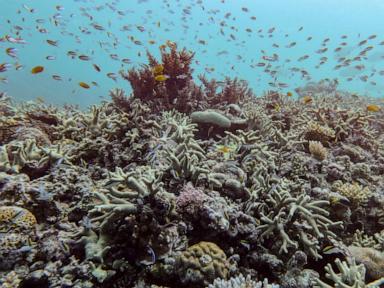
That is the first thing a diver notices when a healthy coral reef begins to die, long before the bright purples and electric blues fade into the chalky white of bone. A thriving reef crackles. Beneath the surface, hundreds of thousands of tiny animals—snapper, parrotfish, shrimp, and worms—click, scrape, chew, and chatter in an endless underwater symphony that you feel in your chest through the neoprene of a wetsuit. When heat turns that garden into a graveyard, the snapping stops. The fish leave. The ocean goes quiet.
I first felt that sudden, eerie hush years ago off a sun-bleached stretch of coast where my grandfather once pulled silver fusiliers from clear water before breakfast. Back then, at ten years old, I thought the sea was too big to break. It stretched out to the horizon like a blue promise that could absorb anything we threw at it—heat, fishing lines, carelessness, time. Now, standing on a dock watching a young fisherman mend nets that come back lighter every season, I know how fragile a promise can be when the water holding it up starts to boil from the inside out.
Projected ecological models warn that almost all coral reef ecosystems face a high risk of collapse within fifty years if global warming and ocean stressors continue along current trajectories. Fifty years sounds distant on a bad day and startlingly close when you picture a child born this afternoon growing into middle age. If you want to understand what is really at stake, you cannot start with graphs of sea surface anomalies or percentages of bleaching. You have to start with the people, the creatures, and the quiet trade-offs happening right now beneath the tide line.
What Coral Actually Is When You Strip Away the Myth
Most of us picture coral as a plant or a rock—something rooted in place like an oak tree or a boulder on a mountain trail. It is neither. A stony coral colony is a living city built by thousands of tiny, soft-bodied animals called polyps, each no bigger than a pencil eraser, working together over decades and centuries to secrete limestone cups around themselves.
Inside the tissue of those polyps live microscopic algae called zooxanthellae. (To be clear, this partnership is a real biological symbiosis, not a poetic invention, though its intimacy feels almost human.) The algae soak up sunlight and turn it into sugars and oxygen, feeding the coral up to ninety percent of its daily energy needs while giving the reef its vivid, jewel-toned color. In return, the coral gives the algae shelter and the compounds they need to photosynthesize.
Think of it like a tiny bakery bolted onto a self-building apartment complex. The residents provide the bricks and walls; the bakers keep the ovens running and feed the neighborhood.
Everything works until the temperature climbs a couple of degrees above what those specific corals and algae can tolerate for too long. Overheated and stressed, the algae begin producing harmful molecules. In a desperate bid to survive, the coral polyp expels its microscopic partners. Once the algae leave, the transparent tissue of the polyp reveals the bright white limestone skeleton underneath. That is coral bleaching. A bleached coral is not dead yet, not quite—it is starving, hanging by a thread, waiting for cooler water before its energy reserves run out completely.
When I try to explain this to friends who live inland, I see the same glazed look that I sometimes catch in my own mirror when I read another climate report. It is hard to care about a microscopic tenant being evicted from a tiny limestone cup when your rent is due on the first and your kids need shoes. I admit that honestly. Even people who love the ocean can feel numb when the scale of loss stretches past human intuition.
A Hypothetical Morning on a Fading Atoll
To see how abstract warnings turn into daily reality, consider a hypothetical morning on a low-lying tropical atoll—let us call it Kalu, though places like it exist across the Pacific, Indian Ocean, and Caribbean.
(Note: The characters and specific morning below are hypothetical, constructed to illustrate real ecological and economic dynamics documented across reef-dependent coastal communities.)
At five-thirty in the morning, before the sun clears the coconut palms, Mateo steps into his skiff. Mateo is thirty-four, with calloused hands, a bad left shoulder from hauling traps, and a daughter named Elena who wants to study marine biology—a dream Mateo supports fiercely even though he wonders if there will be anything left of the reef for her to study.
Twenty years ago, Mateo could motor twenty minutes out from the lagoon, drop a line over a shelf of staghorn and brain coral, and come back before noon with enough reef fish to feed his household and sell the rest at the market. Today he pushes the throttle harder and runs forty-five minutes into deeper, rougher water. Closer to shore, the reef crest looks like a field of shattered porcelain after a winter storm. Waves that used to lose half their energy breaking across the rugged, calcium-rich structure of the reef now roll in taller and faster, chewing at the sandy shoreline where Mateo's sister runs a small guesthouse.
A coral reef is not just a nursery for fish. It is a natural seawall. By dissipating up to ninety-seven percent of wave energy in some settings, healthy reefs shield low-lying islands and coastal towns from storm surge and erosion. When the living coral dies and the hard skeleton erodes into rubble over time, the barrier flattens. Saltwater creeps further into freshwater lenses. Beaches shrink. Storms hit harder.
Mateo pulls his first trap. Inside are two small surgeonfish and a tangle of filamentous algae that has overgrown the dead coral heads like weeds taking over an abandoned garden. He feels that familiar knot in his stomach—not anger first, just a heavy, hollow dread. If the catch keeps shrinking, he will have to sell the skiff or leave for the mainland, leaving behind the only home whose tides he knows by heart.
Why Fifty Years Is Closer Than Any Calendar Suggests
When headlines say "in 50 years," our brains play a trick on us. We file fifty years away under someday, right next to flying cars and retirement plans we mean to look at next quarter.
Ecological collapse rarely happens like a light switch flipping off on a single date. It happens through compounding stress, missed recovery windows, and tipping points. A reef might survive one marine heatwave if the water cools down and fish populations are healthy enough to keep algae from smothering the recovering corals. Hit that same reef with back-to-back heatwaves, runoff from coastal development, plastic debris, and chronic overfishing, and the recovery window slams shut.
Consider what happens next:
Without grazing fish like parrotfish to nibble back fast-growing seaweed, algae blankets the surviving polyps and blocks sunlight. Without healthy coral cover, baby fish lose shelter from predators, so fish stocks drop even further. Without thriving coral growth, the reef cannot build itself upward fast enough to keep pace with rising sea levels. Each loss feeds the next in a downward spiral that accelerates once momentum builds.
This is why scientists treat a fifty-year horizon as an urgent warning rather than a countdown clock with plenty of slack. A child born today will be fifty in the late 2070s. The decisions made in boardrooms, parliaments, shipping lanes, and local watersheds over the next decade determine whether that child inherits living underwater cities or vast stretches of algae-draped stone.
The Hidden Ledger We All Sign Every Day
It is easy to point fingers at distant smokestacks or someone else's fishing boat. Harder to look at how ordinary habits connect to warm water thousands of miles away.
Every time we burn fossil fuels for electricity, freight, heating, or travel, most of the excess heat trapped in the atmosphere does not stay in the air we breathe. The ocean absorbs roughly ninety percent of that surplus heat. The sea is taking the bullet for the rest of the planet—and paying for it with rising temperatures and shifting chemistry as it absorbs carbon dioxide, making seawater slightly more acidic and harder for calcifying creatures like corals, oysters, and sea urchins to build their shells.
I used to think of ocean acidification and warming as separate chapters in a textbook. In truth, they are two blades of the same scissors. Warmer water stresses the coral and drives out its energy-producing algae; higher acidity makes rebuilding damaged skeletons more energy-expensive. Together, they turn a resilient ecosystem into one running a constant energy deficit.
And yet, reducing the story of coral reefs to doom misses something crucial about how ecosystems and human communities actually respond to pressure.
Where Resilience Still Lives
Even in bleak forecasts, there is a reason researchers keep diving into brutal heatwaves and measuring every surviving colony. Not all corals react the same way.
Some corals growing in naturally warmer, shallower back-reefs or tidal pools—places where water temperatures swing sharply every single day—have shown higher heat tolerance than their neighbors a few hundred meters away. Scientists are studying how specific heat-tolerant strains of zooxanthellae, genetic variation, and microbiome partners help certain colonies endure spikes that bleach others.
Out on the water, restoration teams and coastal communities are testing practical interventions alongside larger climate action. Divers attach hardy coral fragments to underwater nurseries and outplant them onto degraded areas. Communities establish marine protected areas that give overfished herbivore populations room to rebound, clearing space for baby corals to settle. Farmers and municipal planners work to cut fertilizer runoff and sewage that fuel algal blooms and coral disease.
None of these local fixes can cool the entire Pacific on their own if global emissions keep climbing unchecked. Let us not kid ourselves with comforting illusions. If we treat coral gardening as a substitute for cutting greenhouse gas emissions, we are putting a bandage on a leaky dam.
Still, local protection and restoration do something vital right now: they buy time and preserve genetic diversity. A healthy reef with abundant fish and clean water has a fighting chance to bounce back after a heat event; a reef already choked by pollution and stripped of grazers often does not.
Back in my hypothetical morning on Kalu, Mateo does not give a speech about carbon budgets before heading back toward the village. He just sets his remaining traps carefully, notices a patch of branching coral further out that still holds a faint, stubborn tint of amber, and marks the coordinates in his head. Hope, out on the water, rarely looks like a grand triumph. Most days, it looks like refusing to walk away while a spark is still alive.
What We Choose to Leave Under the Tide
We often talk about saving nature as if nature were a fragile pet sitting on a shelf waiting for us to rescue it. Coral reefs flip that script. They have built coastlines, sheltered fisheries, supported livelihoods, and sustained staggering biodiversity for hundreds of millions of years. If they vanish across most of the world within half a century, we will not just lose pretty scenery for travel brochures. We will lose food security for hundreds of millions of people, natural storm protection for vulnerable coasts, and a quarter of marine biodiversity—all packed into less than one percent of the ocean floor.
The real question is not whether we know the science. We have known the broad outlines for decades. The real question is whether we can care enough about things we do not see every day to change how we live before the quiet spreads from the shallows to the shore.
Picture a child fifty years from now, wading into clear, warm water at low tide, listening closely as the ripples settle around their knees—waiting to hear if the reef beneath their feet still clicks and sings, or if the ocean has nothing left to say.


