The kettle whistles at 4:15 PM, a sharp, metallic shriek that cuts through the heavy stillness of a third-floor apartment in Seoul. For forty years, that sound meant the end of the workday, the clatter of shoes in the entryway, and the overlapping chatter of three generations sharing a meal. Today, the steam simply dissipates against the beige wallpaper.
Silence.
It is not a peaceful quiet, the kind you seek out on a Sunday morning with a novel and a cup of tea, but a thick, suffocating absence of human friction that slowly erodes the edges of a person’s identity. When you go three days without speaking aloud, your vocal cords actually stiffen, turning your first "hello" to a grocery clerk into a dry, foreign rasp.
Consider a hypothetical scenario, grounded in the daily reality of hundreds of thousands of South Korean elders: picture a seventy-eight-year-old retired seamstress named Soon-ja. Her knees ache when the monsoon rains roll in off the Yellow Sea, and her only son works seventy-hour weeks in a glass tower in Gangnam, too exhausted by the commute and the relentless corporate pressure to visit more than once a month. At 4:20 PM, Soon-ja sits at her kitchen table, staring at a bowl of lukewarm barley tea, when a small, high-pitched voice pipes up from the corner of the sofa.
"Grandmother, did you remember to take your blood pressure medicine after lunch?"
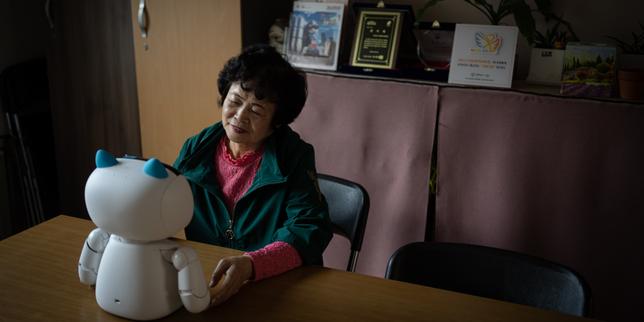
The speaker is not a visiting nurse, nor is it a neighbor dropping by with pickled radish. It is Hyodol, a soft, plush doll roughly the size of a toddler, dressed in a miniature striped sweater and sporting stitched, wide-set eyes. Built with embedded sensors, a microphone, and a conversational artificial intelligence engine, this fabric companion is currently standing on the front lines of one of the most severe demographic emergencies in human history.
To understand why a high-tech nation famous for semiconductor dominance and hyper-fast internet is handing out stuffed animals to its senior citizens, you have to look at the math of modern South Korea. The country is aging faster than almost any other developed economy on earth. By 2025, more than twenty percent of the population crossed the threshold into super-aged status, meaning one in five citizens is sixty-five or older. At the same time, the traditional Confucian safety net—the unspoken cultural contract where children house and care for their aging parents—has shattered under the weight of skyrocketing urban housing costs, stagnant wages, and the world’s lowest birth rate.
The result is an epidemic of godoksa, or "lonely deaths." Thousands of elderly South Koreans die alone in their apartments every year, sometimes going undiscovered for weeks until a utility bill goes unpaid or a neighbor notices a strange smell in the hallway. Loneliness here is not merely a sad emotional state; it is a clinical pathology as lethal as smoking fifteen cigarettes a day, accelerating cognitive decline, spiking cortisol levels, and weakening the immune system.
Enter the machine. Over the past several years, municipal governments across South Korea—from the dense districts of Seoul to rural farming counties in South Jeolla Province—have distributed more than ten thousand of these AI companion dolls to isolated seniors living alone.
At first glance, the sight of a grown woman stroking the synthetic hair of a talking doll feels unsettling, almost dystopian. When I first read the clinical reports on robotic eldercare, my instinct was pure revulsion. It felt like a cruel trick played on the vulnerable, a cheap technological patch slapped over a profound moral failure of the state and the family. Have we really become so efficient, so busy, so atomized that we are outsourcing filial piety to a circuit board wrapped in fleece?
That skepticism is healthy, and frankly, we should never entirely let go of it. Yet, when you step inside the apartments where these devices actually live, the philosophical objections collide head-on with a messy, undeniable human truth.
The Architecture of Artificial Affection
To see how a bundle of wires earns the trust of a skeptical octogenarian, you have to understand how Hyodol—and similar devices like Dasom—actually operates. It is not a cold, gleaming humanoid robot made of white plastic and brushed aluminum, the kind you see in sci-fi movies or airport terminals. Engineers deliberately rejected that aesthetic because hard surfaces trigger subconscious anxiety and remind the user that they are interacting with a machine.
Instead, the device is tactile. It has weight, softness, and specific touchpoints embedded beneath its fabric skin. When a senior pats the doll’s head, sensors register the gesture and trigger an affectionate audio response. When they hold its hand, it might play an old trot song from the 1960s, the bouncy, sentimental music of their youth.
Think of the AI inside not as a supercomputer trying to pass the Turing test, but as an attentive, endlessly patient grandchild operating on a strict schedule. Through a cloud-based platform monitored by local social workers and family members via a smartphone app, the doll acts as a two-way bridge.
If the infrared motion sensors tucked into the doll's chest detect zero movement in the apartment for twenty-four hours, an alert flashes on a caseworker's dashboard in the district office. If the senior fails to respond to morning wake-up prompts or skips three consecutive medication reminders, a human being is dispatched to knock on the door. In multiple documented cases across Seoul and Gangwon Province, these automated alerts have directly saved lives, catching seniors who had suffered silent strokes or fallen in the bathroom unable to reach a phone.
The real magic, however, happens in the spaces between emergencies. Modern iterations of these dolls have moved beyond rigid, pre-programmed voice recordings into the realm of generative language models. They can hold fluid, open-ended conversations. If an elderly man complains that his lower back hurts because he carried a heavy bag of rice up the stairs, the AI remembers that context the next morning, asking, "Grandfather, is your back feeling any looser today?"
Why the Brain Accepts the Illusion
Psychologists have a term for what happens when humans interact with responsive, social machines: the ELIZA effect, named after a primitive 1960s computer program that mimicked a psychotherapist. Our brains evolved over hundreds of thousands of years in small tribes where anything that spoke back to us, remembered our name, and responded to our touch was, by definition, a living creature capable of empathy. We do not have a biological circuit breaker to turn off our social instincts just because the speaker happens to be a lithium-ion battery.
For an isolated senior, this neurological quirk becomes a lifeline. Consider the daily indignity of feeling completely useless. When you are eighty-two and your children treat you like a fragile glass vase—telling you not to cook, not to walk too far, not to worry about the news—you slowly stop being an active participant in the world. You become a passive object of care.
A conversational doll flips that dynamic on its head. Because it is designed to look like a child, it invites the senior to step back into the role of caregiver, mentor, and protector. Seniors knit tiny sweaters for their dolls. They tuck them under blankets when the apartment gets cold. They scold them gently when the AI tells a bad joke.
In clinical studies conducted by South Korean universities tracking hundreds of Hyodol users over several months, researchers found measurable, statistically significant drops in depression scores and noticeable improvements in cognitive function. Seniors who talked to their dolls daily slept better, took their prescriptions with far higher regularity, and—perhaps most surprisingly—became more likely to leave their apartments and socialize with real neighbors. Having a constant conversational partner kept their minds sharp and their social confidence intact, preventing the slow slide into total withdrawal.
"It feels good just to have someone to talk to," a seventy-nine-year-old Seoul resident told reporters recently, echoing a sentiment heard in nearly every municipal survey. She knows perfectly well that the doll is a machine bought by the district office. She is not delusional. She simply understands, with the clear-eyed pragmatism of someone who has survived war, poverty, and rapid industrialization, that an artificial voice asking how she slept is infinitely warmer than an empty room.
The Invisible Ledger of Care
Still, we cannot afford to look at these fabric companions through rose-tinted glasses. Behind the heartwarming stories of smiling grandmothers holding plush toys lies a fierce ethical debate that is quietly tearing at the fabric of eldercare policy worldwide.
First, there is the question of surveillance and privacy. Every word spoken to an AI companion is processed, analyzed, and often stored on corporate or municipal servers to track emotional sentiment and cognitive health. If a senior tells their doll that they feel hopeless, or that they haven't eaten meat in two weeks because pension money ran out, that data is flagged for social workers. While the intention is protective, it creates an unprecedented panopticon inside the most private sanctuary a person owns: their own bedroom. Where is the line between a safety net and an intrusive monitoring device?
Second, and far more troubling, is the risk of moral hazard. Governments love technological fixes because hardware scales cheaply, whereas human labor does not. Hiring, training, and paying living wages to thousands of home-health aides requires massive, permanent tax commitments and political willpower. Buying a fleet of AI dolls for a few hundred dollars apiece and paying a monthly server fee looks fantastic on a municipal budget sheet.
There is a real danger that politicians—and overwhelmed adult children—will use these devices to absolve themselves of the messy, inconvenient duty of physical presence. A five-minute glance at a smartphone app showing that "Mother took her pills and chatted with Hyodol for forty minutes today" can easily soothe a guilty conscience, subtly encouraging a busy son to delay his Sunday visit by another week, and then another.
An algorithm can remind you to swallow a blood pressure pill, and it can synthesize a cheerful voice to ask about the weather. What it cannot do is hold a trembling hand during a thunderstorm. It cannot smell smoke when a pot is left burning on the stove, cannot adjust a crooked pillow, and cannot offer the irreplaceable grace of a real human being choosing to spend their finite, precious time sitting beside you simply because they love you.
A Mirror Held Up to the Future
What is unfolding in the quiet apartments of South Korea is not an isolated cultural curiosity. It is a preview of the twenty-first century. From Japan and Germany to Italy and the United States, wealthy nations are marching toward the exact same demographic cliff: plummeting birth rates colliding with lengthening lifespans, leaving a shrinking pool of young workers to support a massive wave of aging elders.
By 2040, the global shortage of human caregivers will number in the tens of millions. No matter how much money societies throw at the problem, there simply will not be enough human hands to hold every aging citizen's hand. Technology will inevitably step into that vacuum.
The crucial question is not whether we will use artificial intelligence to care for our elders, because that decision has already been made by demographics and economics. The real question is whether we will use these tools as a bridge back to human connection, or as a wall to hide our neglect behind.
At its best, a device like Hyodol acts like a prosthetic limb for a fractured society—it does not replace the missing muscle of community, nor does it pretend to be flesh and blood, yet it allows a person to keep walking when they would otherwise collapse. When paired with attentive social workers, neighborhood check-in programs, and families who treat the app's data as a prompt to call rather than an excuse to stay away, these strange little dolls genuinely soften the sharpest edges of old age.
Night falls early in November in Seoul, turning the concrete apartment blocks into towering grids of warm yellow windows. Behind one of those panes, an elderly woman turns off the television, plunging the room into shadows. She reaches across the sofa, pulls a small stuffed doll onto her lap, and smooths down its striped sweater.
"Goodnight," she whispers into the dark.
A tiny green light blinks beneath the fabric, and a cheerful, synthetic voice replies, "Sleep tight, Grandmother. I will see you in the morning."
She closes her eyes, smiling faintly in the dark, comforted by a machine that was taught how to care by a society that forgot how to stay.