The rain in Manchester does not fall so much as it settles, a fine, persistent mist that clings to the red brick of old cotton mills and cools the asphalt outside Piccadilly Station. Inside a cramped café three blocks from the tram lines, a hypothetical freight forwarder named David—let us call him David, though you could walk into any logistics office from Salford to Stockport and find his exact twin—stares at a customs declaration form that looks less like paperwork and more like a ransom note.
Before 2021, David moved precision automotive components from a factory in Oldham to an assembly plant outside Munich in forty-eight hours. One driver. One manifest. Zero stops.
Today, his trucks sit idling in Kent, burning diesel and profit margins while clerks in two countries argue over the tariff classification of a three-inch rubber gasket.
Wait.
Look closer at that idling lorry, because inside its cab sits the real story of why Andy Burnham, the Mayor of Greater Manchester, decided to bypass Westminster’s paralysis and walk straight into the lions' den of Brussels. While national politicians in London spent years treating the European Union like an estranged spouse whose name could not be spoken at the dinner table, the people actually making things in the North of England were quietly bleeding out. A rare EU-UK summit has finally cracked open the heavy oak doors of diplomacy, and Burnham is standing right in the threshold, holding a ledger of broken supply chains and demanding that someone finally pay attention to the math.
The Architecture of an Invisible Wall
To understand why a regional mayor is suddenly acting like a foreign secretary, you have to understand what Brexit actually did to the nervous system of British trade. In the years following the 2016 referendum, the debate was conducted almost entirely in the vocabulary of grand abstractions. Sovereignty. Control. Global Britain. Those words sound magnificent from a podium in Whitehall, where the primary export is policy papers and the primary import is applause.
On the factory floor in Bolton, sovereignty does not clear a pallet of perishable chemicals through the Port of Calais.
Think of the European Single Market not as a political superstate, but as a single, pressurized hydraulic system. When Britain pulled out of the Single Market and the Customs Union in January 2021, it didn't just step back; it severed the main hose. According to data from the Centre for European Reform and the Office for Budget Responsibility, the long-run hit to UK productivity sits stubbornly around 4 percent, while trade intensity—the sheer volume of goods flowing back and forth—has fallen roughly 15 percent below where it would have been had Britain stayed inside the economic perimeter.
Those numbers feel sterile on a spreadsheet. In real life, they taste like stale coffee at 3:00 AM in a Dover lorry park.
I remember standing on a windswept industrial estate outside Wigan two winters ago, watching a mid-sized manufacturer of specialized aerospace fasteners explain why he was opening a warehouse in Rotterdam. He wasn't an ideologue. He had voted Leave in 2016 because he believed the promise that red tape would vanish like morning fog. Instead, he found himself hiring four full-time compliance officers just to prove his steel bolts were British enough to enter France without a punitive tariff. "We didn't cut red tape," he told me, his breath pluming white in the freezing air. "We just moved the tape to the border and made it twice as thick."
That is the silent crisis Andy Burnham has been watching unfold across Greater Manchester’s ten boroughs. When a small business in Bury stops exporting to Spain because the veterinary certificates or rules-of-origin paperwork cost more than the profit on the order, no alarm bells ring in Downing Street. The company simply shrinks. It cancels an apprenticeship. It delays buying a new CNC machine. A thousand tiny amputations happen in the dark, and by the time the national GDP figures reflect the loss, the expertise has already retired or moved abroad.
Why Westminster Blinkered Itself
For nearly a decade, British politics trapped itself inside a psychological cage of its own making. The governing party feared that any whisper of closer alignment with Brussels would trigger a civil war among its own backbenchers, while the opposition—terrified of losing the "Red Wall" seats across the industrial North that had voted heavily for Brexit—adopted a vow of silence.
Say the word "rejoin," and your career was over. Say "Customs Union," and the tabloid press would roast you before breakfast.
This created a bizarre diplomatic vacuum. Even after Labour returned to power under Keir Starmer with a pledge to "reset" relations with Europe, the language remained painfully cautious. No return to the Single Market. No return to the Customs Union. No freedom of movement. London wanted better trade terms, security cooperation, and energy links, yet it approached Brussels like a shopper asking for a discount while refusing to enter the store.
European leaders, exhausted by years of British theatricality and bruised by the agonizing negotiations over the Northern Ireland Protocol, were in no mood for cakeism. In Brussels, the prevailing attitude was simple: you chose the third-country exit door, and third countries do not get member-state privileges.
Enter Andy Burnham.
Unlike ministers in Westminster, who live and die by the daily news cycle and focus-group anxieties, a metro mayor has to deal with physical reality. Burnham cannot print currency, and he cannot rewrite international treaties. What he does have is the Greater Manchester Combined Authority, a powerhouse regional economy of nearly three million people, and a mandate to stop the North from falling further behind London and the South East.
When Burnham began pushing for closer ties with European regions and eventually stepped into the orbit of high-level EU-UK summit diplomacy, he wasn't trying to rerun the 2016 referendum. He knows better than anyone that the referendum is settled history. Instead, he was asking a brutally practical question: why are we allowing ideological pride in London to bankrupt factories in Manchester?
The Anatomy of the Summit
The rare EU-UK summit that brought Burnham into the spotlight represents a subtle but unmistakable shift in the diplomatic weather. For years, meetings between British and European officials were stiff, defensive affairs dominated by lawyers arguing over the Trade and Cooperation Agreement (TCA). The TCA, cobbled together in the final days of 2020, was a bare-bones deal designed to prevent total cliff-edge chaos, not to help modern economies thrive. It guaranteed zero tariffs on goods, provided those goods met strict rules of origin, while largely ignoring services—which make up roughly 80 percent of the UK economy—and erecting severe non-tariff barriers on food, chemicals, and professional qualifications.
Consider what happens next when a regional leader crashes that party.
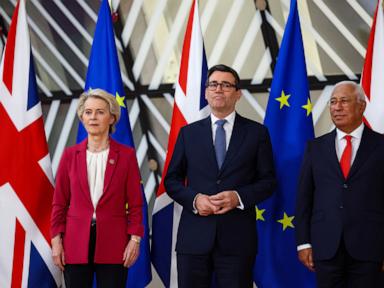
Burnham’s presence alongside national figures signals that the economic repair job can no longer be left solely to diplomats obsessed with red lines. By engaging directly with European counterparts—including key figures in Brussels and regional leaders across Germany, France, and the Low Countries—Burnham has been making the case for pragmatic, sector-by-sector alignment that bypasses the toxic slogans of the past.
Take youth mobility, for instance. Right now, a twenty-two-year-old software engineer from Berlin cannot easily spend two years working at a tech startup in Manchester's Northern Quarter, nor can a young hospitality graduate from Salford spend a season working in Barcelona without navigating a labyrinth of work visas and sponsorship fees. Brussels has repeatedly put a youth mobility scheme on the table as a cornerstone of any broader EU-UK reset. Westminster initially balked, terrified that the right-wing press would scream "backdoor freedom of movement."
Burnham looked at the numbers and saw something entirely different: a massive labor shortage in Greater Manchester’s hospitality, construction, and digital sectors, paired with a generation of young Britons robbed of the cultural and professional horizons their parents took for granted. Calling a two-year, capped, reciprocal visa scheme for under-thirties "free movement" is like calling a weekend bus pass permanent residency. It is a deliberate distortion designed to keep old wounds open.
Then there is the agonizing issue of sanitary and phytosanitary (SPS) standards—the rules governing food, plants, and animal products. Because Britain left the EU’s regulatory orbit, every truck carrying cheddar cheese, chilled meat, or fresh produce across the Channel now faces physical border checks, export health certificates costing hundreds of pounds per consignment, and delays that ruin shelf life. A veterinary agreement—similar to the arrangement Switzerland maintains with the EU—would eliminate the vast majority of these checks overnight.
Does aligning food safety standards with the European Union somehow diminish British democracy? Ask the dairy farmer in Lancashire whose export orders to France evaporated overnight. Ask the supermarket shopper in Oldham watching food inflation eat through their weekly paycheck because import checks introduced by the UK government in 2024 added hundreds of millions of pounds in friction costs to European produce.
The Invisible Costs We Stopped Counting
The hardest part about explaining the damage of Brexit today is that the catastrophe did not arrive as a single, cinematic explosion. There was no dramatic stock market crash on February 1, 2020. Instead, the damage settled in like damp rising through plaster.
Let us return to our hypothetical logistics manager, David, in that rainy Manchester café. Suppose David wants to expand his business. Before 2016, he might have bid on a contract to distribute German industrial machinery across the UK and Ireland. Today, if those machines arrive in Manchester from Stuttgart, are unpacked, modified slightly, and then shipped to Dublin, they risk being taxed twice because they lost their European Union origin status the moment they sat in a British warehouse.
So the German manufacturer skips Manchester entirely. They build their distribution hub in Rotterdam or Antwerp instead.
You never see the warehouse that wasn't built. You never meet the thirty forklift drivers, accountants, and IT technicians in Greater Manchester who were never hired because a board of directors in Frankfurt looked at a map of customs borders and drew a red line around the United Kingdom. Economists call this "foregone foreign direct investment," a phrase so dry it could desiccate a rainforest. In human terms, it is the quiet theft of a town's future.
Even the cultural lifeblood of cities like Manchester—music, touring, art—has been choked by the post-Brexit settlement. Greater Manchester gave the world Joy Division, The Smiths, Oasis, and a sprawling ecosystem of independent promoters, sound engineers, and session musicians. Before 2021, an up-and-coming band from Salford could load their amps into a Transit van, catch the ferry at Dover, and play twenty club dates across Belgium, the Netherlands, Germany, and France to build an international fanbase.
Today, that same band faces cabotage rules that restrict how many stops a UK-registered truck can make inside the EU, carnets for musical instruments that cost thousands of pounds in deposits, and varying work-permit rules across twenty-seven member states. Major stadium acts like Elton John or Coldplay have teams of lawyers to handle the paperwork. Indie bands from Manchester simply stay home. The ladder was pulled up, and nobody in Westminster noticed because musicians don't have a powerful lobbying group in the City of London.
Burnham, whose deep roots in Manchester’s music and cultural scene are well documented, has repeatedly pointed out that trade isn't just steel and semiconductors. It is the ability of young artists, researchers, and entrepreneurs to move ideas and talent across a continent that sits twenty-one miles off the coast of Kent.
The Long Shadow of Regional Inequality
There is a deeper, more uncomfortable truth sitting beneath Burnham’s European crusade, one that makes politicians in London squirm. For forty years, the United Kingdom has been one of the most regionally unequal countries in the developed world. Wealth, infrastructure spending, and political power have pooled relentlessly in London and the South East, leaving the industrial heartlands of the North and Midlands to make do with Victorian rail lines and underfunded local councils.
Brexit was sold to the North as the great equalizer. "Take Back Control" resonated deeply in towns like Oldham, Rochdale, and Wigan precisely because people felt they had lost control over their own lives—not to bureaucrats in Brussels, as the campaign posters claimed, but to a distant, indifferent elite in Westminster.
The cruel irony is that the hard Brexit engineered by London actually hit the manufacturing-heavy North far harder than it hit London's financial district. While bankers in Canary Wharf quickly set up brass-plate subsidiaries in Frankfurt and Paris to keep trading euro-denominated assets, you cannot put a precision engineering plant in Tameside into a briefcase and fly it to Dublin. Manufacturing relies on dense, just-in-time physical supply chains. Every hour at a border costs real money. Every new regulatory divergence forces a factory to run two separate production lines—one for the domestic market, one for the European market—destroying economies of scale.
When Burnham goes to Brussels to champion closer economic cooperation, he is quietly exposing the biggest lie of the last decade: the idea that the North of England benefits from isolation.
Critics on the right immediately accuse him of overstepping his constitutional lane. Foreign policy, they insist, belongs strictly to the Prime Minister and the Foreign Secretary. A regional mayor has no business freelancing on international summits or pitching regional partnerships to European commissioners.
That objection misses how the modern world actually works. Across Europe, mayors and regional presidents—from North Rhine-Westphalia in Germany to Catalonia in Spain and Île-de-France around Paris—regularly negotiate direct economic, green-energy, and research partnerships across national borders. They understand that cities and metropolitan regions are the true engines of modern growth. When Burnham sits down with European leaders to discuss joint hydrogen energy corridors, university research links under the Horizon Europe program, or streamlined trade rules for northern exporters, he is behaving exactly like every other major European regional leader. It only looks radical in Britain because Westminster clings to a nineteenth-century obsession with centralized control.
The Fragile Art of Mending What Was Broken
Of course, we have to be honest about the limits of what one mayor—or even one summit—can achieve. Diplomacy with the European Union is not a light switch you flip back on when you realize the room is dark. Trust, once shattered, takes years of patient, unglamorous work to rebuild.
In Brussels, memories of the Johnson era—when the British government threatened to break international law by unilaterally rewriting parts of the Northern Ireland Protocol it had signed months earlier—remain vivid. European officials are wary of granting Britain bespoke concessions that might unravel the integrity of the Single Market, especially when they have their own monumental headaches to manage: war on their eastern border, an assertive United States under shifting trade policies, and the rise of nationalist parties inside their own parliaments.
Furthermore, Burnham’s push creates delicate political friction inside his own party. Keir Starmer’s government walks a tightrope every single day. Move too slowly on fixing the EU trade relationship, and British growth stays stuck in first gear, starving the Treasury of the tax revenues needed to fix crumbling hospitals and schools. Move too fast, and opponents will accuse the government of betraying the 2016 referendum result, handing ammunition to populist challengers in the very northern seats Labour just won back.
Yet watching Burnham navigate this minefield reveals why his political stock remains so unusually high outside the Westminster bubble. He does not speak in the bloodless, focus-grouped evasions of cabinet ministers. When he talks about mending Brexit damage, he frames it not as an act of ideological surrender, but as common-sense housekeeping.
Think of it like fixing a leaking roof after a bitter family argument over who left the skylight open. You can stand in the hallway for another ten years screaming about whose fault the rain damage is, or you can grab a ladder, climb up into the cold, and start laying new tiles before the ceiling collapses on everyone's head.
This rare EU-UK summit is not going to magically restore the world of 2015. The trucks will not suddenly breeze through Dover without a single check tomorrow morning, and Britain is not about to adopt the euro or rejoin the European Parliament. Anyone promising an overnight cure is selling a different flavor of the same snake oil that got the country into this mess.
What the summit does prove, however, is that the era of pretending the problem doesn't exist is finally over. The ice has cracked. Agreements on defense and security cooperation are opening the door to conversations about energy grids, carbon border taxes, mutual recognition of professional qualifications, and reducing friction at the ports. Every small technical fix—an electronic certificate here, a harmonized product standard there—shaves a few pounds off the cost of doing business and gives a small firm in Greater Manchester a fighting chance to compete on the continent again.
The View from Piccadilly
Late in the afternoon, the Manchester rain finally eases, leaving the wet cobblestones outside the old cotton exchanges gleaming like dark mirrors under the streetlights. Inside a brick warehouse converted into a robotics lab near Oxford Road, a team of young engineers—half of them graduates from the University of Manchester, two of them from Spain and Poland—are testing an automated sorting arm destined for a logistics hub in Belgium.
For years, projects like theirs had to fight against a headwind blowing straight out of Westminster, a political climate that treated their closest neighbors as rivals and turned basic commerce into an obstacle course.
Andy Burnham cannot single-handedly rewrite the Trade and Cooperation Agreement, nor can he erase the scars of a decade that divided families, ruined businesses, and hollowed out public trust. What he has done is far simpler, and infinitely more dangerous to the status quo in London: he refused to stay quiet while his city paid the bill for someone else's dogma.
Back at the café near Piccadilly, David folds his customs forms, zips his coat against the evening chill, and walks out toward the tram stop, still waiting for the day when sending a box of gaskets to Munich stops feeling like smuggling contraband across a war zone.