Seven o'clock in the morning is a battlefield in almost every suburban kitchen across America.
Picture a Tuesday morning in a house much like yours. Let us call the mother Sarah, a hypothetical composite of millions of exhausted parents trying to get two kids out the door before the school bus arrives. Sarah stands at the kitchen island, half-asleep, wrapping her hands around a warm ceramic mug of dark roast. Across the counter sits her eight-year-old son, Leo. He is staring at his bowl of cold cereal with the quiet existential dread only a third-grader can muster, watching the steam curl up from his mother’s cup.
"Can I have a sip?" Leo asks.
Sarah hesitates. Every parent knows that hesitation. For decades, coffee has been the ultimate adult boundary, a liquid rite of passage guarded by stern warnings about stunted growth, racing hearts, and jittery hands. You hand a kid orange juice—liquid sugar disguised as sunshine—or milk, and you tell them to wait until they are grown.
Yet, across the kitchen table, the ritual itself is magnetic. Kids do not actually crave the bitter jolt of caffeine; they crave the belonging. They want to hold the warm mug. They want to participate in the quiet, grounding morning ceremony that signals the start of a purposeful day.
That exact moment of kitchen-table longing is where a nine-year-old boy named Ethan Sanborn spotted an opening that billion-dollar beverage conglomerates completely missed.
The Kitchen Table Revelation
Most nine-year-olds spend their weekends trading Pokémon cards, negotiating bedtime extensions, or figuring out how to beat the next level on a video game. Ethan Sanborn spent his analyzing supply chains, flavor profiles, and retail slotting fees.
Like millions of other children, Ethan loved the idea of coffee. He watched his father, David Sanborn—a veteran entrepreneur who understood the mechanics of building consumer brands—brew his morning cup. Ethan wanted in. He liked the aroma, the warmth, the grown-up sophistication of the ritual. The problem was obvious: traditional coffee is loaded with caffeine, an alkaloid stimulant that pediatricians overwhelmingly advise children to avoid. Even standard decaf coffee often relies on chemical solvents during processing and still retains trace amounts of caffeine alongside harsh, acidic tannins that overwhelm a child’s palate.
For most kids, the story ends with a sip of bitter black liquid, a wrinkled nose, and a retreat to chocolate milk.
Ethan asked a simpler, more dangerous question. Why couldn't coffee be made specifically for kids?
Not coffee-flavored sugar milk packed into a cartoon juice box. Not a neon-colored energy drink masquerading as hydration. Real, organic, water-processed decaf coffee—99.9% caffeine-free—fortified with actual nutrition, stripped of bitterness, and designed from the ground up for developing bodies.
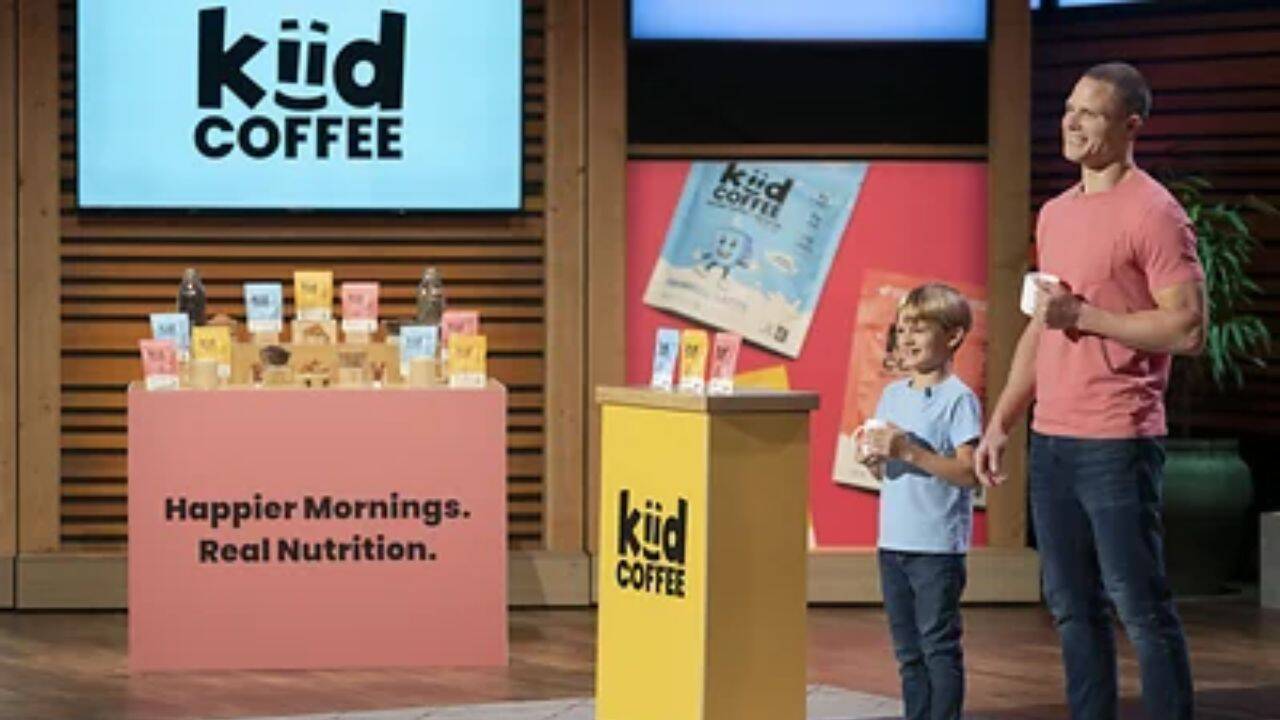
When Ethan pitched the idea to his father, David did not pat him on the head and tell him to save it for a fifth-grade science fair. Instead, they went to work. They founded Kiid Coffee, transforming a childhood curiosity into a legitimate consumer packaged goods contender.
Fast forward to today, and Ethan’s kitchen-table curiosity is no longer a cute novelty. Kiid Coffee has expanded into more than 400 retail stores across the United States, landing shelf space in powerhouse grocers like Erewhon, Sprouts Farmers Market, and Fresh Thyme Market.
Numbers like "400+ retailers" look clean and clinical in a press release. On paper, it reads like a standard business milestone. In the brutal, trench-warfare reality of the grocery industry, however, getting a brand founded by an elementary schooler onto 400 retail shelves is nothing short of a miracle.
The Invisible War for Grocery Shelf Space
To understand why Ethan Sanborn’s expansion matters, you have to understand how deeply hostile the modern grocery store is to newcomers.
Walk down the beverage aisle of any major supermarket. What you are looking at is not a meritocracy; it is real estate leased to the highest bidder. Multinational conglomerates control the eye-level shelves. They pay tens of thousands of dollars in "slotting fees" just for the privilege of placing a new flavor of soda or iced tea within arm's reach of your shopping cart. Independent founders routinely mortgage their homes, burn through millions in venture capital, and spend years begging regional buyers for a three-month trial in twelve stores—only to be pulled from the shelves if their "velocity," the industry term for units sold per store per week, dips by a fraction of a percent.
I have spent years watching passionate food and beverage founders get crushed by this machine. You can taste their desperation at trade shows like Expo West, where thousands of hopeful entrepreneurs stand behind folding tables for ten hours a day, handing out tiny paper cups of mushroom elixirs and prebiotic sodas, praying a buyer from Sprouts or Whole Foods walks by and pauses for thirty seconds. Most of those brands vanish within twenty-four months.
Now, imagine walking into those same buyer meetings when your CEO has not even hit middle school.
When retail buyers evaluate a brand, they are looking for one thing: proof that a shopper will stop their cart, reach out, and trade hard-earned money for an unfamiliar box. A cute backstory might earn a five-minute courtesy meeting, particularly on the viral circuit—Ethan and his father notably brought their pitch to Shark Tank, putting the concept in front of millions of viewers—but sentimentality does not keep a product on the shelf at Sprouts Farmers Market. Velocity does. Repeat purchases do.
The fact that Kiid Coffee has scaled past the 400-store mark tells us something profound about what is happening in American households right now. Parents are actively hunting for an off-ramp from the sugar-and-caffeine trap that has quietly colonized childhood.
The Quiet Crisis in the Kid’s Aisle
Step back and look at what children are actually drinking today.
For decades, the beverage industry operated on a simple, lucrative formula for kids: water, high-fructose corn syrup, artificial dyes, and synthetic fruit flavors. When parents finally revolted against soda and neon juice pouches, the market pivoted. Suddenly, children were being marketed hydration drinks packed with artificial sweeteners, electrolytes meant for endurance athletes, and—most alarmingly—massive doses of caffeine.
Over the last few years, high-caffeine energy drinks marketed through vibrant packaging and youth-oriented influencers have flooded middle schools and even elementary playgrounds. Pediatricians have sounded the alarm as emergency room visits linked to youth caffeine consumption climbed. Children are experiencing anxiety, disrupted sleep architecture, heart palpitations, and crashes that wreck their ability to focus in a classroom.
At the same time, look at what happens when a parent tries to find a warm, comforting morning beverage for their child that is not hot cocoa loaded with twenty-five grams of refined sugar. The options vanish.
This is the invisible tension Ethan Sanborn stepped into. Kids want to feel grown up. Parents want to protect their children's health without turning every morning into a negotiation over nutrition labels.
Kiid Coffee solved both sides of the equation by treating children with respect rather than pandering to them. Instead of masking cheap ingredients behind cartoon mascots, Ethan and his team built a formulation that reads like a nutritionist’s wish list. They started with organic coffee beans decaffeinated using the Swiss Water Process—a chemical-free method that relies purely on water, temperature, and time to gently remove 99.9% of the caffeine while preserving the natural flavor compounds of the bean.
Then, they tackled the nutritional void. Working with food scientists, they infused the blend with plant-based vitamins and minerals—including calcium, vitamin D, B vitamins, and prebiotic fiber—while keeping added sugars dramatically lower than traditional kid-targeted drinks. Available in flavors like Original, Choco'Latte, and Caramel, it dissolves easily into warm or cold milk, bridging the gap between the coffeehouse culture kids admire and the nutritional guardrails parents demand.
Analogies of the Everyday Ritual
Think of Kiid Coffee like training wheels on a bicycle, or a wooden chef’s knife designed for small hands in the kitchen.
When you give a seven-year-old a dull wooden knife so they can chop bananas beside you while you prep dinner, you are not doing it because you desperately need the bananas sliced. You are doing it because human beings learn who they are through shared ritual. Exclusion breeds rebellion; inclusion builds confidence.
When you tell a child, "No, coffee is only for adults, go drink your sugar water," you turn coffee into forbidden fruit. By the time that child hits thirteen, they are sneaking iced lattes loaded with four pumps of vanilla syrup and two shots of espresso on their way to eighth grade, chasing a status symbol they were locked out of for years.
By giving a nine-year-old a mug of warm, nutrient-dense, caffeine-free coffee at the breakfast table, the dynamic flips entirely. The mystery evaporates. The ritual becomes healthy, grounded, and shared.
There is a vulnerability in admitting how hard modern parenting has become when it comes to food. Every trip down the grocery aisle feels like an exam you did not study for. Labels scream "natural," "organic," and "immune-boosting" on the front while hiding glycemic bombs in six-point font on the back. You want to trust what you put into your child’s body, yet you are constantly second-guessing whether you are falling for clever marketing.
Seeing a nine-year-old step up and build the exact product he wished existed brings a rare dose of transparency to an industry famous for smoke and mirrors. Ethan is not an abstract corporate boardroom trying to calculate "Gen Alpha market penetration." He is the target demographic. He drank the prototypes. He rejected the ones that tasted too bitter or too chalky. He understood instinctively that if it did not look and feel like real coffee, kids would see right through the gimmick.
Why 400 Stores Is Only the Opening Act
History shows us that the most disruptive consumer brands rarely start inside massive research-and-development laboratories. They start on the fringes, born out of personal frustration.
Gatorade began in a university lab trying to keep football players from collapsing in the Florida heat. Clif Bar started on a 175-mile bike ride when a baker realized he could not stomach another chalky energy bar. Mrs. Meyer’s Clean Day began when a mother of nine looked at her harsh chemical cleaning supplies and wondered why housekeeping had to smell like a hospital ward.
In every single case, established giants laughed at the premise—right up until the moment those niche products began stealing prime shelf space.
Right now, traditional coffee roasters and legacy kid-beverage brands are watching Kiid Coffee’s footprint quietly expand across natural and specialty grocers. Landing in 400+ doors—spanning trendsetting stores like Erewhon in Southern California, where wellness trends are born, alongside mainstream natural grocers like Sprouts and Fresh Thyme across the Midwest and South—proves that this is not a regional fluke. A mother in Ohio shopping at Fresh Thyme has the exact same morning dilemma as a father in Los Angeles shopping at Erewhon.
Of course, scaling from 400 stores to 4,000 brings a new set of existential risks. In the consumer goods world, rapid expansion is a double-edged sword. More doors require massive inventory financing, airtight supply chains, and relentless marketing spend to ensure boxes do not sit gathering dust on bottom shelves. Even with an experienced entrepreneur father helping steer the operational ship, Ethan is stepping into an arena where well-funded competitors can copy a concept in six months and undercut prices overnight.
Yet, competitors can copy an ingredient panel, and they can mimic packaging colors. They cannot manufacture authenticity. You cannot fake a nine-year-old founder who genuinely loves sitting down with a warm mug of coffee before school and wanted his peers to have a seat at the table too.
The Lasting Pour
Go back to that quiet Tuesday morning kitchen for a second.
Imagine Sarah standing at the counter again. Only this time, when Leo asks for a sip of coffee, she does not sigh or deliver a lecture on pediatric cardiology. Instead, she reaches into the pantry, pulls out a bright pouch of Kiid Coffee, and stirs a spoonful into a warm mug of oat milk.
She sets it down next to his cereal bowl.
Leo wraps both hands around the warm ceramic. He blows gently across the top, mimicking the exact gesture he has watched his mother make a thousand times, and takes a slow, careful sip. Across the counter, mother and son share a quiet, unhurried moment before the chaos of the school day begins. No jitters. No sugar crash. Just two people starting their morning together, cup for cup.