Jet fuel smells like burnt kerosene and hot grease. If you have ever stood near an active runway at dawn—feeling the pressure wave hit your sternum before the roar even reaches your ears—you know that air power is never an abstract line item on a budget spreadsheet. It is rivets, sweat, hydraulic fluid, and young pilots staring into dark cockpits wondering whether the radar screen in front of them is telling the truth.
Now imagine that cockpit is built to whisper rather than scream.
For decades, the arithmetic of South Asian skies followed a familiar, grueling rhythm. New Delhi and Islamabad watched each other through radar domes, satellite passes, and hard-won intelligence. Every generation of combat aircraft brought a new round of anxiety: a faster missile here, a sharper sensor there, a fresh bill from a foreign capital. Yet for years, stealth—the art of shaping an airframe and coating it in radar-absorbent materials so that enemy beams scatter like rain on glass—belonged almost exclusively to a handful of major powers, led in Western strategic circles by the American F-35.
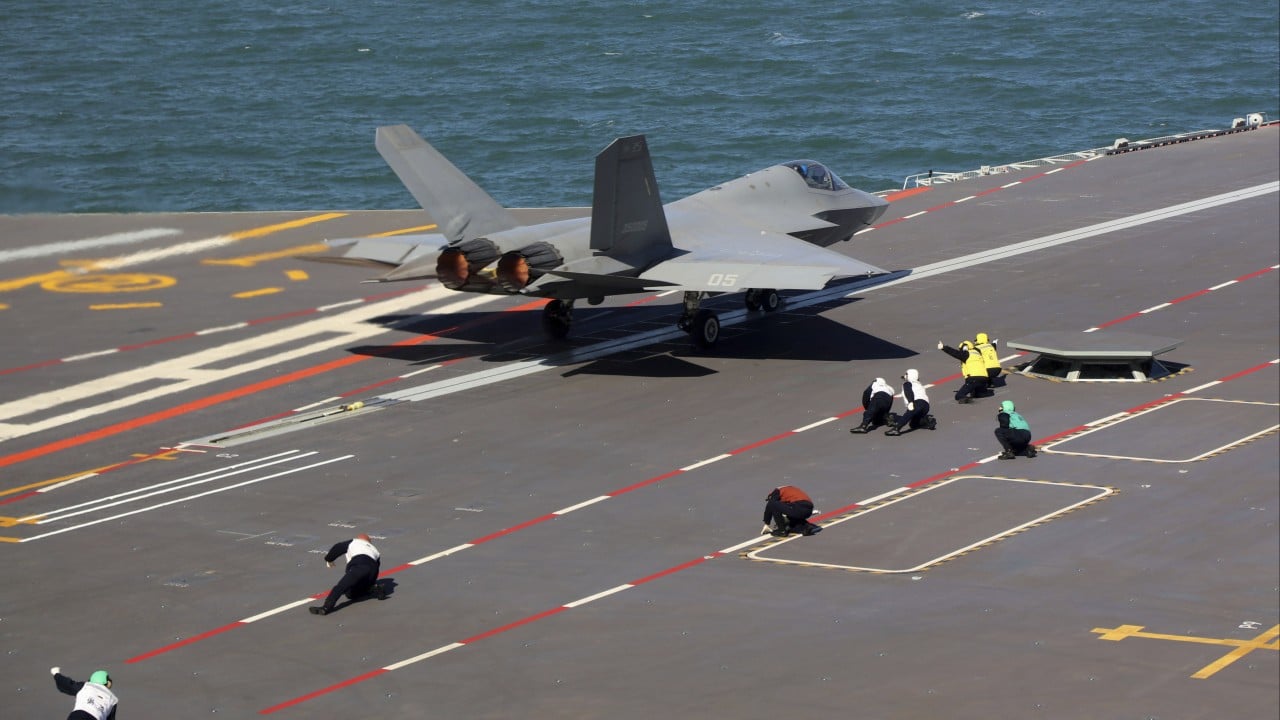
China’s Shenyang J-35 changes that math by putting a fifth-generation stealth fighter onto the global export table, with Pakistan sitting right near the front of the line.
On paper, a defense sale looks tidy. A government signals interest. Engineers talk payload, range, and avionics. Diplomats argue over financing and spare parts. In reality, when Pakistan looks seriously at buying China’s J-35 stealth jets, it is not just shopping for an airplane. It is walking a tightrope over a canyon where every step affects its relationship with Washington, its balance with India, and its own economic breathing room.
Why Stealth Changes the Mood in the Cockpit
To understand why a stealth jet feels different from a conventional fighter, it helps to step away from defense acronyms and use a simple metaphor.
Suppose you are in a pitch-black room holding a flashlight, trying to find someone who has a mirror. A standard fighter jet is like a person wearing a bright neon jacket and ringing a cowbell. Even before you see them clearly, you know roughly where they are and how fast they are moving. A stealth fighter tries to be the person with the mirror—angled carefully, coated to dull reflections, keeping weapons tucked inside internal bays instead of hanging external fuel tanks and missiles that catch radar waves like coat hangers.
Radar works by sending out radio waves and listening for the echo. Stealth does not make an aircraft invisible to the naked eye or completely undetectable under all conditions. Instead, it shrinks the radar cross-section—the size of the echo—until a distant operator sees a faint, ambiguous blip rather than a crisp target lock. In modern air combat, the side that spots the other first and fires from farther away often holds the decisive edge.
Consider a hypothetical scenario—purely invented to illustrate the operational tension, not a report of an actual incident. Picture a flight lead, whom we will call Tariq, sitting in a briefing room in Islamabad before a night patrol. For years, his squadron flew older platforms that relied on speed, low-altitude terrain masking, and electronic jamming to survive dense air defenses. If an adversary’s newer sensors or fifth-generation jets enter the picture, Tariq’s margin for error shrinks. A few seconds of hesitation—a radar screen that flickers late, a missile warning that comes too late—can turn a routine deterrence patrol into a tragedy.
That is the human pull behind Islamabad’s interest in the J-35. Pilots and planners do not want to fight yesterday’s war with yesterday’s signatures. When a rival regional air force invests in modern fighters, air-defense networks, and long-range strike capabilities, military planners feel an intense, almost primal pressure to answer in kind.
The Washington Wire That Never Stops Vibrating
Yet every move Islamabad makes in Beijing sends a tremor all the way to Washington.
For decades, the United States and Pakistan have lived through cycles of intense partnership, deep suspicion, cold estrangement, and tactical alignment. Washington has long worried about regional escalation between India and Pakistan, nuclear stability in South Asia, and the growing reach of Chinese military hardware across Asia and the Indian Ocean. At the same time, the United States has spent years deepening defense ties and strategic alignment with India as a counterweight to Beijing’s expanding influence.
When China offers a flagship stealth fighter like the J-35 to a close security partner like Pakistan, American policymakers do not view the transaction in isolation. They ask hard questions. Will fifth-generation jets in South Asia lower the threshold for miscalculation during a crisis? How will India respond, and does that spark an even more expensive regional arms race? What happens to sensitive intelligence, regional basing dynamics, or diplomatic leverage if Beijing’s hardware becomes even more central to Pakistan’s air force?
Washington rarely needs to announce a dramatic rupture to make its displeasure felt. Pressure in international politics often arrives quietly: a delayed waiver, a chilly diplomatic meeting, tighter scrutiny on dual-use technology, or a stern reminder from lawmakers and defense officials about proliferation, regional stability, and financial commitments.
Admittedly, untangling these motives is confusing and sometimes unsettling. Even seasoned analysts disagree on how fast a complex stealth program can move from political enthusiasm to squadrons on a runway, how much the export version differs from the aircraft flown by China’s own forces, and how much leverage Washington truly holds when Islamabad faces domestic and regional pressures. Uncertainty is part of the terrain here, and pretending otherwise would be dishonest.
What an Airplane Actually Costs Beyond the Sticker Price
Money is where grand strategy hits the pavement.
Modern fighter jets are notoriously expensive, not just to buy, but to feed and maintain. A combat aircraft is like a high-strung thoroughbred racehorse: the purchase price is only the beginning. You need hardened shelters, specialized diagnostic gear, spare engines, munitions, simulator hours, training pipelines, and decades of steady maintenance.
For a country like Pakistan, which has repeatedly navigated severe macroeconomic strain, foreign-exchange pressures, and tight fiscal choices, every dollar spent abroad carries weight. A hospital wing not built, a power grid upgrade postponed, a subsidy debated in Parliament—these are the quiet trade-offs sitting behind any multi-billion-dollar defense ambition.
To make that trade-off concrete, imagine a second hypothetical character—again, a composite illustration rather than a real person. Let’s call her Nadia, an economic policy researcher in Lahore watching inflation squeeze household budgets while headlines tout sleek new fighter jets. To Nadia, security matters, but so does whether young graduates can find jobs or whether electricity tariffs will jump again next quarter. When defense spending rises sharply or ties a nation deeper into long-term external financing, citizens feel the ripple effects in everyday life long before a single jet ever flies over a parade ground.
China often structures defense deals with flexible financing and long-term industrial cooperation, which can look attractive to buyers facing hard-currency constraints. Still, no financing arrangement erases the recurring cost of operating advanced aviation. Stealth coatings require careful upkeep; complex avionics demand continuous software and hardware support. A bargain upfront can still be heavy over twenty or thirty years.
India’s Shadow Over Every Calculation
You cannot look at Pakistan, China, and the United States in this equation without seeing India standing right in the frame.
South Asian security is a triangle where every angle shifts when another moves. India has its own ambitious plans to modernize its air force, expand indigenous fighter and radar programs, and acquire capable foreign platforms to stay ahead of both Chinese and Pakistani capabilities. If Pakistan moves closer to acquiring stealth fighters from Beijing, New Delhi’s planners will treat that development as a direct strategic variable—accelerating their own acquisitions, dispersing assets, or upgrading air-defense sensors.
That creates a classic security dilemma. One side buys a jet to feel safer; the other side upgrades its defenses because it feels less safe; the first side then feels even more pressed to buy more. Nobody starts out wanting an endless spiral, yet spirals are easy to start and hard to stop.
Meanwhile, Beijing has its own reasons to push the J-35 onto export markets. Selling advanced fighters is not merely about revenue. It cements long-term defense relationships, creates decades of spare-parts and training dependency, normalizes Chinese aerospace standards abroad, and signals that Chinese defense engineering can compete at the upper tier of global aviation.
Why This Story Is Really About Sovereignty and Choice
Strip away the flight jargon and diplomatic cables, and a deeper question emerges: how much room does a middle power actually have to chart its own course when two giants are sizing each other up?
Pakistan has long tried to balance relationships—maintaining historic ties with Beijing while keeping channels open to Washington and capitals across the Middle East. That balancing act worked better in eras when great-power rivalry was less all-consuming. Today, every major defense choice looks like a vote in a larger contest.
Choosing a Chinese stealth fighter signals deep alignment with Beijing’s defense ecosystem and tests the patience of Washington. Backing away or slowing down risks leaving pilots feeling outmatched if rivals modernize faster. There is no cost-free button on the console.
What Comes Next in the Skies Above South Asia
Watch the quiet details rather than just the loud headlines if you want to see where this story goes next.
Look at budget debates, official delegations, defense-expo announcements, and diplomatic signals coming out of Islamabad, Beijing, and Washington. Pay attention to timelines—because fighter jet programs move in years, not weeks—and watch how regional neighbors adjust their own force plans in response.
Above all, remember that behind every strategic headline are real people: mechanics checking fasteners by floodlight, families worrying about stability, and leaders trying to keep a volatile region from slipping over the edge.
Out on the tarmac at dawn, the exhaust shimmers in the cold air, bending the light until the runway itself seems to waver.