The teacup on the kitchen table in Kharkiv does not rattle anymore when the air raid sirens begin, mostly because Olena stopped using porcelain two winters ago. She drinks out of a tin mug now. Tin bounces. Tin survives.
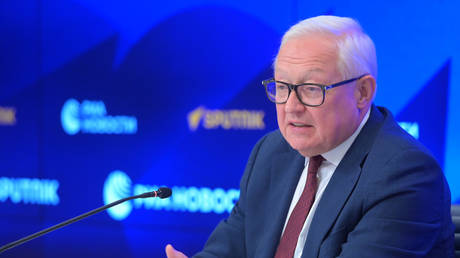
When a Russian Deputy Foreign Minister steps up to a podium in Moscow and tells a room full of cameras that "progress" has been made in Ukraine peace talks, that single, sterile noun travels four hundred miles southwest and lands directly inside Olena’s tin mug. It is a word designed to sound like a sunrise, yet to the people actually living beneath the flight paths of ballistic missiles, "progress" is the most terrifying word in the diplomatic dictionary.
Diplomatic progress is rarely a sudden burst of light. More often, it is a slow, agonizing negotiation over which parts of a human life are acceptable to trade away for a few months of quiet.
To understand what is actually happening behind the closed doors of these high-stakes negotiations, you have to strip away the velvet curtains of statecraft and look at the cold, hard geometry of exhaustion. Both Moscow and Kyiv are locked in a brutal war of attrition that has reshaped the European security architecture since February 2022. Hundreds of thousands of soldiers have been killed or wounded. Entire cities—Bakhmut, Avdiivka, Mariupol—have been reduced to gray, jagged skeletons of concrete and rebar. Economies are warped entirely around the production of artillery shells and drones.
And yet, for years, the very idea of negotiation was treated as a taboo. Now, the whispers from the Russian Foreign Ministry suggest the tectonic plates are shifting.
Why now? And what does "progress" actually buy?
The Anatomy of a Diplomatic Whisper
In the lexicon of international relations, diplomats do not speak to communicate; they speak to test the wind. When a senior Russian official—figures like Sergey Ryabkov or Mikhail Galuzin, whose entire careers are built on the precise calibration of ambiguity—uses the word "progress," they are not announcing peace. They are signaling to Washington, Brussels, and Kyiv that the cost of continuing the current trajectory has finally met the threshold of willingness to talk.
Consider a hypothetical scenario inside one of those sterile, windowless conference rooms in Geneva, Istanbul, or Riyadh—the neutral cities where these quiet backchannels always take root. Picture two mid-level envoys sitting across a mahogany table. Neither has the authority to sign a treaty. Their job is simply to slide pieces of paper across the polished wood and see if the other person flinches.
One paper outlines a freeze along the current line of contact. The other demands strict limits on the size of Ukraine’s future military and a permanent, legally binding ban on NATO membership.
In the cold reality of verified diplomatic history, these are the exact fault lines that have stalled every previous attempt at a settlement. During the spring of 2022, negotiators met in Belarus and Turkey, drafting complex communiqués that explored Ukrainian neutrality in exchange for international security guarantees. Those talks collapsed under the weight of Russian maximalist demands, the discovery of atrocities in Bucha, and Ukraine’s growing confidence as Western weaponry began to arrive.
Since then, the map has hardened in blood. Russia currently occupies roughly a fifth of internationally recognized Ukrainian territory, including Crimea and vast swathes of Donetsk, Luhansk, Zaporizhzhia, and Kherson. When Moscow speaks of progress today, they are speaking from a position where they expect those territorial gains to be recognized, either formally or through a de facto freeze that leaves them in control.
For Kyiv, accepting that reality feels less like a compromise and more like an amputation.
What Peace Actually Costs the Living
Let us step out of the conference room and return to Olena. (She is a composite character, a stand-in for the millions of displaced and frontline Ukrainians, though her tin mug is entirely real).
Olena’s brother, Mykola, has been serving in a mechanized brigade near Pokrovsk for nineteen months. Her mother is buried in a cemetery in Zaporizhzhia Oblast, thirty kilometers behind the current Russian defensive lines.
When a diplomat says "progress," Olena does not hear the end of war. She hears a permanent border wall being built between her and her mother’s grave. She wonders what happens to the millions of Ukrainians living under occupation—people forced to take Russian passports just to buy insulin or register their cars, people whose children are being taught a rewritten history in schools scrubbed of the Ukrainian language.
This is the invisible stake that never makes it into the wire reports. News agencies summarize the Russian Deputy Foreign Minister’s remarks in three hundred words, noting market reactions in European natural gas futures and the shifting rhetoric from the White House. They rarely measure the psychological vertigo of a population asked to suddenly pivot from "victory at any cost" to "survival at a discount."
I remember watching a similar agonizing calculus play out during the Minsk agreements in 2014 and 2015. Back then, the world breathed a collective sigh of relief when the ink dried on the protocols. The headlines declared a breakthrough. Yet on the ground in the Donbas, the shooting never truly stopped. It merely dropped from a roar to a steady, lethal hum—a "frozen conflict" where snipers still killed young men every Tuesday, and the economy withered in a legal limbo where no bank would lend money and no investor would build a factory.
A bad peace is not the absence of war. It is simply war put on a slow drip.
The Leverage Trap
To understand why the Kremlin is floating the idea of progress right now, we have to look at the sheer, grinding math of modern warfare. Warfare is no longer just about courage or strategy; it is an industrial assembly line.
Think of the conflict not as a chess match, but as two massive engines running at redline without any oil. Russia has successfully transitioned its economy onto a war footing, spending roughly a third of its entire national budget on defense and security. It has circumvented Western sanctions through shadow fleets of oil tankers and supply chains winding through Central Asia and East Asia. It can absorb staggering casualties because its political system suppresses dissent with ruthless efficiency.
Yet even a war economy has breaking points. Interest rates in Russia have soared past twenty percent to combat runaway inflation. Labor shortages are crippling civilian industries because men are either at the front or working in drone factories. The Soviet-era stockpiles of armored vehicles and artillery barrels, once thought inexhaustible, are visibly thinning on satellite imagery.
Ukraine faces an even starker demographic reality. With a fraction of Russia’s population, every lost soldier is irreplaceable. The country’s energy grid has been systematically hammered, leaving millions facing rolling blackouts in the dead of winter. Furthermore, Kyiv is entirely dependent on the political whims of its Western backers—a precarious position when election cycles in the United States and Europe constantly threaten to turn off the tap of ammunition and air defense interceptors.
Both sides are looking at the calendar and seeing a cliff.
Russia wants to lock in its territorial gains before its economy overheats and its Soviet stockpiles run dry. Ukraine wants to stop the bleeding before its infrastructure collapses and its frontline troops are overwhelmed by sheer numbers.
When both boxers are too exhausted to keep their hands up, they lean against each other in the center of the ring. To the crowd in the cheap seats, it looks like an embrace. In reality, they are just trying not to fall down while they catch their breath for the next round.
The Ghost of Budapest
If you ask a Ukrainian why they do not trust the word "progress" coming from a Russian official, they will rarely cite political theory. They will simply say two words: Budapest Memorandum.
In 1994, Ukraine possessed the third-largest nuclear arsenal in the world, inherited from the collapse of the Soviet Union. Under intense pressure from both Washington and Moscow, Kyiv agreed to give up every single warhead. In exchange, the United States, the United Kingdom, and the Russian Federation signed a solemn pledge to respect Ukraine’s independence, sovereignty, and existing borders.
Twenty years later, Russian troops without insignia seized Crimea. Eight years after that, Russian tanks rolled toward Kyiv.
That historical betrayal is the central obstacle to any lasting peace today. It is not merely a matter of where to draw a line on a map; it is a profound crisis of enforcement. If Ukraine agrees to stop fighting today, what stops Russia from using the next three years to rebuild its tank divisions, retrain its army, and launch a third invasion in 2029?
Words on paper cannot stop a cruise missile.
For Kyiv, any viable peace agreement requires ironclad security guarantees—something resembling NATO’s Article 5, where an attack on one is treated as an attack on all, or the permanent deployment of European peacekeeping forces on Ukrainian soil.
For Moscow, those exact guarantees are the ultimate red line. The Kremlin’s stated justification for the entire war has been to prevent Western military infrastructure from taking root on its border.
Here lies the fundamental paradox of the negotiations. The only thing that makes peace safe for Ukraine is the very thing that makes peace unacceptable to Russia. How a deputy foreign minister squares that circle—and whether "progress" means one side is quietly preparing to blink on its core demand—is the billion-dollar question hanging over Europe.
The Illusion of the Clean Ending
We are conditioned by movies and history textbooks to expect wars to end with dramatic clarity. We look for the signing ceremony on the deck of a battleship, the flag raised over a ruined capital, the definitive moment when the dark clouds part and the rebuilding begins.
Modern geopolitical conflicts rarely offer that kind of catharsis.
More likely, if these talks actually bear fruit, the end of this phase of the war will look messy, deeply unsatisfying, and morally ambiguous. It will look like the Korean Peninsula in 1953—an armistice rather than a peace treaty, separated by a heavily mined demilitarized zone where two worlds stare at each other through binoculars for seventy years.
Imagine what that means for the global order. If borders can be redrawn by force, and the aggressor is rewarded with territory simply because the world grew tired of paying for the defense of the victim, every authoritarian regime on earth takes notes. From the Taiwan Strait to the South China Sea, the precedent set in the muddy fields of eastern Ukraine will echo for generations.
Yet, when you are standing in a cold apartment in Kharkiv, global precedents feel terribly abstract. You do not care about the rules-based international order when you are taping cardboard over a shattered window frame. You care about whether your children can walk to school without checking an app on their phones to see if MiG-31 fighter jets have taken off from an airfield in southern Russia.
I admit, looking at the sheer complexity of the stalemate, it is tempting to root for any compromise just to make the dying stop. The moral weight of prolonging a war from the comfort of a safe, warm living room is staggering. Who has the right to tell Ukrainians to keep bleeding for principles that the rest of the world enjoys for free? Conversely, who has the right to force them to surrender their neighbors to a brutal occupation just so gas prices in Europe can stabilize?
There are no clean hands in this equation. Only tragic choices.
The Weight of a Tin Mug
The diplomatic machinery will continue to grind forward over the coming months. There will be more carefully leaked statements to state media, more secret flights to Middle Eastern capitals, more agonizing debates in Washington and Brussels about aid packages and sanctions relief.
The word "progress" will be used again. It will be dissected by pundits on cable news, analyzed by defense contractors, and cheered by financial markets hungry for stability.
In Kharkiv, Olena will hear the news on the radio while she boils water on a camping stove. She will pour the dark tea into her tin mug, wrap her hands around the warm metal, and look out the window at the darkened skyline. She will not celebrate. She will not tear down the tape from her glass. She will simply wait, listening to the night sky, knowing that until the guns actually fall silent, peace is just another word for a promise no one has kept yet.