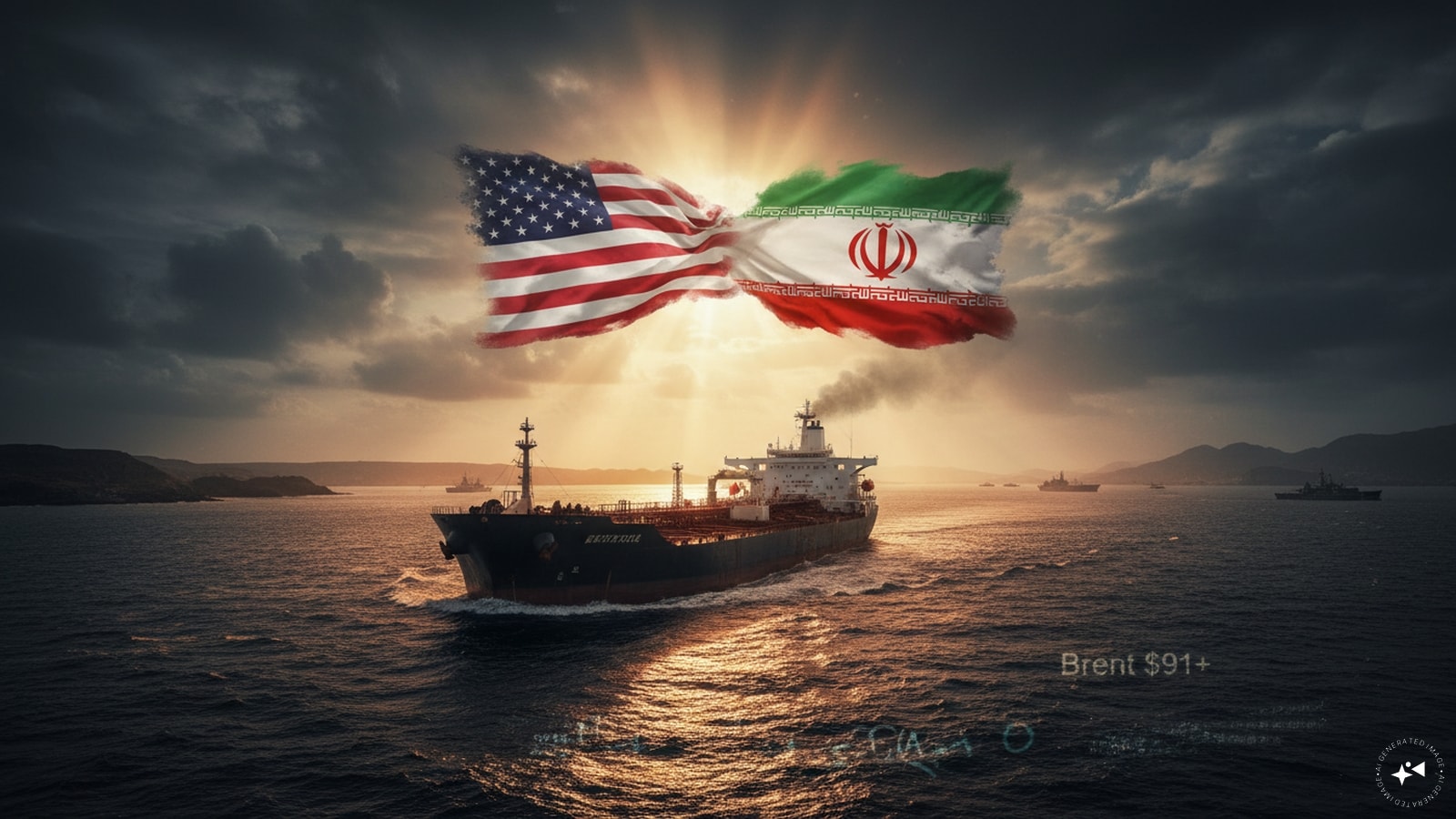
Midnight. The water is black glass.
For a commercial sailor navigating the Strait of Hormuz, the darkness is incredibly heavy. It smells of crude oil, salt, and the sharp, metallic tang of diesel exhaust. Let us construct a hypothetical scenario to understand this reality. Picture a seasoned mariner—call him Captain Elias—standing on the bridge of a massive crude carrier. His eyes are locked on the radar screen. A cluster of small, fast-moving green blips emerges from the Iranian coastline.
They are closing in. Fast.
These are not fishing boats. They are fast attack craft. The fresh clashes in the Strait are no longer just headlines; they are right off his port bow. Elias grips the console. The radio crackles with warnings. A warning shot tears across the bow, a fiery streak against the night. The message is blunt. We control this water.
But flip the channel, change the frequency, look toward Geneva or Vienna, and you hear an entirely different message.
Tehran is ready to talk.
The news that Iran is signaling readiness to revive a lapsed peace deal—even as its speedboats harass commercial shipping—feels violently contradictory. It is confusing. It is scary. How can a nation offer an olive branch with one hand while firing a machine gun with the other? To understand this paradox, we have to look past the water and into the streets.
Let us introduce another hypothetical figure to ground these abstract geopolitics. Meet Roya. She runs a small pharmacy in the heart of Tehran. While Elias watches radar blips, Roya watches the currency exchange rate. Over the last few years, since the original nuclear deal collapsed and sanctions snapped back with bone-crushing force, she has watched the rial disintegrate.
Medicines for her customers—basic antibiotics, insulin—are agonizingly scarce. When she can source them, the prices are astronomical. Roya is exhausted. Her neighbors are exhausted. The economic strangulation has hollowed out the Iranian middle class, leaving a society running on fumes and frustration.
This is the invisible engine driving the diplomatic signals. The government in Tehran knows that survival—internal, political survival—requires economic relief. The lapsed peace deal, for all its flaws and domestic critics, represents a valve. A way to let the crushing pressure out of the economy. They need the deal. They desperately need the money.
Why, then, the speedboats? Why the fresh clashes in Hormuz?
The answer lies in a grim geopolitical strategy. Escalation as negotiation.
It sounds counterintuitive. If you want someone to negotiate with you, you don't typically set their front lawn on fire. But in the high-stakes poker game of Middle Eastern diplomacy, vulnerability is interpreted as weakness. If Tehran simply begged for a return to the negotiating table, they would have zero bargaining chips. The West would dictate the terms.
So, they create an advantage out of thin air. Or, more accurately, out of salt water.
The Strait of Hormuz is only 21 miles wide at its narrowest point. Yet roughly a fifth of the world's liquid gold passes through this chokepoint. By instigating fresh clashes, seizing a tanker, or harassing a convoy, Iran demonstrates a terrifying capability. They are reminding Washington, London, and Beijing of a simple, unassailable fact. If we cannot sell our oil, no one will sell theirs.
It is a hostage situation where the hostage is the global economy.
The speedboats are not trying to start a third world war. They are trying to force a conversation on favorable terms. The message is: We are dangerous enough that you must deal with us, but rational enough to make a deal.
Witnessing this from the outside is exhausting. The whiplash is enough to break your neck. One morning, the stock market tanks because an oil tanker is ablaze in the Gulf of Oman. The very next afternoon, a neatly dressed diplomat steps up to a podium in Europe and softly suggests that all parties are open to constructive dialogue.
It is a brutal, cynical game. And the stakes are entirely human.
We often talk about these deals in sterile terms. Centrifuges. Enrichment percentages. Breakout times. Sanctions relief. We reduce the fate of millions to spreadsheets and treaties. But the reality of a lapsed peace deal is deeply, physically felt. It is felt by Elias, who writes a will before every deployment through the Gulf. It is felt by Roya, who turns away a weeping mother because asthma medication is stuck behind an international banking blockade.
The human cost of failure is absolute.
When the original agreement fell apart, the rhetoric was deafening. Politicians celebrated their toughness. Pundits debated the geopolitical maneuvering. But the fallout was immediate. The hardliners in Iran felt vindicated in their distrust of the West. The West felt justified in tightening the economic screws. And the space for moderate, pragmatic conversation evaporated.
Now, we are watching a dangerous attempt to rebuild a bridge while both sides are still actively throwing explosives at it.
The Iranian signaling is subtle, wrapped in layers of diplomatic deniability. A back-channel message sent through Oman. A carefully worded interview by a foreign minister. A slight delay in the installation of advanced uranium centrifuges. These are the whispers of a nation looking for a way out of a corner.
But trust is a shattered mirror. Reassembling it seems impossible.
The Western negotiators look at the fresh clashes in Hormuz and see a rogue actor incapable of honoring an agreement. Why sign a paper with a government that green-lights piracy?
The Iranian negotiators look at the lapsed deal and see a West incapable of keeping its promises. Why limit your defense capabilities for economic relief that can be snatched away by the next change in a foreign administration?
This is the deadlock. It is a tragedy of mutual, entirely justified paranoia.
Yet, the signals persist. Because the alternative to the deal is unthinkable. Without a diplomatic off-ramp, the trajectory is linear and violent. The skirmishes in the Strait of Hormuz will eventually result in a miscalculation. A nervous sailor will fire a live round instead of a warning shot. A drone will strike a vital compartment instead of a reinforced hull. A ship will sink. Blood will spill.
Once that threshold is crossed, the carefully calibrated game of escalating to de-escalate collapses. The logic of war takes over. And a war in the Strait of Hormuz would not stay in the Strait of Hormuz. It would engulf the region, shatter the global supply chain, and plunge an already fragile world economy into a dark age.
So, we cling to the signals. We parse the diplomatic double-speak, desperate for a sign of genuine compromise. We watch the skies and the seas, hoping that the posturing does not accidentally ignite a powder keg.
The sailors keep watch. The shopkeepers keep counting their devalued currency. The diplomats keep shuffling papers. We are all caught in the crossfire of this massive, invisible negotiation.
Captain Elias stares into the black glass of the ocean. The green blips on the radar eventually turn away, disappearing back into the Iranian coastline. The radio falls silent. The immediate danger passes, for tonight. He exhales, wiping the cold sweat from his forehead.
Thousands of miles away, morning breaks over Tehran. Roya unlocks the metal grate of her pharmacy, staring at the empty shelves, waiting for a shipment that may never arrive.
The sun rises over the water and the city. It illuminates a world holding its breath, trapped between the pull of the trigger and the promise of the pen.