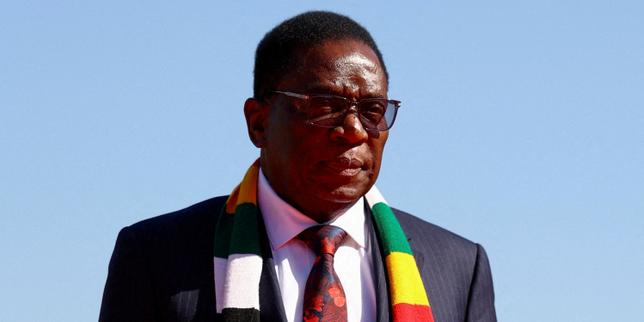
The Zimbabwean presidency has quietly executed a legal maneuver that effectively extends the incumbent executive's grip on power by two additional years. By signing into law a sweeping set of constitutional amendments, the administration has bypassed traditional democratic checks, signaling a deep-seated reluctance to allow a conventional electoral transition. This legislative shift fundamentally alters the country's political timeline, pushing back anticipated elections and cementing executive control over a fracturing state.
Understanding this move requires looking beyond the immediate surface of legislative debates. The restructuring of the constitution is not an administrative optimization. It is a calculated strategy born out of political survival.
The Mechanics of Constitutional Erasure
Constitutional amendments in young democracies rarely happen in a vacuum. They are usually reactions to internal pressures. In this case, the amendments dismantle the strict term limits and age caps that were painstakingly negotiated in the post-Mugabe era. By pushing the electoral horizon back by 24 months, the ruling elite secures a critical buffer zone.
This extension serves a dual purpose. First, it defuses the immediate threat of an organized opposition that had been gaining momentum around the previous electoral timeline. Second, it offers the ruling party a chance to manage its internal succession battles without the looming pressure of a general election. The process was fast-tracked through a parliament dominated by party loyalists, minimizing public debate and sidelining civil society groups who cried foul to no avail.
To understand how a state accomplishes this without triggering immediate domestic uprising, one must look at the judicial architecture. Over the past five years, the executive branch has systematically placed sympathetic figures within the higher courts. When civic groups filed urgent applications to declare the amendment process unconstitutional, the benches functioned exactly as designed. The challenges were dismissed on technicalities.
Economic Failure as a Catalyst for Political Stagnation
Dictatorships and hybrid regimes do not alter constitutions merely because they can. They do so because they are terrified of what happens if they do not. The driving force behind this sudden constitutional rewrite is a collapsing domestic economy.
The introduction of new currencies, skyrocketing inflation, and a chronic shortage of foreign reserves have left the population desperate. In a fair fight, an incumbent party presiding over such fiscal ruin would face annihilation at the ballot box. Therefore, the strategy is simple: eliminate the fair fight.
+------------------------------------+---------------------------------------+
| Previous Constitutional Framework  | New Amended Framework                 |
+------------------------------------+---------------------------------------+
| Strict 5-year presidential terms   | 2-year extension built into transition|
| Judicial independence protections  | Executive oversight on appointments   |
| Devolution of regional authority   | Centralized control over local funds  |
+------------------------------------+---------------------------------------+
By expanding the timeline, the administration buys time to execute short-term economic stabilization measures—likely funded by opaque resource-backed loans from foreign creditors who care little for democratic norms. These loans frequently trade long-term mineral rights, such as platinum and lithium deposits, for immediate cash injections used to placate the military and civil service.
The Regional Silence and Global Indifference
Western nations will issue the standard press releases expressing deep concern over the erosion of democratic institutions. These statements mean nothing. The reality of modern geopolitics is that international attention is fractured. With major conflicts drawing the focus of global powers, a constitutional coup in a southern African nation barely registers on the international priority list.
More telling is the reaction from regional neighbors. The Southern African Development Community (SADC) has historically favored stability over democracy. For South Africa and others in the bloc, a highly flawed but stable government in Harare is vastly preferable to the unpredictable chaos of a contested transition or a collapsing state that sends millions of refugees across the Limpopo River. Regional leaders will maintain diplomatic decorum, treat the amendment as an internal legislative matter, and move on.
This leaves the internal opposition in a perilous position. Deprived of international leverage and facing a heavily armed state apparatus funded by resource extraction, traditional protesting is a recipe for state-sponsored violence. The opposition must now pivot from preparing for an imminent election to organizing a long-term underground resistance strategy, a transition that many traditional political parties are ill-equipped to handle.
The Sinking Illusion of Electoral Reform
For years, international donors poured millions into Zimbabwean electoral trust funds, believing that better ballot boxes, biometric voter registration, and observer missions could guarantee a democratic outcome. This week's developments expose the fundamental flaw in that philosophy.
You cannot reform an election when the regime reserves the right to rewrite the rules of the game mid-match. The focus on election day itself was always a distraction from the broader capture of the state's legal framework.
The state has successfully weaponized the law. This phenomenon, often termed autocracy by decree, allows a regime to maintain an veneer of legality while stripping away the substance of democracy. They did not use tanks to extend the presidency; they used fountain pens.
The immediate fallout will be felt in the business community. Foreign direct investment, already scarce due to currency volatility, will dry up further as international risk assessors note the total lack of regulatory predictability. When a constitution can be rewritten in a matter of weeks to serve the ambitions of one man, no contract or property right can be considered secure. The regime has gambled that it can survive on the margins of the global economy, relying on illicit gold smuggling and bilateral deals with non-aligned powers to keep the state machinery running.
The two-year extension is a symptom of a deeper, systemic rot. It proves that the transition away from decades of authoritarian rule was an illusion, a rebranding exercise designed to court international capital before reverting to old habits. The political calendar has been reset, but the underlying social and economic crises remain, compressed like a spring that the state hopes its new constitutional powers will be strong enough to hold down.