Silence.
That is the first thing you notice when you stand next to an electric vehicle rolling off an assembly line in southern China, a hum so faint it feels less like a machine waking up and more like a deep breath taken before a plunge.
Consider a hypothetical engineer named Lin, standing on the polished concrete floor of the Guangzhou International Automobile Exhibition—known globally as Auto Guangzhou—watching thousands of visitors press their palms against the matte-finished hoods of sleek, battery-powered sedans. Lin has spent twelve years perfecting thermal management systems for lithium-iron-phosphate batteries, the kind of invisible engineering that keeps a car from catching fire in August heat or losing half its range in a January freeze. He knows the tolerances of every weld. He knows the cost of every gram of copper. Yet as he watches international buyers whisper into their phones beside a gleaming concept coupe, the anxiety tightening his chest has nothing to do with voltage or torque. It has everything to do with a room thousands of miles away, where diplomats from Washington, Beijing, and Moscow are arguing over invisible lines drawn across maps, tariffs, and supply chains.
On a standard news ticker, these stories sit in separate boxes. Box one: trilateral diplomatic friction and high-stakes talks between the United States, China, and Russia. Box two: sluggish domestic consumption, deflationary whispers, and broader macroeconomic concerns weighing down global markets. Box three: the dazzling, hyper-competitive floor of Auto Guangzhou, where domestic automakers unveil dozens of new models in a relentless race for market share.
Treating them as separate stories is a mistake. They are the same story, told at different altitudes.
The Architecture of a Divided World
To understand why an engineer in Guangdong cares about a diplomatic communiqué issued after closed-door talks between American, Chinese, and Russian officials, you have to strip away the flags and look at the periodic table.
Modern industrial power runs on minerals that do not care about borders. Lithium from South American salt flats or Australian hard-rock mines. Cobalt refined in coastal Chinese facilities. Nickel, palladium, and titanium flowing out of Russian territory and into global manufacturing arteries. Energy pipelines stretching across the Eurasian steppe, rerouted by sanctions and realigned by necessity.
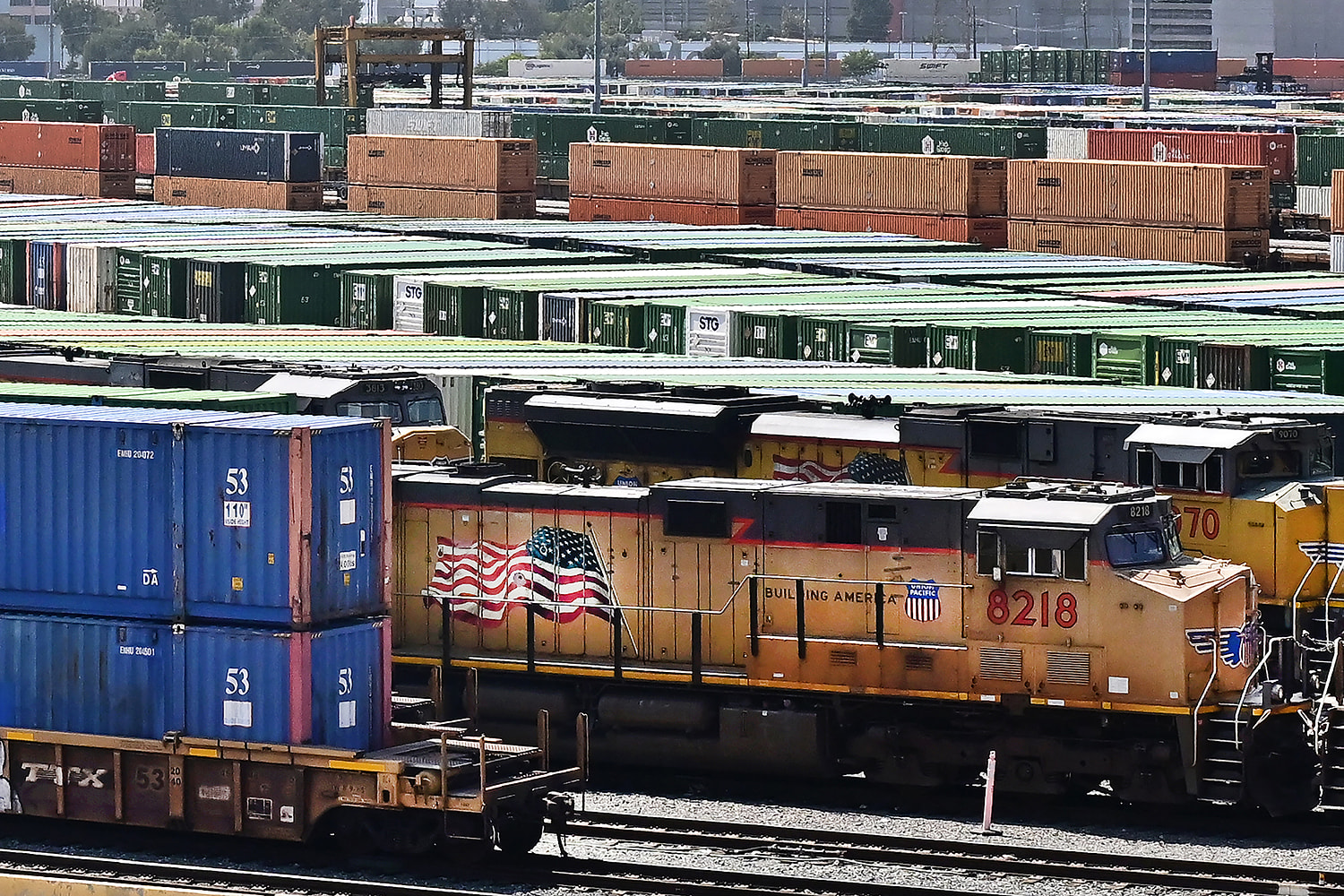
For decades, the operating assumption of global commerce was simple: efficiency wins. If a factory in Shenzhen could assemble a component thirty percent cheaper than a plant in Ohio, and a refinery in Norilsk could supply the raw nickel without interruption, capital flowed toward the lowest friction point. Politicians argued on television, while container ships quietly kept the peace.
That era is dead.
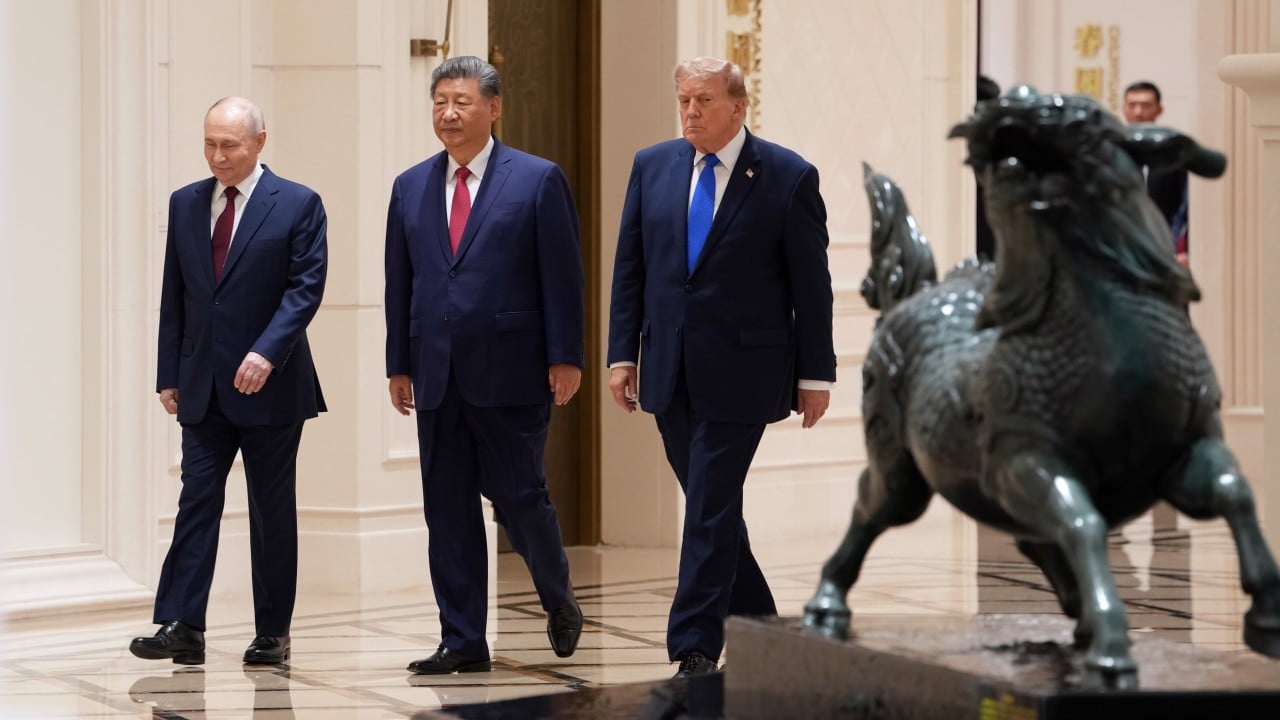
When diplomats from the United States, China, and Russia sit across from one another—whether in Geneva, Beijing, or on the margins of international summits—they are no longer merely negotiating arms control treaties or regional ceasefires. They are negotiating the terms of industrial survival. Every discussion about export controls on advanced semiconductors, every quiet warning regarding dual-use technologies, and every dispute over maritime shipping lanes translates directly into the price tag on a family sedan.
Think of the global economy not as a single, smoothly running engine, but as a massive suspension bridge spanning a widening canyon. For thirty years, engineers added lanes, reinforced cables, and celebrated the speed of the traffic crossing from east to west and north to south. Today, the three primary anchors holding that bridge aloft are pulling in incompatible directions. Washington demands resilience and security, even if it means duplicating factories at enormous expense. Beijing demands market access and technological self-reliance, pouring state-backed capital into advanced manufacturing to offset a cooling property sector. Moscow, locked in prolonged confrontation with the West, deepens its energy and raw-material alignment with China, reshaping trade flows across Asia.
Nobody on the bridge feels the cables snap all at once. Instead, you feel a subtle, sickening sway beneath your tires.
The Weight Inside the Wallet
Step away from the diplomatic podiums and walk down a residential street in Wuhan, Munich, or Michigan. The macroeconomic anxieties dominating financial headlines—sticky inflation in the West, fragile consumer confidence and real estate overhang in China, rising sovereign debt everywhere—are not abstract charts. They are the hesitation in a shopper's hand before swiping a credit card.
In China, the economic puzzle is particularly acute. For twenty years, household wealth was stored in concrete and rebar. When an apartment in a tier-two city reliably appreciated every year, families felt rich enough to spend freely on electronics, travel, and dining out. As the property market entered a painful, multi-year correction, that psychological safety net vanished. Households began saving aggressively, hoarding cash against an uncertain future. Industrial output remained staggering—factories kept humming, churning out solar panels, steel, and vehicles—but domestic buyers grew cautious, hunting relentlessly for bargains.
Meanwhile, across the Pacific and throughout Europe, households wrestled with the lingering aftershocks of higher interest rates and elevated living costs. A mid-level manager in Frankfurt or Chicago looking at a new car no longer asks which model has the best leather upholstery; they calculate the monthly payment against mortgage rates, grocery bills, and the nagging fear that their industry might be the next one restructured by automation or trade barriers.
I remember sitting in a cramped, fluorescent-lit supply chain office during the height of the semiconductor shortages a few years back, watching a procurement director stare at a spreadsheet where the price of a basic microcontroller had jumped four hundred percent in six months. He rubbed his temples and said something that has stayed with me ever since: "We spent twenty years removing every ounce of fat from the system so consumers could save fifty dollars. Now there's no cushion left when someone throws a wrench into the gears."
That lack of cushion is what makes current economic concerns feel so personal. When growth slows and geopolitical friction rises simultaneously, companies cannot simply absorb higher tariff costs or currency swings. They pass them along, cut margins to the bone, or freeze hiring.
The Showroom as a Pressure Cooker
Which brings us back to the blinding lights of Auto Guangzhou.
If you want to see where geopolitical tension and economic anxiety collide in physical form, walk the aisles of a major Chinese auto show. It is not a polite trade exhibition; it is a Darwinian arena.
More than a hundred brands compete for attention under one roof, surrounded by towering LED screens, armies of livestreamers broadcasting to millions of viewers on their phones, and executives pacing the floors like cornermen before a championship fight. Over the last several years, Chinese automakers—led by giants like BYD alongside ambitious challengers like Xiaomi, Li Auto, XPeng, and Nio—have achieved something that stunned Detroit, Wolfsburg, and Tokyo. They turned the automobile from a mechanical marvel into a rolling smartphone, slashing battery costs while packing cabins with voice-activated artificial intelligence, autonomous driving sensors, and living-room comfort.
In China, new energy vehicles—battery-electric and plug-in hybrids—crossed the threshold from niche curiosity to market majority, capturing more than half of monthly passenger car sales in the world's largest auto market. Foreign legacy brands, which once treated China as an effortless profit engine, suddenly found themselves fighting to hold onto single-digit slices of the electric segment.
Yet beneath the triumphalist music and laser light shows at Auto Guangzhou lies a brutal truth: almost nobody is making easy money.
Because domestic consumers are price-sensitive and overcapacity looms across the manufacturing sector, automakers have locked themselves into a punishing price war. Models are discounted weeks after launch. Suppliers are squeezed for quarterly price reductions. Smaller startups vanish overnight, leaving owners wondering who will update their car's software next year.
To survive this domestic pressure cooker, Chinese automakers must export. They need the higher profit margins available in Europe, Southeast Asia, Latin America, and the Middle East.
And right at the border, they run headfirst into the diplomats from box one.
The Tariff Wall and the Counter-Move
When the United States imposes steep tariffs on Chinese electric vehicles and batteries, and the European Union layers countervailing duties onto imported models over state-subsidy concerns, those decisions are often framed as simple protectionism—shielding domestic factory workers from underpriced foreign competition.
Look closer, and the chessboard grows far more intricate.
An automotive supply chain is like a deeply rooted banyan tree; you cannot pull up one trunk without dragging half the forest floor along with it. Even when a vehicle is assembled in Mexico, Hungary, or Thailand to bypass direct import duties, where did the battery cells originate? Where was the cathode material processed? Whose software architecture runs the infotainment screen?
During trilateral and bilateral talks involving Washington, Beijing, and Moscow, these industrial realities hover over every agenda item like uninvited guests. American negotiators push allies to tighten screening on Chinese technology and curb exports of high-end chips and manufacturing equipment, arguing that economic security and national security are now indistinguishable. Russian officials, navigating sweeping Western sanctions, lean heavily on Chinese industrial goods—turning Russia into one of the largest foreign destinations for Chinese automobiles—while offering discounted oil, gas, and metals in return. Beijing pushes back against what it calls containment, filing trade disputes, tightening export rules on critical minerals like gallium, germanium, and graphite, and accelerating domestic chipmaking efforts.
Imagine a hypothetical European parts supplier—let us call her Clara—running a mid-sized precision stamping plant outside Stuttgart. For forty years, her family business supplied transmission housings to German automakers, who sold millions of combustion cars to Chinese buyers. Today, Clara faces a triple squeeze. Her traditional German clients are losing market share in China to domestic electric rivals. Energy costs in Europe remain structurally higher than they were before Russia's invasion of Ukraine disrupted pipeline gas. And if she wants to pivot to supplying components for electric vehicles, she has to navigate an increasingly tangled web of compliance rules determining how much Chinese-processed material is allowed inside a battery pack before it forfeits tax credits in North America or triggers scrutiny in Brussels.
Clara is not a diplomat. She has never read a white paper on multipolar deterrence. Yet her factory's survival depends entirely on whether the people in those diplomatic rooms find a way to manage their rivalry without shattering the commercial arteries keeping her machines running.
Why the Old Playbook Fails
It is tempting to look at all of this—the diplomatic standoffs, the sluggish economic numbers, the ferocious competition on the auto show floor—and assume we are simply living through another cyclical downturn. Markets dip, politicians posture, and eventually business returns to normal.
That assumption ignores a structural shift in how power is measured.
In the twentieth century, industrial dominance belonged to whoever controlled oil fields and internal combustion assembly lines. In the twenty-first century, dominance belongs to whoever controls the clean-energy manufacturing stack—batteries, solar modules, grid equipment, electric drivetrains—and the artificial intelligence algorithms layered on top of them.
China recognized this shift early and deployed massive industrial policy, cheap credit, and fierce domestic competition to build an unmatched manufacturing ecosystem. The United States and Europe realized late that ceding the entire supply chain for future transportation and energy carried strategic risks they could no longer stomach. Russia, isolated from Western capital and technology, became both a cautionary tale about weaponized interdependence and a critical supplier of raw commodities to Beijing's industrial machine.
When three major powers view the same factories and supply chains as vital to their survival, compromise becomes extraordinarily difficult. If Washington eases restrictions on advanced semiconductors, critics warn it accelerates Beijing's military and AI capabilities. If Beijing reins in industrial subsidies and allows excess factory capacity to go bankrupt, it risks urban unemployment and social unrest at home during an already fragile economic recovery. If Moscow steps back from its strategic alignment with China, it loses its primary economic lifeline.
Nobody wants a catastrophic rupture—the mutual economic damage would trigger a global depression that no government could easily survive. Yet nobody feels safe enough to lower their guard.
Living Inside the Transition
So what happens when an unstoppable technological transition collides with an immovable geopolitical wall?
We get a messier, more expensive, and far more inventive world.
Watch closely at what happens on the margins of Auto Guangzhou, away from the main stages. You will see executives from legacy Western and Japanese automakers quietly walking the booths of Chinese battery and software startups, not to complain about competition, but to sign joint-venture licensing deals. If you cannot beat the speed of Chinese EV development, you license their platform, co-develop software architectures, and build factories inside tariff walls in Europe, Southeast Asia, or the Americas.
At the same time, look at the battery labs in Nevada, South Korea, and Germany, where engineers are racing to commercialize sodium-ion batteries, solid-state cells, and dry-electrode manufacturing—technologies designed specifically to bypass reliance on scarce minerals or bottlenecked refining steps.
History shows that trade walls rarely stop technological diffusion; they merely reroute it, forcing companies to localize production, diversify suppliers, and rethink every assumption about cost and geography. In the 1980s, fierce trade friction between Washington and Tokyo over fuel-efficient Japanese cars led to voluntary export restraints, heated rhetoric on Capitol Hill, and predictions of industrial ruin. Within a decade, Japanese automakers were building factories across Kentucky, Ohio, and Tennessee, reshaping American manufacturing from the inside out.
Today's stakes are broader, the technologies more deeply entwined with national security, and the macroeconomic backdrop far less forgiving. There is no guarantee that the transition will unfold smoothly. Consumers will likely pay more for vehicles than they would in an open, frictionless market. Automakers will burn through billions of dollars in capital, and several household names will disappear before the dust settles.
Late on the final evening of Auto Guangzhou, after the livestreamers pack up their tripods and the cleaning crews begin sweeping confetti off the carpeted aisles, the exhibition hall grows quiet again.
Our hypothetical engineer, Lin, walks past a row of gleaming electric sedans waiting to be loaded onto transport trucks. Some are bound for dealerships in Chengdu and Shanghai. Others will be hoisted onto roll-on, roll-off car carriers at the port of Nansha, sailing toward ports in Rotterdam, Bangkok, or São Paulo—crossing oceans governed by treaties written in rooms where engineers are never invited, carrying the quiet, electric weight of a world trying to figure out how to compete without breaking apart.