The tech press is currently obsessed with a fairytale. The narrative is simple: quantum computing is hitting its "big leap," and the only thing standing between us and a god-like computational era is building enough data centers to house the hardware.
It is a lie. Worse, it is a misunderstanding of physics that will burn through billions in venture capital before the smoke clears.
I have watched boards of directors authorize nine-figure spends on "quantum-ready" infrastructure based on the assumption that a quantum processor is just a faster version of a GPU. It isn’t. We are currently watching the industry try to build a garage for a car that hasn't been invented yet, using blueprints for a bicycle.
The Cooling Lie
The most persistent myth is that data centers just need "better cooling" to handle quantum rigs.
Standard data centers worry about the ASHRAE standards. They fight to keep rooms at 18°C to 27°C. They brag about PUE (Power Usage Effectiveness) ratios. In the quantum world, these metrics are irrelevant. We aren't talking about air conditioning; we are talking about the absolute cessation of molecular motion.
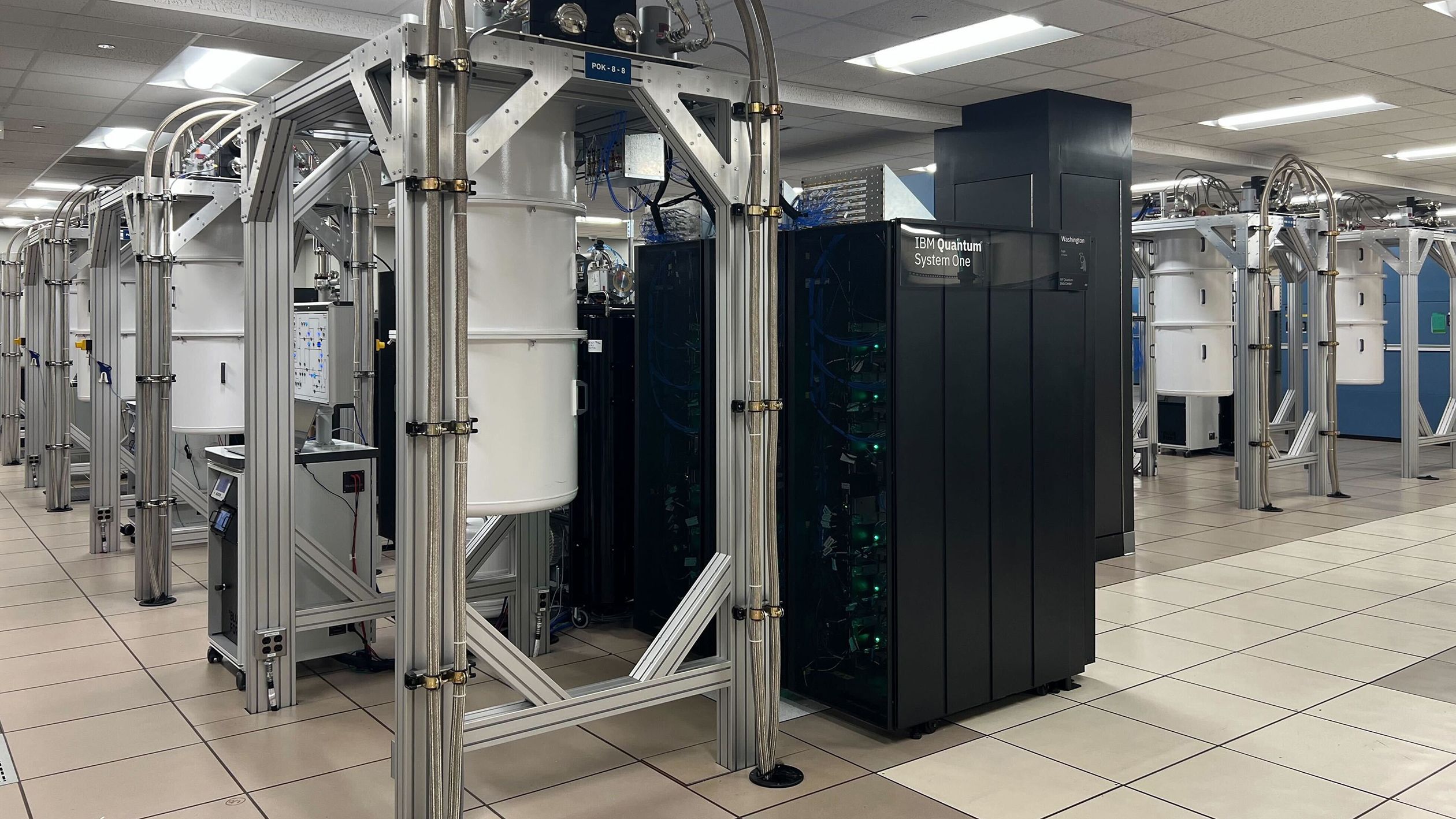
Most viable quantum systems—specifically superconducting qubits used by the likes of IBM and Google—require temperatures around 15 millikelvin. That is $0.015$ Kelvin. For context, deep space is a balmy 2.7 Kelvin.
You do not "retrofit" a data center for this. You cannot just "scale up" liquid nitrogen loops. You are looking at dilution refrigerators that cost millions, vibrate enough to ruin their own calculations, and possess the footprint of a small apartment. The idea that we will have "racks" of these in a standard North Virginian data center by 2030 is a fantasy sold by people who haven't looked at a phase diagram since high school.
Error Correction is the Hidden Tax
If you listen to the "big leap" enthusiasts, they talk about qubit counts. "We hit 400 qubits! We’re aiming for 1,000!"
This is vanity metrics at its finest. In the classical world, if a bit flips from a 0 to a 1, we have checksums to fix it. In the quantum world, the moment a qubit interacts with a single stray photon or a microscopic vibration, the entire calculation collapses into "noise." This is decoherence.
To get one "logical" qubit—a qubit that actually works and holds its state—you currently need thousands of "physical" qubits to act as a buffer.
- The Consensus: We need more data centers to house more qubits.
- The Reality: We need a fundamental breakthrough in material science that makes qubits less fragile.
Building a massive data center to house 10,000 noisy physical qubits is like building a massive stadium to host a game of telephone played by people who don't speak the same language. You aren't getting a better result; you're just making the failure louder and more expensive.
The Latency Paradox
Data centers thrive on connectivity. We talk about "edge computing" and "low latency."
Quantum computers don't play well with others. If you want to use a quantum processor to accelerate a classical workload (the "hybrid" model everyone keeps pitching), you hit a wall. Moving data from a classical CPU to a quantum processing unit (QPU) and back again introduces bottlenecks that negate the quantum speedup for almost every near-term use case.
Unless the QPU is literally sitting on the same substrate as the classical processor—which is physically impossible given the temperature requirements—the "big leap" stays stuck in the fiber optic cables.
The Energy Trap
We are told quantum computing will save the planet by solving battery chemistry and carbon capture. Perhaps. But the energy cost to get there is being ignored.
A dilution refrigerator runs 24/7. The specialized lasers for trapped ion systems suck power. The vacuum pumps required to keep the "shroud" around the processor pristine are energy hogs. When you stack the power requirements of the cooling infrastructure against the actual computational output, the efficiency is abysmal.
I’ve seen energy estimates for a "scaled" quantum data center that would require its own dedicated small modular reactor (SMR). We are trying to solve climate change by building the most energy-inefficient machines in human history.
The Wrong Questions
Investors and CTOs are asking: "How do we secure space in the quantum data center?"
They should be asking: "Why are we trying to use a Ferrari to go to the grocery store?"
Quantum computing is not a general-purpose tool. It is a specialized scalpel for a very specific set of mathematical problems:
- Prime factorization (Shor's Algorithm)
- Unstructured search (Grover's Algorithm)
- Molecular simulation
If your business doesn't involve high-level cryptography or simulating the electron shells of a new catalyst, you don't need a quantum computer. You certainly don't need a "quantum-ready" data center. Most companies would see a 100x better return by simply optimizing their existing SQL databases or actually cleaning their training data for their "AI" models.
The Infrastructure Bubble
We are currently in the "Data Center Land Grab" phase of the bubble. Real estate investment trusts (REITs) are rebranding themselves as "Quantum Hubs" to juice their stock price.
It's a dangerous game. The hardware is evolving too fast for the buildings. If a company builds a multi-billion dollar facility optimized for superconducting qubits, and the industry pivots to photonics or topological qubits (which have vastly different environmental needs), that building becomes a very expensive monument to obsolescence.
Microsoft’s pursuit of topological qubits is a prime example. If they succeed, the cooling requirements change. If neutral atom providers like QuEra win, the vacuum requirements change.
Investing in quantum infrastructure today is like building a specialized airport in 1903 because you saw the Wright brothers fly for twelve seconds. You don't even know how big the wings are going to be yet.
The Actionable Truth
Stop looking for "quantum-ready" facilities. They don't exist.
If you are a CEO or a tech lead, your strategy should be:
- Quantum-Agile, Not Quantum-Integrated: Use cloud-based quantum simulators. Let IBM and AWS eat the CAPEX of the refrigerators.
- Focus on Post-Quantum Cryptography (PQC): The real threat isn't that you won't have a quantum computer; it's that your competitors will use one to break your encryption. Fix your security, not your server room.
- Audit the Math: Ensure your problems actually require quantum interference. If a classical heuristic can solve it in roughly the same time, the quantum "leap" is just a stumble into a money pit.
The data center isn't the spotlight. It's the distraction. The real work is happening in the math and the vacuum chambers, and it doesn't care about your square footage.
Stop building garages for ghosts.