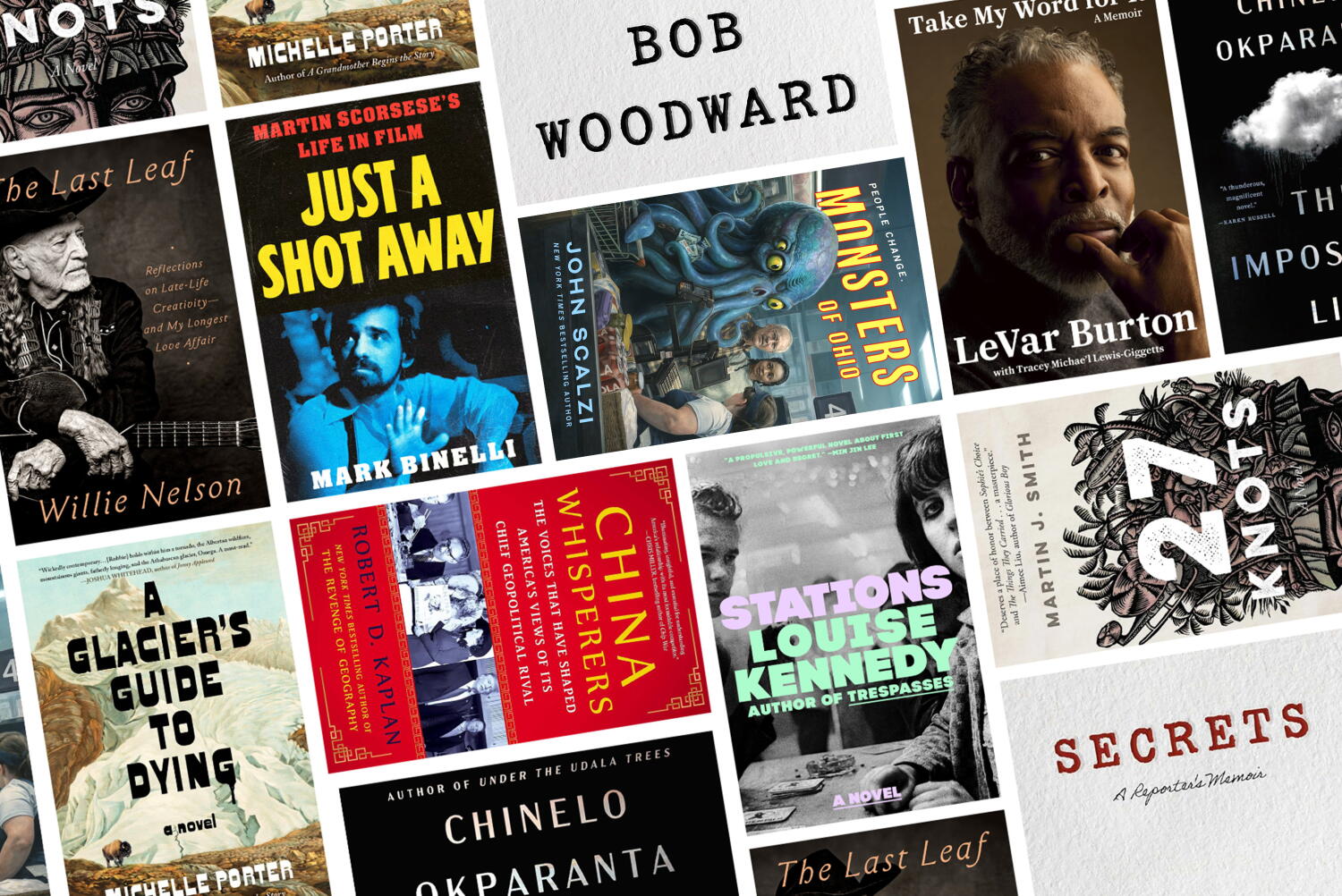
Standard book recommendation lists treat November publishing slates as arbitrary collections of celebrity memoirs and political exposés. That framing misses the structural economics driving Q4 release schedules. Between October 15 and November 30, major trade publishers execute their highest-capital allocation strategy of the fiscal year, concentrating frontlist marketing budgets into titles engineered for the fourth-quarter gifting market. When Willie Nelson, Bob Woodward, and LeVar Burton release major nonfiction works in the same calendar window, the clustering reflects a deliberate risk-mitigation model built around pre-existing audience equity, gift-buyer psychology, and media saturation cycles.
The Structural Economics of Q4 Frontlist Allocation
Book publishing operates on an asymmetric return profile. Roughly 80% of frontlist titles fail to earn back their advances, forcing publishing houses to rely on a narrow tier of predictable bestsellers to subsidize experimental acquisitions. November represents the final deployment window to capture holiday retail volume, which historically accounts for 30% to 40% of annual hardcover unit sales in North American trade publishing.
To secure retail shelf space at major chains and independent bookstores during this period, publishers must minimize customer acquisition cost (CAC). Launching an unknown author in November requires expensive awareness campaigns against peak holiday advertising rates. Launching an established cultural figure transfers the discovery burden onto decades of accumulated brand equity.
This dynamic produces three distinct editorial archetypes on the November release calendar:
- Legacy Cultural Icons: Figures like Willie Nelson and LeVar Burton carry multi-generational recognition that converts directly into low-friction gift purchases.
- Institutional Political Chroniclers: Journalists like Bob Woodward operate on an event-driven news cycle, leveraging national broadcast appearances to drive immediate first-week velocity.
- Niche Authority Nonfiction: Biographies, historical retrospectives, and essay collections targeting specific demographic verticals (music enthusiasts, policy followers, literary readers) with high gift-giving propensity.
The Three Pillars of November Nonfiction Valuation
Evaluating a Q4 book slate requires separating editorial merit from commercial mechanics. Readers selecting books for personal consumption optimize for narrative depth or instructional utility. Gift buyers—who drive a disproportionate share of November hardcover sales—optimize for signal value and recipient recognition.
1. Audience Liquidity and Cross-Generational Reach
Audience liquidity measures how easily an author's existing fanbase converts into book buyers without paid media intervention. Willie Nelson exemplifies maximum audience liquidity across overlapping demographics. His catalog spans outlaw country traditionalists, counterculture listeners, and modern festival audiences. A memoir or lyric-annotated retrospective from Nelson requires zero explanation on a retail table; the cover image alone executes the pitch.
LeVar Burton operates through a different liquidity mechanism: nostalgic trust. Across Roots, Star Trek: The Next Generation, and Reading Rainbow, Burton established a 40-year association with literacy and moral pedagogy. For publishers, a Burton release possesses built-in institutional alignment with libraries, educators, and parents. The marketing funnel does not need to build credibility from scratch; it simply activates dormant affinity among adults who grew up watching him on public television.
2. Information Asymmetry and News-Cycle Velocity
Political nonfiction follows a perishable value curve. Bob Woodward's releases rely on proprietary access and primary-source documentation regarding executive-branch decision-making. Unlike memoirs, which retain steady backlist demand over years, investigative political books front-load their revenue into the first 21 days post-publication.
The commercial engine here is embargoed media rollout. Publishers coordinate exclusive excerpts with major newspapers and prime-time broadcast interviews during release week. Each news cycle generated by a specific revelation acts as unpaid top-of-funnel advertising. If a book breaks three distinct headlines across national networks during its launch window, the publisher captures massive unit volume before public attention shifts to the next political cycle.
3. Gift-Buyer Risk Reduction
Purchasing a book for another person carries high social friction. If the recipient dislikes the prose or disagrees with the premise, the gift fails. To eliminate this friction, Q4 buyers gravitate toward consensus icons and authoritative histories.
A hardcover biography or curated collection functions as a physical status object. Thick paper stock, archival photography, and recognizable spine typography justify the $30 to $40 retail price point. Standard reading lists rarely account for physical production specs, yet binding quality and trim size directly govern whether a title moves off a front-of-store display table in late November.
Deconstructing the Core November Archetypes
Understanding why specific titles dominate November coverage requires examining the operational mechanics behind each category rather than summarizing plot points or blurbs.
The Annotated Retrospective and Legacy Memoir
When musicians or actors publish late-career books in November, they frequently utilize structured formats—such as song-by-song breakdowns, annotated lyrics, or thematic essays—rather than strict chronological autobiographies. This structural choice solves two operational problems:
- Production Timeline Compression: Curating existing creative artifacts with commentary requires less developmental editing time than constructing a 350-page narrative arc from scratch, allowing publishers to hit rigid Q4 print deadlines.
- Modular Reading Behavior: Holiday gift recipients often read intermittently. Modular chapters allow a reader to open the book to any page, absorb a self-contained anecdote, and set it down without losing narrative momentum.
The limitation of this format is shallow analytical depth. Because the author controls the selection of artifacts, uncomfortable career periods or contradictory public statements are routinely omitted. Readers seeking objective historical assessment should treat these works as curated primary-source self-portraits rather than definitive biographies.
The Real-Time Political Post-Mortem
Investigative releases timed for November capitalize on heightened civic attention surrounding autumn election cycles and year-end policy debates. Authors like Woodward utilize deep-background interviewing techniques—reconstructing closed-door meetings through contemporaneous notes, calendars, and multi-party corroboration.
The operational advantage of this methodology is speed to market. By focusing on recent administrative decisions, the book serves as an immediate corrective to official press briefings. The structural vulnerability lies in historical myopia. Events documented within months of occurrence lack long-term archival context. Subsequent declassifications or long-term economic outcomes frequently alter the significance of episodes that appeared decisive at the time of publication.
Cultural Criticism and Essay Collections
Alongside celebrity memoirs and political reporting, November slates routinely include essay collections from prominent cultural critics, comedians, and public intellectuals. Publishers slot these titles into Q4 to capture the "stocking stuffer" and white-elephant gift tiers—price points between $18 and $28 where buyers seek intelligent, low-risk options for coworkers or extended family.
Essay collections succeed commercially when the author maintains a high-frequency digital footprint (podcasts, newsletters, or broadcast commentary). The book acts as a physical monetization vehicle for an audience that otherwise consumes the author's output for free. Without an active weekly distribution channel, standalone essay collections suffer severe discoverability bottlenecks in crowded Q4 retail environments.
How to Audit a Q4 Reading List for Signal vs. Noise
Standard "best of the month" roundups aggregate publishers' press releases without filtering for editorial substance. Readers and book buyers can separate high-value releases from purely commercial packaging by applying a four-step diagnostic filter before purchasing.
- Check the Advance-to-Promotion Ratio: High-profile November titles often feature massive print runs (250,000+ copies) backed by national morning-show bookings. High visibility indicates marketing spend, not editorial rigor. Verify whether the author wrote the manuscript independently or utilized a uncredited collaborator; ghostwritten celebrity memoirs frequently recycle anecdotes already available in archival magazine profiles.
- Evaluate Primary Source Density: For political, historical, or biographical releases, inspect the endnotes and bibliography before committing to the hardcover. Works anchored in newly released transcripts, personal correspondence, or on-the-record interviews retain reference value long after the November news cycle fades. Books built primarily on secondary press clippings lose relevance within six months.
- Assess Format-to-Content Fit: Determine whether the subject matter actually benefits from long-form print. If a comedian's or broadcaster's primary appeal relies on vocal inflection, timing, and improvisational delivery, the print edition often strips away their core asset. In these cases, the unabridged audiobook—narrated by the author—delivers superior utility over the physical hardcover.
- Account for Paperback Arbitrage: Hardcover releases in November carry peak retail pricing to subsidize Q4 marketing overhead. Unless a title contains time-sensitive political reporting or serves an immediate gifting deadline, delaying purchase by nine to twelve months captures the exact same text in trade paperback at a 40% to 50% discount.
Strategic Allocation for Readers and Gift Buyers
Treat November publishing lists as retail merchandising maps rather than curated literary canons. When purchasing gifts for recipients with broad, mainstream tastes, lean into the Q4 mechanics: select legacy cultural memoirs or visually rich retrospectives where brand recognition eliminates selection risk. When buying for personal enrichment or serious historical study, bypass the November hype cycle entirely—wait for independent critical reviews in January, prioritize works with verifiable primary-source documentation, and use audiobook formats for voice-driven memoirs where print flattens the author's delivery.


