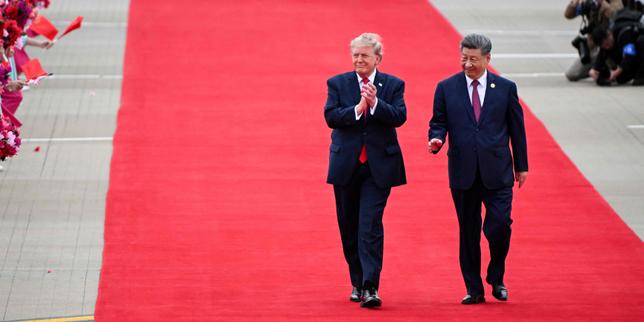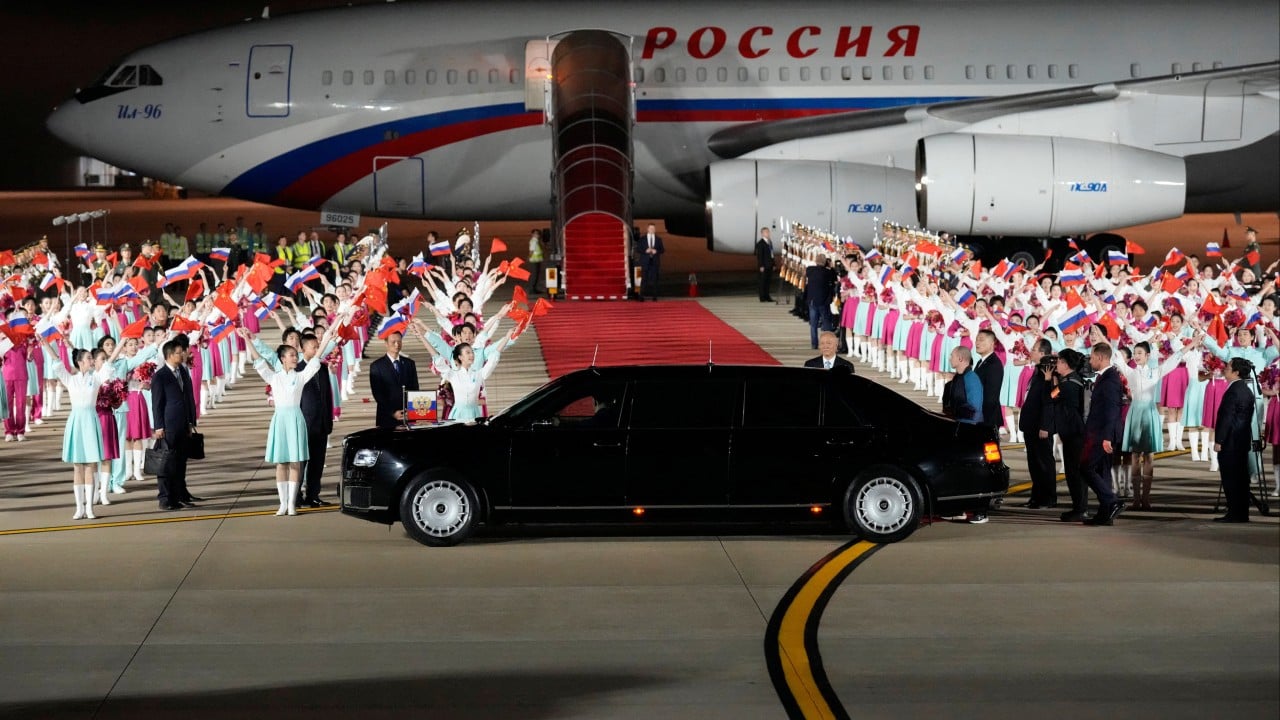
Most people watching news clips of Russian President Vladimir Putin arriving in Shenzhen see a shiny black luxury sedan and assume it's just standard presidential vanity. They're missing the point entirely. When Putin stepped off his plane in southern China in October 2023—and again during subsequent high-stakes diplomatic trips—he didn't ride in a Chinese-supplied Hongqi state car like many visiting dignitaries do. He brought his own custom-built Russian Aurus Senat limousine, flown in thousands of miles ahead of him on a heavy military transport aircraft.
That car isn't just transportation. It's a rolling geopolitical statement, a mobile command bunker, and a deliberate flex of Russian industrial sovereignty right in the heart of China's premier tech hub.
What Is the Aurus Senat Limousine Actually Doing in China
If you've ever followed presidential logistics, you know that heads of state don't just grab an Uber from the tarmac. The United States Secret Service famously flies "The Beast"—Cadillac One—everywhere the U.S. president travels aboard C-17 Globemaster cargo planes. Putin does the exact same thing with his Aurus Senat, typically transported via an Ilyushin Il-76 heavy airlifter operated by the Special Flight Squadron Rossiya.
Why haul a seven-ton armored vehicle across Asia when Beijing would happily provide a flagship Hongqi N701?
First comes pure operational security. Foreign intelligence agencies aren't naive, and even between "no-limits" strategic partners like Moscow and Beijing, trust stops at the armored door of a head of state's vehicle. Using a host nation's car means sitting inside an environment wired, maintained, and swept by someone else's security services. Inside the Aurus Senat, every encrypted communication line, satellite uplink, and signal-jamming module belongs strictly to Russia's Federal Protective Service (FSO).
Second is the optics of industrial pride. Shenzhen isn't just another Chinese city. It's the cradle of China's economic miracle, home to Huawei, BYD, Tencent, and DJI. Showing up in a purely Russian-engineered luxury limousine sends a clear message to both domestic audiences back home and Chinese hosts on the ground. Moscow wants to project that it isn't merely a junior partner supplying raw oil and gas to China—it still builds complex, high-end machines of its own.
Inside Putin's Rolling Fortress
Let's strip away the hype and look at what the Aurus Senat actually is under the sheet metal. Developed under Russia's Kortezh (Cortege) project starting around 2013 by the NAMI Central Scientific Research Automobile and Automotive Engines Institute, the car was specifically designed to replace the foreign Mercedes-Benz S600 Pullman Guard limousines Russian leaders previously relied on.
That detail matters. For decades after the Soviet Union collapsed, Russian presidents rode in German armor. Relying on a NATO member's flagship car became politically untenable after 2014 sanctions hit. Putin wanted an indigenous replacement, and NAMI delivered the Senat.
Here's what separates the presidential state version from the civilian Aurus Senat models sold to oligarchs and foreign leaders:
- Ballistic and blast protection: While exact armor ratings remain classified by the FSO, independent defense analysts and automotive engineers note the presidential limousine meets or exceeds VR10 ballistic standards. It's built to survive armor-piercing rifle rounds, hand grenades, and underside explosive blasts.
- Run-flat mobility: Even if every tire gets shredded by gunfire or road spikes, reinforced internal steel rings allow the massive vehicle to keep moving at high speeds until it clears an ambush zone.
- Independent life support: The cabin features an autonomous air filtration and oxygen supply system. If chemical or biological agents are deployed outside, the interior seals completely off from external air.
- Hybrid V8 powertrain: Under the hood sits a 4.4-liter twin-turbocharged V8 engine paired with an electric motor and a nine-speed automatic transmission, pushing out roughly 598 horsepower. It won't win drag races against a sports car because of the sheer weight of its armor plating, yet it moves with surprising urgency for a vehicle weighing north of 6.5 metric tons.
- Encrypted mobile office: The rear cabin functions as a secure bunker where Putin can hold classified video conferences, review intelligence briefings, and maintain direct command links with Russia's nuclear forces while in transit.
Honestly, looking closely at the Senat's exterior lines, you can spot familiar styling cues. Critics have long pointed out its visual resemblance to a Rolls-Royce Phantom or Ghost, particularly around the massive vertical chrome grille. NAMI engineers even consulted with Porsche Engineering during early powertrain development phases before Western sanctions severed those ties. Still, the final armored configuration is uniquely Russian in execution.
Why Shenzhen Made This Visit Different
Context changes everything in diplomacy. When Putin visited Shenzhen, he wasn't just attending a ceremonial banquet in Beijing's Great Hall of the People. Shenzhen represents the sharpest edge of Chinese innovation, private enterprise, and manufacturing dominance.
Think about the contrast on those Shenzhen streets.
Shenzhen was the first major city in the world to electrify its entire public bus and taxi fleet. Its roads are packed with sleek, software-defined electric vehicles from BYD, NIO, and XPeng. Meanwhile, Putin's motorcade rolled through those ultra-modern avenues anchored by a roaring, twin-turbo V8 Russian land yacht flanked by Aurus Arsenal support vans and local Chinese police escorts.
It was a visual collision of two very different industrial models. China's economic power rests on hyper-efficient consumer manufacturing, battery supply chains, and global scale. Russia's state-backed industrial prestige still revolves around heavy engineering, defense tech, and sovereign prestige projects.
Yet both leaders needed that photo op. For Chinese President Xi Jinping, hosting Putin in southern China underscored Beijing's willingness to deepen economic and technological ties with Moscow despite intense pressure from Washington and Brussels. For Putin, rolling through China's Silicon Valley in his own custom limousine demonstrated resilience—proof that Western isolation hadn't grounded the Kremlin's diplomatic reach.
The Aurus as a Literal Diplomatic Gift
Putin doesn't just ride in the Aurus Senat to look tough. He uses the car itself as an instrument of statecraft—literally handing over the keys to win favor with key allies.
You don't have to look far for proof. In February 2024, Putin gifted a brand-new Aurus Senat limousine to North Korean leader Kim Jong Un, who promptly rode around Pyongyang in it despite United Nations Security Council resolutions banning the supply of luxury vehicles to North Korea. Later that same year, during Putin's historic visit to Pyongyang, the two leaders took turns driving each other around in the car while cameras rolled for global media.
It didn't stop with North Korea. Putin also presented an Aurus Senat to Bahrain's King Hamad bin Isa Al Khalifa during talks in Moscow, and he's shown off the vehicle to United Arab Emirates President Sheikh Mohamed bin Zayed Al Nahyan and Egyptian President Abdel Fattah el-Sisi.
There's a clear strategy at work here. Traditional superpowers use fighter jets, infrastructure loans, or trade deals as diplomatic currency. Russia has turned an ultra-exclusive luxury sedan into a bespoke status symbol for authoritarian and non-aligned leaders who want prestige without buying American or European luxury brands.
What Most Commentators Get Wrong About Presidential Limousines
Whenever photos of Putin's motorcade go viral, armchair commentators tend to fall into one of two traps. Either they dismiss the whole spectacle as empty dictator vanity, or they treat the Aurus Senat like an indestructible sci-fi tank.
Both takes miss reality.
First, bringing your own armored car isn't unusual for major powers—it's standard protocol. U.S. presidents haven't ridden in a foreign-built vehicle on an official trip in decades. Chinese President Xi Jinping similarly began flying his own Hongqi N701 limousine abroad for major summits, including his 2023 trip to San Francisco for the APEC summit. When Xi's Hongqi rolled up alongside Joe Biden's Cadillac Beast at the Filoli estate in California, Biden famously admired the Chinese car and remarked on how much it looked like his own ride.
Second, no limousine is invincible. Even the heaviest armored vehicles built by the U.S. Secret Service or Russia's FSO are designed to buy critical seconds—not fight a prolonged battle. Their real job is surviving an initial ambush long enough for the driver to execute a high-speed J-turn or ram through a blockade while counter-assault teams engage threats.
And third, there's a massive gap between Russia's presidential fleet and its commercial auto ambitions. While Putin's personal Senat performs reliably under heavy state maintenance, the broader Aurus brand has struggled to become a real commercial competitor to Bentley, Rolls-Royce, or Mercedes-Maybach. Sanctions choked off access to Western microchips, specialized transmissions, and high-end components, forcing Russian engineers to scramble for domestic or Chinese substitutes. Production numbers remain tiny—measured in dozens or low hundreds per year rather than thousands.
How to Spot the Real Signals in Diplomatic Motorcades
Next time you watch footage of an international summit—whether in Shenzhen, Beijing, Moscow, or Washington—pay attention to the cars on the tarmac. Diplomatic theater rarely leaves anything to accident. Every detail tells you something concrete about how two governments actually view each other:
- Check the license plates and flags: When a visiting leader uses a host nation's car, you'll see local state plates and dual flags mounted on the front fenders. When Putin brings his Aurus Senat to China, the car often carries Russian diplomatic or presidential plates, signaling complete operational independence on foreign soil.
- Watch the escort formation: Notice which vehicles immediately surround the limousine. Local police motorcycles and patrol cars handle traffic control at the outer perimeter, while unmarked black vans and SUVs carrying the visiting leader's own armed security detail stay glued to the rear bumper.
- Look at who drives whom: In traditional diplomacy, heads of state never touch a steering wheel. When Putin and Xi or Putin and Kim Jong Un break protocol to personally drive or inspect each other's state cars on camera, they're staging deliberate intimacy meant to signal personal trust to international observers.
- Track the cargo flights beforehand: Aviation enthusiasts and open-source intelligence analysts regularly spot heavy transport aircraft like the Il-76 or C-17 landing at host airports 24 to 48 hours before an official announcement. Those advance flights confirm a leader is bringing their own armored fleet rather than relying on local hospitality.
Putin's trip to Shenzhen wasn't just another routine diplomatic stop, and his Aurus limousine wasn't just a fancy ride from the airport. Between the encrypted antennas hidden in its roof, the heavy ballistic steel inside its doors, and the symbolic weight of rolling a Russian-built luxury sedan through China's premier technology capital, that seven-ton vehicle carried every geopolitical message Moscow wanted to send without Putin saying a single word.