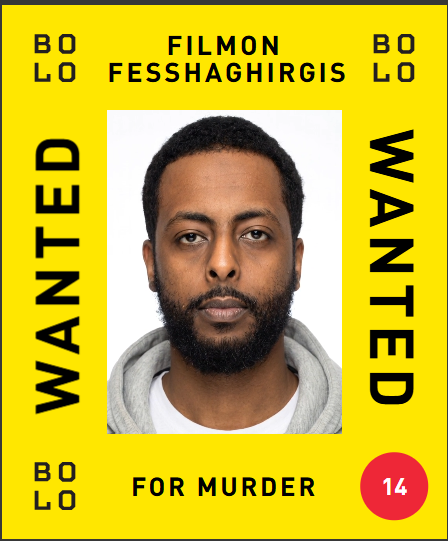
An Ontario fugitive wanted on serious charges was arrested in Winnipeg within hours of being added to a national most wanted list, proving how rapidly public visibility and inter-provincial police coordination can erase a geographic head start. Crossing provincial borders once bought wanted suspects months of anonymity while paper warrants moved slowly between municipal departments and regional detachments. Today, the moment a suspect's face hits a high-profile public campaign backed by financial rewards and instant media distribution, the operational math flips entirely against the person on the run.
Standard news dispatches treat a fast arrest like a lucky break. A name goes up on a website, a tip line rings, and handcuffs click shut in another province before the evening news cycle finishes. That surface reading misses the machinery underneath. When an Ontario fugitive surfaces in Manitoba and gets taken down in a matter of hours, it is rarely a coincidence or an accidental traffic stop. It is the result of deliberate timing, psychological pressure, and the strategic deployment of public attention as a law enforcement dragnet.
Why Provincial Borders No Longer Buy Time
For decades, Canada's policing structure inadvertently gave mobile suspects a predictable buffer. Municipal police services in Ontario, provincial forces like the Ontario Provincial Police, and federal detachments operating in jurisdictions like Manitoba each maintained distinct operational rhythms. A warrant issued in southern Ontario did not automatically trigger street-level urgency in Winnipeg unless detectives already possessed intelligence tying the suspect to a specific address on the prairies.
Suspects understood this friction. Moving west along the Trans-Canada Highway or boarding a domestic flight meant stepping out of the immediate visual awareness of the investigators working the file. Local beat officers in another province had no reason to memorize the booking photo of a suspect wanted two thousand kilometers away.
That buffer evaporates the second a case transitions from an internal police bulletin to a public most wanted campaign. Programs like the Bolo Program—short for "Be On the Lookout"—specifically target this jurisdictional blind spot. By amplifying active warrants through digital billboards, social media saturation, and coordinated press conferences, investigators force a suspect's face into the daily feed of millions of people simultaneously. A fugitive hiding in a Winnipeg apartment or walking down Portage Avenue is suddenly subject to the exact same visual scrutiny as they would face in Toronto or Ottawa.
The Mechanics Behind a Rapid Takedown
Police rarely put a suspect on a major public list without already holding a working theory of where that person might be. In many high-profile fugitive hunts, investigators spend weeks or months quietly exhausting traditional methods—surveilling known associates, subpoenaing financial records, and tracking digital footprints—before turning to the public.
When those quiet avenues stall, a public launch acts as a controlled detonation. The objective is twofold. First, it enlists ordinary citizens who recognize a new neighbor, a coworker, or a customer at a local shop. Second, and often more importantly, it induces panic in the suspect and their immediate support network.
Consider a hypothetical scenario to see how this plays out on the ground. Suppose a suspect flees Ontario after a violent offense and settles in with a distant acquaintance in Winnipeg. For weeks, the arrangement holds because nobody in the surrounding neighborhood knows the guest is wanted. Then, at ten in the morning, the suspect's face appears across national news outlets alongside a substantial cash reward. By noon, the acquaintance realizes that harboring the fugitive carries severe legal exposure—and that turning them in could pay off debt. Even if the host stays silent, the suspect often makes a fatal mistake by trying to relocate immediately, stepping out into public view at the exact moment eyes are sharpest.
Speed is the entire point. The first twenty-four to forty-eight hours after a major announcement represent peak public recall. Attention decays quickly in modern media environments. Law enforcement agencies time these rollouts to maximize tip volume during that narrow window, ensuring that tactical teams and fugitive apprehension units are already staged and ready to act on incoming leads without bureaucratic delay.
The Economics of Tips and Rewards
Money changes loyalties faster than appeals to civic duty. While some tips come from observant strangers who spot a face on a transit shelter ad, the decisive intelligence in major fugitive cases frequently originates from the suspect's own circle.
Cash rewards attached to most wanted lists are calibrated to disrupt the informal economies that keep fugitives hidden. Staying off the grid requires resources—cash for rent, prepaid phones, rides, and groceries. Fugitives rely on friends, romantic partners, or criminal associates to provide those essentials. A five-figure or six-figure reward introduces immediate distrust into those relationships. Every person who knows the fugitive's location suddenly holds a lottery ticket, and the fugitive knows it.
Critics of reward-driven policing raise legitimate concerns about tip quality and resource drain. High-profile announcements inevitably generate hundreds of false sightings from well-meaning citizens who mistake an innocent lookalike for a dangerous offender. Investigative teams must triage that noise rapidly, separating verifiable details—like a specific vehicle plate, an alias, or an exact apartment number—from vague hunches.
Yet when a tip hits the mark, the return on investment is undeniable. Traditional multi-month manhunts burn through staggering amounts of overtime, surveillance hours, and inter-agency coordination costs. Converting a prolonged investigation into an afternoon arrest saves departments massive operational overhead while removing a high-risk individual from the street before they can reoffend.
Inter-Agency Coordination Under Pressure
Receiving a tip in Ontario about a suspect sitting in Winnipeg means nothing if the handoff between police services falters. An arrest happening within hours of a public announcement proves that cross-jurisdictional communication channels worked without friction.
In practice, this requires pre-established protocols between the originating agency in Ontario and the receiving jurisdiction in Manitoba, such as the Winnipeg Police Service or the RCMP. Before a name ever reaches a press release, liaison officers verify that the warrant is endorsed for Canada-wide execution. If a warrant is only valid within Ontario, spotting the suspect in Winnipeg creates a legal bottleneck that can give the fugitive time to slip away while paperwork gets upgraded.
Once a credible tip lands, intelligence analysts cross-reference the caller's details against existing files—checking addresses, known vehicles, and associate networks in Manitoba. That verified package goes directly to local tactical or warrant squads in Winnipeg. Those units move in, confirm identity, and execute the arrest before the suspect even realizes their cover has been blown.
The Limits of the Public Dragnet
As effective as rapid public exposure proved in bringing an Ontario fugitive to ground in Winnipeg, the tactic is not a silver bullet for every cold warrant. Overusing public most wanted campaigns dulls their impact. If agencies broadcast every mid-level offender with the same urgency reserved for violent fugitives, public attention fractures and tip lines go quiet.
There is also an inherent operational trade-off. Going public surrenders the element of surprise. If a suspect is deeply entrenched with a sophisticated criminal network, or if they have already fled the country using fraudulent documents, a press conference simply confirms that investigators have lost the trail. In those cases, public noise drives the target deeper underground rather than flushing them out.
Privacy advocates and defense attorneys also point out the collateral damage of aggressive digital wanted campaigns. Booking photos, allegations, and physical descriptions remain indexed on search engines and social media platforms indefinitely. For individuals who are later acquitted, or whose charges are stayed, removing that digital footprint proves nearly impossible. Law enforcement agencies carry a heavy responsibility to ensure that the severity of the alleged offense justifies permanent public exposure before pulling the trigger on a national campaign.
What Rapid Arrests Signal for Fugitives
The swift apprehension in Winnipeg sends a clear operational message across Canadian policing. Geographic distance within the country no longer offers reliable insulation from an active warrant. A suspect leaving Ontario for Manitoba, British Columbia, or the Atlantic provinces steps into an interconnected information ecosystem where local anonymity can be dismantled before lunch.
For investigators, the lesson is equally concrete. Public engagement is no longer a last resort reserved for decades-old cold cases. When paired with verified intelligence, a Canada-wide warrant, and streamlined inter-provincial handoffs, a targeted public rollout functions as an active tactical tool. Once a suspect's face is placed in front of millions of eyes with a direct line to police dispatch, hiding in plain sight stops being a strategy and becomes a countdown.