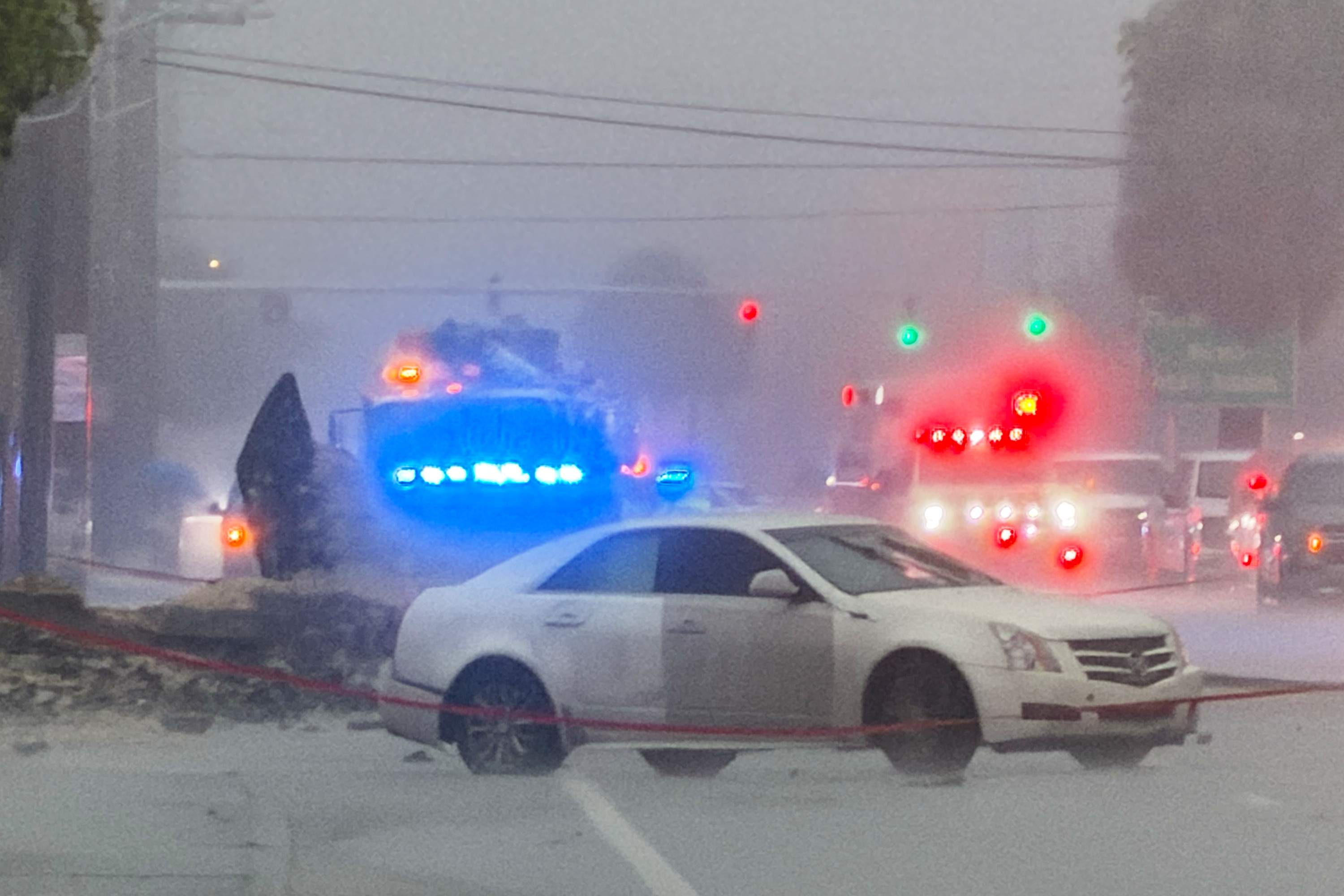
When federal aviation officials confirm that a private jet carrying nine people has crashed into a Florida neighborhood, the public usually treats it like a freak lightning strike. It is not. These accidents are the predictable result of a booming private aviation sector colliding with rapid suburban sprawl, aging airframes, and regulatory blind spots that allow complex turbine aircraft to operate near dense residential zones with far fewer safety guardrails than commercial airlines.
Breaking news reports focus on the immediate wreckage, the smoke rising over suburban cul-de-sacs, and the scramble of local emergency responders. They rarely look at the structural pressures putting those aircraft over your roof in the first place. To understand why another corporate or charter jet has ended up in a residential area, you have to look at the mechanics of modern business aviation, the geography of Florida’s airfields, and the quiet erosion of safety margins in the non-commercial sector.
The Illusion of Commercial Safety in Private Aviation
Most travelers step onto a private jet assuming they are getting an upgraded, safer version of a commercial flight. The leather seats and lack of security lines create an aura of elite reliability. Aviation safety records tell a vastly different story.
Major U.S. commercial airlines operate under Part 121 of the Federal Aviation Regulations. This is the strictest safety regime in the world. It mandates two highly experienced pilots in the cockpit, rigorous rest requirements, continuous maintenance oversight, advanced flight data monitoring, and strict dispatch protocols. Before a commercial airliner pushes back from the gate, a licensed dispatcher has independently verified the weather, fuel loads, and runway conditions.
Private jets operate under entirely different rulebooks. Depending on whether the flight is strictly private or an on-demand charter, it falls under Part 91 or Part 135.
Under Part 91, which governs corporate flight departments and wealthy individual owners, the regulatory burden drops off a cliff. Many light and midsize business jets are certified for single-pilot operations. Picture a complex, high-altitude turbine aircraft traveling at 450 knots, approaching a congested airspace in deteriorating Florida weather, managed by one person handling the radios, navigation, checklists, and emergency anomalies simultaneously.
Even under Part 135, which covers paid charter flights and often involves a two-pilot crew, the operational pressures are immense. Charter pilots routinely fly into unfamiliar airports at odd hours, often pressured by high-paying clients to land in marginal weather rather than divert to a safer airfield thirty miles away. When an engine fails on takeoff or an icing issue develops on approach, a two-person crew working under commercial Part 121 standards has drilled that exact scenario in a full-motion simulator every six months. A private crew might not have the same muscle memory, and in a crisis at 1,500 feet, seconds evaporate.
Florida’s Fatal Equation of Sprawl and Airspace
Florida is the epicenter of private aviation in the United States. The state boasts an extraordinary concentration of wealth, a year-round tourism economy, and a massive network of regional and executive airports. From Opa-locka and Boca Raton to Naples, Sarasota, and the sprawling suburbs surrounding Orlando and Tampa, business jets weave through some of the most congested low-altitude airspace in the country.
Decades ago, these regional airfields were built on the outskirts of town, surrounded by swampland, citrus groves, or empty scrub. Today, aggressive real estate development has pushed housing developments right up to the perimeter fences.
When a jet experiences a catastrophic mechanical failure shortly after takeoff or on final approach, the pilot has almost zero lateral maneuverability. The aircraft is essentially a heavy brick following a ballistic trajectory. In states with vast open farmland, a crippled plane might belly-land in a cornfield. In coastal and central Florida, the only available terrain beneath the standard departure and arrival corridors consists of tile roofs, backyard pools, high-voltage power lines, and four-lane highways.
Local zoning boards routinely approve high-density residential construction directly inside runway protection zones and noise contours, prioritizing property tax revenue over basic aerodynamic reality. When an accident happens, municipal officials express shock that a jet went down in a neighborhood, ignoring the fact that the neighborhood was permitted to grow directly under the flight path.
How a Routine Flight Becomes a Catastrophe
To see how quickly things unravel in these accidents, consider a hypothetical scenario typical of Florida business aviation. Imagine a midsize twin-engine jet carrying nine people—two crew members and seven passengers—departing a regional Florida airfield on a humid afternoon.
The aircraft is heavy, loaded with fuel for a three-hour trip north, and approaching its maximum takeoff weight. High ambient temperatures and humidity reduce air density, a phenomenon pilots call high density altitude. Thinner air means the wings generate less lift and the engines produce less thrust, eating up significantly more runway before the wheels leave the ground.
Just after rotation, at roughly 400 feet above the terrain, the left engine ingests a flock of wading birds—a chronic hazard near Florida’s coastal wetlands—or suffers an uncontained turbine failure. Instantly, the aircraft loses half its power. Worse, the remaining right engine is now pulling the plane violently to the left, creating massive asymmetric thrust.
The pilot has less than five seconds to execute a precise sequence of actions:
- Apply heavy rudder pressure to keep the nose straight and prevent a fatal aerodynamic spin.
- Pitch the nose down slightly to maintain minimum controllable airspeed, sacrificing precious altitude.
- Identify the failed engine, verify it, and secure it to eliminate drag.
- Retract the landing gear to clean up the airframe.
If the pilot pulls back on the yoke instinctively to clear a line of trees or a condo complex ahead, airspeed bleeds off immediately. The wing stalls. Once a swept-wing jet stalls at 400 feet, recovery is physically impossible. The aircraft rolls inverted and impacts the neighborhood below, carrying hundreds of gallons of Jet-A fuel that ignite on impact.
There is no single villain in that cockpit. It is simply physics winning an argument against human reaction time, compounded by an environment that leaves zero margin for error.
The Maintenance and Aging Fleet Blind Spot
While new private jets roll off assembly lines with synthetic vision, autothrottles, and envelope protection systems that prevent pilots from stalling the aircraft, a massive portion of the domestic charter and private fleet consists of legacy airframes. Many jets flying nine to twelve passengers today were manufactured in the 1980s, 1990s, or early 2000s.
An older airframe is not inherently unsafe if maintained to rigorous standards. Aluminum does not simply expire if inspected properly. The problem lies in the economics of secondary-market aviation.
As business jets depreciate, they trickle down from Fortune 500 flight departments—which spare no expense on preventative maintenance—to smaller charter operators, fractional ownership groups, and private holding companies. These operators survive on thin margins. When a jet sits in a hangar for unscheduled maintenance, it bleeds money.
Pencil-whipping—the practice of signing off on inspection items without thoroughly performing the work—remains an open secret in the darker corners of general aviation maintenance. Furthermore, global supply chain bottlenecks in recent years have made sourcing replacement parts for legacy turbine engines and avionics agonizingly slow. Mechanics face relentless pressure to defer non-critical repairs under Minimum Equipment Lists, allowing aircraft to fly with minor degraded systems that can cascade into major failures when combined with bad weather or pilot fatigue.
National Transportation Safety Board investigators frequently uncover histories of recurring maintenance squawks in the wreckage of fatal private crashes. A fuel control unit that fluctuated three weeks earlier, a landing gear sensor that flickered intermittently, or a thrust reverser that failed to deploy properly—minor ghosts in the machine that were cleared on paper until they converged at the worst possible moment.
The Illusion of Oversight
When federal officials confirm a crash, the standard public relations playbook kicks into gear immediately. Spokespeople emphasize that the Federal Aviation Administration and the NTSB are launching a thorough investigation. This reassures the public that the system works.
In reality, the regulatory apparatus is chronically outmatched by the sheer volume of private air traffic. The FAA has faced persistent staffing shortages across its flight standards district offices for over a decade. Inspectors are stretched thin, tasked with overseeing hundreds of charter certificates, repair stations, and flight schools simultaneously. Routine ramp checks—where federal inspectors show up unannounced on the tarmac to verify pilot credentials, weight-and-balance manifests, and maintenance logs—happen far too infrequently at smaller regional airports.
Meanwhile, the NTSB has no regulatory enforcement power whatsoever. The board investigates wreckage, determines probable cause, and issues safety recommendations. The FAA is under no legal obligation to adopt them.
Over the past twenty years, the NTSB has repeatedly urged the FAA to tighten rules around private and charter operations. They have recommended mandatory flight data recorders—black boxes—on smaller turbine aircraft. They have pushed for stricter pilot fatigue rules for charter crews and tighter oversight of maintenance facilities. Many of those recommendations sit gathering dust on the NTSB’s "Most Wanted" list for years because aviation lobbying groups successfully argue that compliance costs would cripple small businesses and regional airports.
Without a cockpit voice recorder or flight data recorder—devices that are still not required on many smaller business jets—investigators picking through charred debris in a Florida neighborhood are often forced to play detective with melted aluminum and radar tracks. They may never know for certain whether the pilots were distracted, whether an alarm sounded in the cockpit, or whether a mechanical linkage snapped three seconds before impact.
What Actually Needs to Change
Preventing the next private jet from tearing through a residential block requires stripping away the political deference given to business aviation. The industry enjoys immense lobbying clout in Washington and Tallahassee, framed as an essential engine of commerce. That economic value does not excuse operating at a lower safety threshold over populated areas.
First, the regulatory gap between Part 121 commercial airlines and Part 135 charter operations must close. If a company is selling seats or chartering an entire aircraft to the paying public, the passengers deserve commercial-grade safety standards. That means mandatory two-pilot crews for all turbine operations, strict duty-time limits that account for circadian rhythms, and mandatory safety management systems that track operational risks before an accident occurs.
Second, flight data monitoring must become non-negotiable. Lightweight, crash-protected recording devices are cheaper and smaller than ever. Every turbine-powered aircraft carrying passengers should carry equipment capable of recording cockpit audio and basic flight parameters. More importantly, operators should be required to download and analyze that data routinely to catch bad habits—like unstable approaches or rushed checklists—before they result in a smoking crater.
Finally, municipal governments in high-growth states like Florida must enforce strict land-use buffers around regional airports. You cannot build thousands of homes directly off the departure end of a 6,000-foot runway and act surprised when an aircraft experiencing an engine failure lands in someone's living room. Airports require clearways and open buffer zones not to protect the pilots, who have already accepted the risks of flight, but to protect the families sitting at their kitchen tables below.
Until federal regulators force private aviation to adopt the same unforgiving discipline that made commercial air travel the safest mode of transportation in human history, these crashes will remain an accepted cost of doing business. The sirens will keep wailing in suburban neighborhoods, officials will keep confirming the casualties, and the underlying mechanics of the disaster will remain entirely unchanged.