The sound did not reach the world immediately. It was a rhythmic, dull thud. The strike of a pickaxe against sun-baked mud brick. In 2012, Timbuktu—the City of 333 Saints—was not under siege by a modern army with tanks, but by men with hammers and an ideology that demanded the erasure of memory.
They weren't just destroying buildings. They were liquidating the past.
Consider the Sidi Yahia mosque. For centuries, its gate stood as a sentinel. Legend whispered that the day it opened was the day the world would end. When the militants arrived, they didn't just break the wood; they broke the town’s sense of inevitability. They tore through the mausoleums, turning the resting places of scholars and saints into piles of shattered earth.
For the people of Mali, this was not collateral damage. It was an amputation.
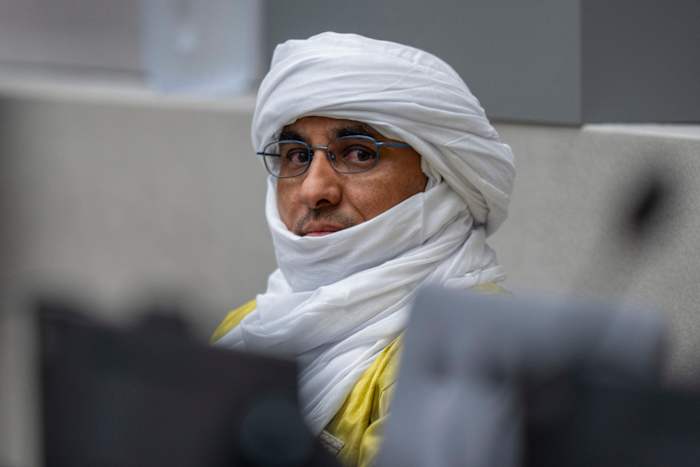
Years later, the International Criminal Court in The Hague delivered a verdict. They ordered $8.4 million in reparations for the victims of Ahmad al-Faqi al-Mahdi, the man who directed these acts. It is a staggering figure, yet it feels entirely insufficient. How do you quantify the cost of a stolen identity? How do you write a check to settle the bill for the erasure of a lineage?
This is the central friction of international justice. We operate in a system that demands concrete numbers for abstract losses. The ICC is a court of law, not a temple of healing. It excels at parsing evidence and sentencing the guilty, but it struggles with the ghost-work of mending a broken society.
Think of Moussa. I use him as a placeholder, a representative of the many residents who stood by while their heritage was pulverized. He remembers the dust that hung in the air for weeks. It wasn't just dirt; it was the pulverized history of his ancestors. When the court awards millions, that money flows into projects—restoration of monuments, economic support for the families, symbolic acts of communal healing. It is vital, necessary, and bureaucratic.
But does it wash the fear from the eyes of those who watched their history being hammered into gravel?
The $8.4 million is managed through the Trust Fund for Victims. It is a mechanism designed to be objective. It pays for the physical rebuilding of the shrines, which is a triumph of architecture and will. The mud bricks are fired again. The walls rise. But restoration is not resurrection. Once you have seen your heritage treated as trash, you never look at your history the same way again. The object is back, but the sanctity has been bruised.
Justice, in this context, functions like a tourniquet. It stops the bleeding. It acknowledges that a crime occurred, and it forces a reckoning. Yet, the victim is left to manage the scar.
The trial of al-Mahdi was the first of its kind. It was the first time the ICC focused exclusively on the destruction of cultural heritage as a war crime. This is where the precedent matters. By elevating the destruction of stone and mortar to the level of human violence, the court shifted the definition of a victim. You don't have to be bleeding to be harmed. Your culture can be your body, and when that is attacked, your humanity is under assault.
This creates a complicated ripple. If we acknowledge that destroying a monument is an act of violence, then we must accept that justice for the living is inextricably linked to the preservation of the dead.
Critics often argue that money is a poor substitute for the sanctity of a shrine. They are right. If you look at the $8.4 million, it is a pittance compared to the cultural wealth of the Sahel. But to dismiss the reparations because they are imperfect is to misunderstand the purpose of the law. The law does not exist to make the past perfect. It exists to provide a baseline of accountability. It tells the world: You cannot walk into a desert and erase a people’s soul without paying a price.
There is a cold reality here. We live in a world where history is often the first casualty of conflict. From the libraries of Alexandria to the shrines of Timbuktu, the logic of the extremist is always the same: kill the memory, and you kill the people.
The $8.4 million is a counter-narrative. It is a stubborn, bureaucratic declaration that memory has a value that can be measured, tracked, and defended.
If you travel to Timbuktu today, the mausoleums stand again. They are beautiful. They are sturdy. They are evidence that the hammer is weaker than the desire to remember. Yet, the air still holds a certain tension. Every time a storm rolls across the dunes, or a political breeze shifts the heat, the people of the city know how quickly the ground can move beneath their feet.
The money will build schools. It will support livelihoods. It will restore the physical structures that connect the present to the lineage of the desert. But the true reparation—the one that will take generations—is the slow, quiet, defiant act of telling the next generation who they are, despite those who tried to tell them they were nothing.
Justice is never a finish line. It is a process of constant rebuilding. Each time we decide that the erasure of history is a crime, we are choosing to stand on the side of the stone, the mud, and the spirit that refuses to be crushed.
The hammer stops. The dust settles. But the story remains.


