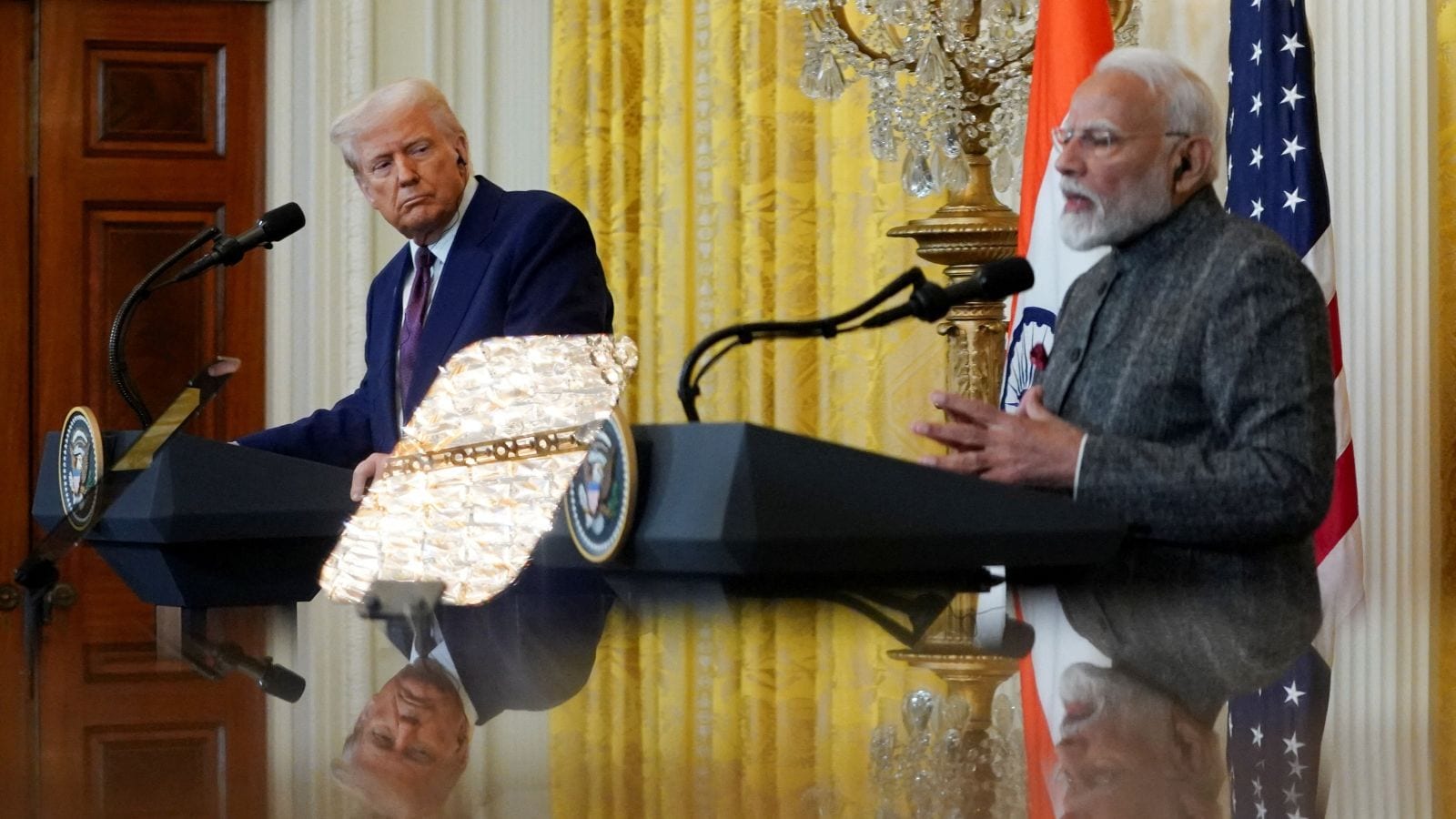
Celebratory headlines are flooding financial feeds across Mumbai and New Delhi. Commerce Minister Piyush Goyal announced that India and the United States have agreed on preferential market access for Indian goods entering America. On paper, it reads like an unmitigated triumph for Indian manufacturing, trade diplomacy, and export growth.
Put down the champagne. Also making waves recently: Stop Begging for Dubai Supermarket Shelf Space Before You Go Broke.
The mainstream financial press treats every bilateral tariff concession like a golden ticket to boundless economic expansion. That lazy consensus misses the structural traps hidden inside modern trade preferences. Preferential market access is rarely a free lunch; in global supply chains, it often functions as a velvet-lined cage. If Indian exporters celebrate lower tariff barriers without fixing the domestic bottlenecks and compliance realities waiting on the other side, they will walk straight into a margin-compression buzzsaw.
The Mirage of Tariff Concessions
Let us look at what "preferential market access" actually means in practice. Usually, it translates to reduced Most Favored Nation (MFN) tariffs on select tariff lines, restored Generalized System of Preferences (GSP) style benefits, or sector-specific quotas for textiles, pharmaceuticals, engineering goods, and specialty chemicals. Further information regarding the matter are explored by Bloomberg.
Here is the problem: tariffs are no longer the primary gatekeeper of the American market.
Average US MFN tariffs on industrial goods already sit around 3.3 percent. Shaving two or three percentage points off an import duty does not magically make an Indian factory competitive against Vietnamese, Mexican, or Bangladeshi rivals. While trade negotiators haggle over basis points on customs schedules, real market access in the United States is dictated by non-tariff barriers, strict rules of origin, and brutal supply chain velocity.
I have watched mid-sized Indian component manufacturers spend millions expanding capacity after a favorable trade announcement, only to watch their goods sit in customs purgatory at the Port of Los Angeles. Why? Because Washington’s trade bureaucracy gives with one hand and takes with the other. Lower tariffs are routinely paired with heightened scrutiny under the Uyghur Forced Labor Prevention Act (UFLPA), aggressive anti-dumping investigations, and strict environmental, social, and governance (ESG) traceability mandates.
The Rules of Origin Trap
If you do not understand Rules of Origin (RoO), you do not understand modern trade deals. Rules of Origin are the legal criteria used to determine the national source of a product. To qualify for preferential tariffs in America, an Indian exporter cannot simply assemble foreign parts in Pune and slap a "Made in India" sticker on the box. The product must undergo "substantial transformation" domestically, meeting strict Regional Value Content (RVC) thresholds.
This is where the triumphant narrative falls apart.
India’s export machine relies heavily on imported intermediate inputs—specifically active pharmaceutical ingredients (APIs), electronic sub-assemblies, specialty yarns, and industrial machinery from China and East Asia. When Washington grants preferential access to Indian goods, American customs officials immediately look for Chinese value-add hiding inside the supply chain.
Consider a thought experiment. Imagine an Indian electronics assembler wins a lucrative contract with a US retail giant under new preferential terms. To hit the price point, the Indian firm sources printed circuit boards from Shenzhen and casings from Taiwan, doing final assembly and testing in Tamil Nadu. When the shipment hits US Customs and Border Protection (CBP), auditors determine that domestic Indian value addition falls short of the required 35 to 40 percent threshold. Not only is the preferential tariff denied, but the importer is slapped with retroactive Section 301 punitive duties originally meant for China.
Preferential access without deep domestic supply chain integration turns exporters into compliance targets.
The Race to the Bottom on Margins
Standard economic commentary assumes that when tariffs drop, the exporter pockets the difference as pure profit. Anyone who has actually negotiated a purchase order with a major American buyer knows that is pure fantasy.
American procurement teams track international tariff schedules down to the decimal. The moment India and the US finalize a preferential tariff cut on a specific Harmonized System (HS) code, US buyers demand an immediate price reduction equal to—or greater than—the tariff savings.
The windfall does not stay in India. It goes straight to lowering retail prices in Ohio or boosting the gross margins of Fortune 500 importers in Delaware. Meanwhile, the Indian supplier is left absorbing higher domestic logistics costs, expensive industrial power, and rising compliance overhead just to maintain the same thin operating margin they had before the deal was signed.
Trade economists like Jagdish Bhagwati warned decades ago about the "spaghetti bowl" effect of overlapping preferential trade arrangements. Navigating complex bilateral preference rules adds administrative friction that big conglomerates can absorb, while small and medium enterprises (SMEs)—the supposed beneficiaries of Indian export policy—get crushed under the paperwork.
Answering the Questions Exporters Are Afraid to Ask
Will preferential US market access immediately boost Indian GDP?
No. Merchandise exports account for roughly 13 to 15 percent of India's GDP, and the US takes about 18 percent of those exports. Even a massive surge in bilateral trade moves the needle on headline GDP by fractions of a percent over several years. Treating a bilateral trade arrangement as a macroeconomic silver bullet ignores the fact that India’s primary growth engine remains domestic consumption and capital expenditure.
Does this mean India is replacing China as America's primary factory?
Stop believing this narrative. China’s manufacturing output still dwarfs India’s by a factor of roughly six. When Western firms adopt a "China Plus One" strategy, they are hedging geopolitical risk, not executing a wholesale migration. Furthermore, much of the "Plus One" manufacturing that lands in India still depends on Chinese upstream supply chains. Preferential access to the US accelerates assembly in India, which paradoxically increases India's trade deficit with China in the short term.
Are Indian textiles and pharmaceuticals guaranteed winners under this agreement?
Only the top tier. In pharmaceuticals, US Food and Drug Administration (FDA) inspection backlogs and strict Good Manufacturing Practice (GMP) compliance dictate who sells in America—not tariff rates, which are already near zero for most generic drugs. In textiles, preferential access helps, yet India still lacks the scale, synthetic fiber ecosystem, and turnaround speed of competitors who enjoy duty-free access via other regional pacts.
What Smart Operators Should Do Instead
If you run an export business or allocate capital in Indian manufacturing, do not build your 2027 strategy around diplomatic press releases. Trade preferences can be revoked, modified, or neutralized by a single executive order in Washington whenever domestic political winds shift. Ask any exporter who lost market share when India was removed from the US GSP program in 2019.
Instead of chasing tariff arbitrage, execute moves that build permanent pricing power:
- Audit your bill of materials down to tier-three suppliers. Map every gram of raw material and every sub-component. If you cannot prove non-Chinese origin with auditable digital paper trails, preferential US access is a liability, not an asset.
- Move up the value chain into proprietary IP or specialized tooling. If your only competitive advantage is a 4 percent tariff preference, a competitor in Mexico with nearshoring advantages under USMCA will eat your lunch within six months. Own the design, own the formulation, or own the certification.
- Price for compliance, not volume. Factor the true cost of US customs audits, ESG reporting, and supply chain traceability into your baseline quotes before signing multi-year supply agreements. Never give away 100 percent of a tariff reduction at the negotiating table.
- Diversify beyond the American consumer. The US market offers unmatched depth, yet over-indexing on a single geopolitical partner exposes your balance sheet to sudden regulatory shocks. Balance US expansion with aggressive pushes into the Middle East, Europe, and domestic Indian enterprise markets.
The Uncomfortable Reality of Trade Diplomacy
To be fair, securing preferential market access is objectively better than facing punitive tariffs. Minister Goyal and his negotiating team deserve credit for keeping India inside Washington's inner circle of trusted trade partners at a time when global protectionism is surging. Having a seat at the table matters, and locking in predictable terms gives boardrooms the confidence to commit long-term capital.
Yet confidence without execution is fatal.
A trade agreement only opens the door; it does not carry your product across the threshold, clear it through customs, or convince an American buyer to reorder. Until India slashes its domestic logistics costs from roughly 13 to 14 percent of GDP down toward the global benchmark of 8 percent, and until Indian factories achieve true backward integration, preferential access will remain a headline victory rather than a bottom-line revolution.
Stop celebrating the tariff cut and start auditing your supply chain before US Customs does it for you.