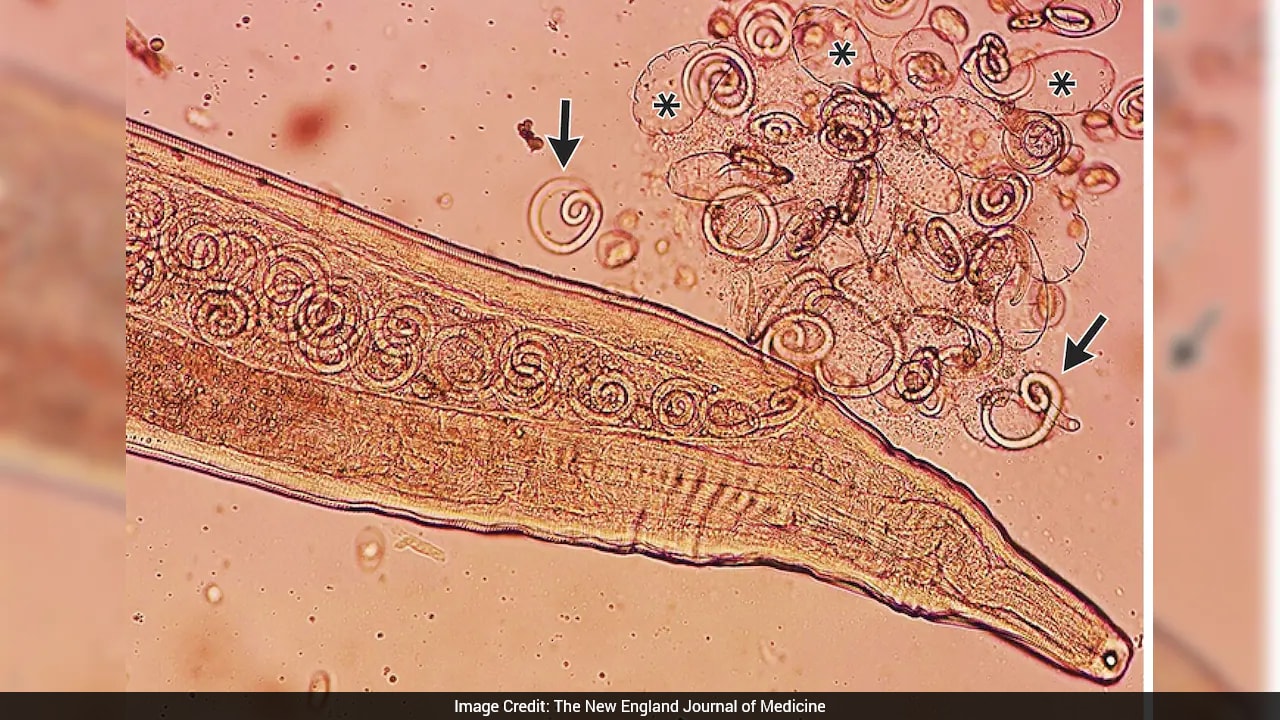
You rub your eye because something feels scratchy, expecting an eyelash or a speck of field dust, and the doctor pulls out eleven live worms. That sounds like a fake horror story cooked up for clicks. It isn't.
A 64-year-old farmer in South Korea walked into an ophthalmology clinic complaining of persistent irritation and foreign-body sensation in his right eye, and clinicians discovered 11 parasitic worms writhing beneath his eyelids. Most headlines treated the incident like a freak biological fluke, which completely misses the real medical story. Eye parasites like Thelazia callipaeda aren't mythical monsters from a distant jungle—they're a documented, well-understood zoonotic infection transmitted by a very specific species of fruit fly that feeds on tears.
Let's be honest about why these stories go viral. People love shock value, so news outlets strip away the clinical context and leave you terrified that a casual walk outside will fill your tear ducts with nematodes. If you actually look at the medical case reports and veterinary parasitology behind Thelazia infections, the reality is far more interesting—and much easier to prevent—than sensational headlines make it sound.
How 11 Parasitic Worms Ended Up Inside a Human Eye
The culprit behind the Korean farmer's ordeal is almost certainly Thelazia callipaeda, commonly known as the oriental eyeworm. Unlike intestinal parasites that enter through contaminated water or undercooked meat, this worm relies on an airborne courier.
Specific male drosophilid flies—most notably Phortica variegata in Europe and Phortica okadai in East Asia—have a bizarre dietary requirement. Instead of feeding exclusively on fermenting fruit like the common kitchen fruit fly, these males actively seek out the ocular secretions of mammals. They land near the eye to drink tears, protein, and salt.
When an infected fly feeds on the tears of a dog, cat, fox, or human, third-stage infective larvae emerge from the fly's mouthparts and slip directly onto the surface of the eye. Once inside the conjunctival sac, those microscopic larvae mature into adult worms over several weeks.
Here is why eleven worms is such a notable clinical count. A single fly rarely deposits a dozen mature parasites in one sitting. Finding eleven adult worms means the farmer likely experienced repeated exposures while working outdoors near livestock or rural brush, or a single heavily infected vector lingered long enough to transfer multiple larvae.
- Adult worm size: Females typically measure between 10 and 17 millimeters long, while males are slightly smaller at 5 to 12 millimeters.
- Movement pattern: They are thin, milky-white, and actively wriggle across the conjunctiva and under the nictitating membrane or eyelids.
- Lifespan: Left untreated, adult worms can survive inside the conjunctival sac for over a year, continuously irritating the ocular surface.
Why Rural Workers and Pet Owners Face Higher Exposure
You won't catch Thelazia callipaeda in a sterile high-rise office. The transmission cycle requires a very specific ecological overlap between reservoir animals, the vector fly, and human outdoor activity.
In South Korea, Japan, China, and parts of Southern and Central Europe, dogs and wild carnivores like red foxes serve as the primary natural reservoirs. When a farm dog carries untreated eyeworms, local Phortica flies pick up first-stage larvae while feeding on the dog's tears. Inside the fly, those larvae develop into infective third-stage parasites over two to three weeks.
Farmers, foresters, hikers, and gardeners spend hours outdoors during warm months when Phortica flies are most active. Sweating outdoors attracts insects to the face, and a quick swipe with a dirty sleeve rarely stops a persistent tear-feeding fly.
I've seen plenty of cases in clinical parasitology literature where patients delayed seeing an eye doctor for weeks because the early symptoms mimic ordinary seasonal allergies or dry eye. You feel a mild tickle. Your eye waters a bit more than usual. You buy over-the-counter lubricating drops, which do nothing to kill a nematode anchored beneath your upper eyelid.
What Thelazia Infection Actually Feels Like
Forget the dramatic movie tropes of worms burrowing straight through the center of the eyeball. Thelazia callipaeda lives in the conjunctival sac—the moist pocket between the inside of your eyelid and the white of your eye—and across the tear ducts.
That anatomical detail matters. Because the worms stay on the external ocular surface rather than invading the internal chambers of the eye like Toxocara larvae sometimes do, permanent blindness is rare if the worms are removed promptly.
Still, having eleven wriggling parasites scraping against your cornea and eyelid lining causes unmistakable misery:
- Relentless foreign-body sensation: Patients consistently describe feeling like a sharp piece of grit or a trapped eyelash is scratching their eye every time they blink.
- Excessive tearing and mucus discharge: The conjunctiva reacts to physical movement by flooding the eye with tears and thick mucopurulent discharge.
- Conjunctival redness and swelling: Chronic mechanical friction inflames the blood vessels, making the eye look severely bloodshot.
- Corneal abrasions and ulcers: If a patient rubs their eye aggressively or ignores the infection for months, the worms' serrated cuticles can scratch the cornea, opening the door to secondary bacterial keratitis.
Sometimes patients actually see a thin white thread dart across their field of vision before it retreats under the upper lid. Imagine looking in the bathroom mirror and watching something move behind your lower eyelid. Most people book an emergency appointment immediately at that point.
How Ophthalmologists Remove Eyeworms Safely
You cannot flush Thelazia worms out with tap water, and standard antibiotic eye drops won't touch them. Bacteria and parasitic nematodes belong to completely different biological kingdoms.
Treatment is surprisingly straightforward once an ophthalmologist examines the eye under a slit-lamp biomicroscope. Because the worms often hide deep inside the upper conjunctival fornix—the upper recess under the eyelid—a casual flashlight exam in an urgent care clinic can easily miss several of them.
Doctors follow a precise mechanical removal protocol:
- Topical anesthesia: Clinicians apply numbing drops like proparacaine or tetracaine. This immediately stops the patient from blinking involuntarily and paralyzes the worms slightly, slowing their movement.
- Eyelid eversion: Using a cotton-tipped applicator or lid retractor, the doctor flips the upper and lower eyelids completely inside out to inspect the deepest folds of the conjunctiva.
- Forceps extraction: Every visible worm is gently lifted off the tissue using fine-tipped ophthalmic forceps.
- Saline irrigation: After mechanical extraction, the doctor flushes the conjunctival sac thoroughly with sterile normal saline to wash out any remaining microscopic larvae.
- Topical antibiotic prophylaxis: Even though the worms themselves aren't bacteria, doctors prescribe a short course of antibiotic drops to prevent bacterial infection in the tiny surface scratches left behind.
In the South Korean farmer's case, removing all eleven worms resolved the mechanical irritation immediately. Follow-up exams a week or two later are standard practice just to confirm no hidden larvae matured after the initial extraction.
Why Headlines About Eye Parasites Often Mislead Readers
Whenever a medical journal like the American Journal of Tropical Medicine and Hygiene or a Korean ophthalmology journal publishes a case report on ocular thelaziasis, tabloid aggregators pounce on the numbers. Eleven worms sounds sensational. Fifteen worms sounds even better.
What those viral rewrites leave out is context. According to epidemiological reviews published in journals like Parasites & Vectors, human thelaziasis remains relatively uncommon compared to canine infections, even in endemic regions of East Asia and Europe. However, reported human cases have climbed steadily over the past two decades.
Why are doctors seeing more cases now? Two reasons stand out. First, climate shifts and warmer seasonal temperatures have expanded the geographic range and active breeding window of Phortica flies. Second, veterinary surveillance and human ophthalmology awareness have improved, meaning cases that used to be misdiagnosed as stubborn viral conjunctivitis are now properly identified under slit-lamp magnification.
Another huge misconception is that these worms reproduce directly inside your eye. They don't. Adult female Thelazia worms release first-stage larvae into your tears, which cannot mature into adult worms without passing through a Phortica fly first. That means every single one of those eleven worms inside the farmer's eye entered from the outside environment.
Practical Steps to Protect Your Eyes and Pets
If you live in or travel to rural parts of East Asia, Southern Europe, or areas where Thelazia species are documented—including parts of North America where the related Thelazia californiensis occurs—you don't need to panic, but you should take basic precautions.
Keep your pets on year-round parasite prevention. Dogs and cats are the local amplifiers for eyeworms. If your dog develops unexplained watery eyes, squinting, or thick discharge after spending time in wooded or agricultural areas, have a veterinarian check under their third eyelid. Routine monthly macrocyclic lactone preventatives used for heartworm also help control Thelazia infections in pets.
Use physical barriers during peak fly hours. Phortica flies are most active during warm, humid daylight hours, particularly around orchards, wooded trails, and livestock pastures. Wearing wraparound sunglasses or clear protective safety glasses while farming, gardening, or hiking physically blocks flies from reaching your tear film.
Never ignore persistent one-sided eye irritation. Standard allergies almost always affect both eyes simultaneously. When redness, watering, and a gritty sensation stay locked in one eye for more than 48 hours despite lubricating drops, skip the pharmacy aisle and get a slit-lamp exam from an optometrist or ophthalmologist. Tell the doctor if you work outdoors or spend time around farm animals so they know to invert your upper eyelids and check the fornix thoroughly.