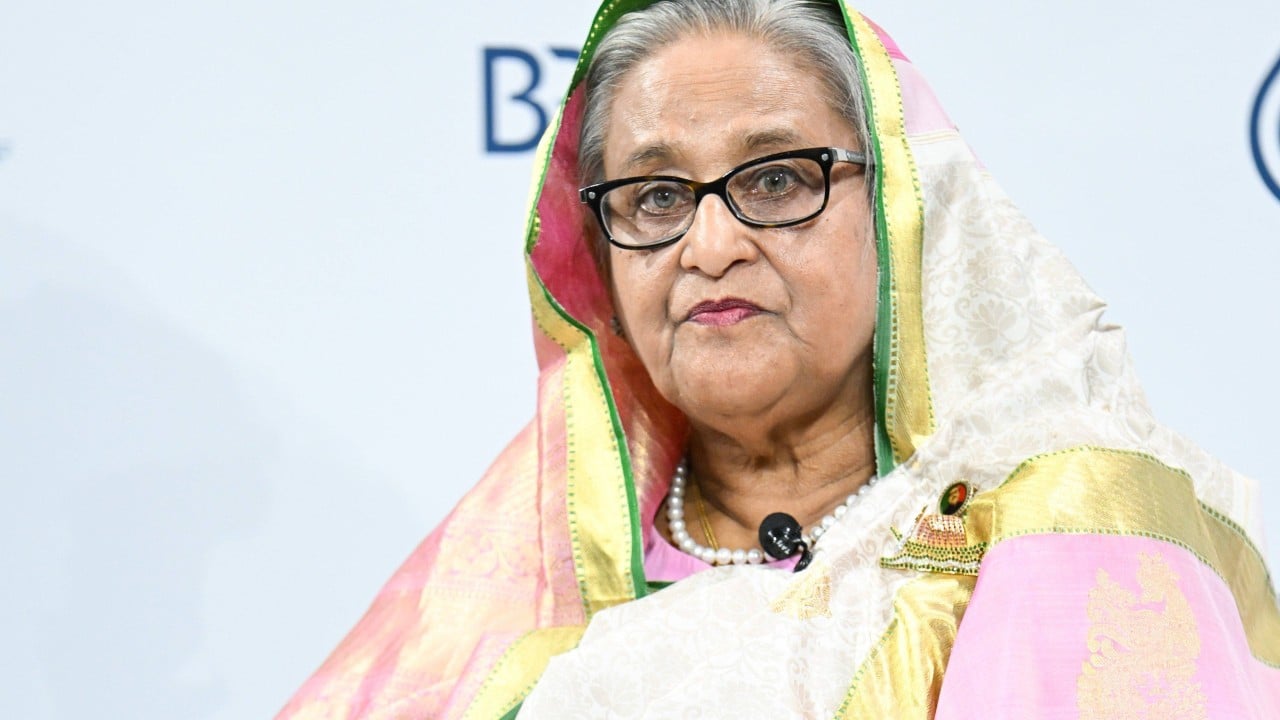
Sheikh Hasina says she's coming home on December 16, 2026. She knows a death sentence awaits her in Dhaka. Yet most headlines treat this like a standard political comeback or a reckless suicide mission. Both takes miss the actual chess match playing out between New Delhi and Dhaka.
If you look closely at the legal roadblocks, the passport standoff, and the street violence erupting across Bangladesh, her announcement isn't just about boarding a plane. It's a calculated squeeze on Prime Minister Tarique Rahman's government and a massive diplomatic headache for India. Let's break down what's actually happening behind the rhetoric and whether she can even cross the border.
The Contradiction at the Heart of Dhaka's Strategy
For more than two years after Hasina fled the student-led uprising on August 5, 2024, authorities in Dhaka demanded she be sent back to face justice. In November 2025, a Bangladeshi tribunal convicted her in absentia of crimes against humanity over the 2024 crackdown—which the United Nations estimates killed up to 1,400 people—and handed her a death sentence.
Now that the 79-year-old former prime minister says she wants to return voluntarily, Dhaka is slamming the door shut.
On November 9, Hasina's lawyers at London-based Matrix Chambers formally asked the Bangladesh High Commission in New Delhi to reissue her passport and national identity card, both of which were revoked after she fled. They followed up with a second letter on November 19. Dhaka's response was blunt. Officials rejected the request, alleging her signature was forged and declaring that Bangladesh doesn't issue passports to a "terrorist".
Hasina then upped the ante. Her spokesperson, Syed Mozammel Ali, publicly called on the government to send a state-run Biman Bangladesh Airlines flight to Delhi to bring her back, pointing out that a Bangladeshi military aircraft flew her out in 2024.
Prime Minister Tarique Rahman's administration isn't biting. State Minister for Foreign Affairs Humayun Kabir made their stance clear, stating she'll never be allowed back as an ordinary commercial traveler and can only return "in handcuffs" through formal extradition.
Why would a government that sentenced someone to death actively block her from flying in to face that exact punishment?
Because Tarique Rahman—the son of Hasina's longtime rival Khaleda Zia, who took office after the Bangladesh Nationalist Party won the February 2026 election—knows the danger of a political spectacle. Having Hasina walk off a commercial plane or a state carrier onto Bangladeshi tarmac turns her into a martyr overnight. Even in handcuffs, her physical presence on Victory Day would dominate every screen in a country of 175 million people. By refusing her travel documents, Dhaka forces her to stay stuck in exile while making her look powerless—or forces India to take the blame for keeping her there.
Why December 16 Is Not a Random Date
Nothing in South Asian politics happens on an accidental calendar date. Hasina didn't pick December 16 because flights are cheaper.
December 16 is Bangladesh's Victory Day, marking the end of the 1971 Liberation War against Pakistan. That history is the bedrock of Hasina's political identity. Her father, Sheikh Mujibur Rahman, led the independence movement and became the nation's first leader before he and most of his family were assassinated in a 1975 military coup.
Hasina survived because she was abroad at the time. She spent six years in exile in India before returning in 1981 despite severe threats to her life.
By tying her 2026 homecoming to Victory Day, she's trying to overwrite the memory of August 2024. She wants voters to stop seeing her as the ousted autocrat who ordered lethal force against student protesters and start seeing her again as the daughter of the nation's founder returning to rescue her people. In an email interview with AFP, she framed her decision around legacy and duty, stating that while she doesn't wish to die, she's prepared to pay that price to return to her own soil.
It's a classic political rebrand. Whether the public buys it is another story entirely.
How She Plans to Cross Without a Passport
If Dhaka won't give her a passport and won't send a plane, how does Hasina actually plan to get inside Bangladesh?
Aides say she's willing to cross on foot. Close aide Abu Obaida Arin told the BBC that Hasina is prepared to walk across the border and that supporters have already scouted nine potential crossing points along the 4,096-kilometer frontier shared by India and Bangladesh.
Honestly, walking across a heavily guarded international border without valid travel papers sounds more like political theater than a realistic logistical plan. India's Ministry of External Affairs has already noted that international travel requires a valid travel document, calling the passport dispute a "technical issue" while keeping their cards close to the chest.
New Delhi is walking a tightrope here. India has hosted Hasina since August 2024, while simultaneously trying to build workable ties with Tarique Rahman's new government.
Let's look at the legal reality of the 2013 India-Bangladesh extradition treaty:
- The political offense exception. The treaty allows either country to refuse extradition if the alleged offense is of a "political nature."
- The violent crime override. The treaty explicitly excludes murder, enforced disappearances, and torture from being classified as political crimes. Since Hasina's conviction involves deaths during the 2024 crackdown, Dhaka argues India is legally obligated to hand her over.
- The diplomatic stall. Extradition isn't automatic. India's foreign ministry maintains that Dhaka's request is still "under legal review"—diplomatic code for stalling while they figure out how to avoid handing over a longtime ally to face the gallows.
If India lets Hasina walk up to a border checkpoint on December 16 without documents, New Delhi looks complicit in destabilizing its neighbor. If Indian security forces physically stop her from leaving, Hasina gets to claim she's a prisoner in India. Either way, New Delhi loses.
The Reality on the Ground in Bangladesh
Outside the diplomatic cables, Hasina's announcement is already triggering real-world consequences inside Bangladesh.
Her Awami League party remains banned and sat out the February 2026 parliamentary elections. Thousands of party leaders are in jail, underground, or living abroad. Yet the party hasn't vanished. According to party aides, Hasina has spent the past 18 months holding over 300 marathon audio meetings via Telegram, connecting with grassroots units across all 64 districts.
That digital organizing is spilling back onto the asphalt.
Over the past few weeks, street clashes, arson attacks on buses and trains, and vandalism have spiked across several districts. Conflict monitoring group ACLED noted a marked surge in political violence tied directly to her vow to return. Police have responded with sweeping crackdowns, including the recent arrest of Hasina's former aide KM Shakhawat Moon under the Anti-Terrorism Act in Dhaka.
Meanwhile, her supporters are talking big. Aides claim they can mobilize five million people to form a human chain from the border to Dhaka. Chhatra League leader Saddam Hussain Inan went even further, claiming Hasina would win 80 percent of the vote in an inclusive election and warning that supporters would defend themselves if suppressed.
Take those numbers with a massive grain of salt. A banned party with its top leadership in exile or prison isn't mobilizing five million people on open highways without facing overwhelming military and police roadblocks. Still, it doesn't take five million people to paralyze Dhaka. A few thousand coordinated protesters blocking key intersections or rail lines can bring the garment-export economy to a standstill.
What Happens If She Actually Sets Foot in Dhaka
If Hasina somehow bypasses every diplomatic and physical barrier and lands in Bangladesh, the legal runway is short.
Bangladeshi prosecutors have stated she exhausted her legal appeal options after missing the deadline to challenge her in-absentia death sentence. Under current court rulings, authorities wouldn't be bringing her back for a fresh trial—they'd be arresting her at the point of entry to begin carrying out her sentence.
That said, executing the 79-year-old daughter of Bangladesh's founding father carries enormous political risk. Even among Bangladeshis who celebrated her ouster in 2024 and despise her authoritarian rule, hanging an elderly former prime minister could spark unpredictable backlash and fracture the fragile coalition keeping Tarique Rahman's government stable.
How to Track This Story Without Getting Played by Propaganda
Between Telegram audio leaks, exaggerated crowd estimates, and fierce state media spin from both sides, following Bangladesh's political crisis requires filtering out a lot of noise. If you're watching how this unfolds between now and mid-December, focus on three concrete indicators instead of viral social media claims.
- Watch New Delhi's travel document stance. Ignore speeches from party spokespeople about "walking across the border." Unless India's Ministry of External Affairs issues an emergency travel permit or formally responds to Dhaka's extradition request, Hasina isn't going anywhere legally.
- Monitor border deployment around West Bengal and Tripura. If BSF (Border Security Force) units in India or Border Guard Bangladesh troops quietly reinforce land ports like Benapole or Petrapole in early December, both governments are taking the threat of a border stunt seriously.
- Track transport and garment sector disruptions. Street protests only threaten Prime Minister Rahman's grip on power if they halt factory production around Gazipur and Savar or shut down highways leading to Chittagong port.
Pay attention to what Indian officials do with her paperwork over the next two weeks—that single bureaucratic decision will tell you whether December 16 ends at a border fence or in a Dhaka prison cell.