Everyone thinks the math in the Philippine Senate already seals Vice President Sara Duterte's fate. They're wrong.
If you look at the headlines out of Manila right now, you'd think conviction is a done deal. The House of Representatives impeached her in February 2025 with 215 signatures, blowing past the one-third threshold needed to send the articles straight to the Senate. The political alliance between the Marcos and Duterte dynasties didn't just crack. It shattered into a million pieces on live television. Because President Ferdinand Marcos Jr. controls the legislative machinery, casual observers assume the Senate will simply rubber-stamp a guilty verdict and bar Duterte from holding public office forever.
Here's the problem with that logic. Getting articles of impeachment out of the House is an exercise in raw political power, while securing a conviction in the Senate requires a two-thirds supermajority under the 1987 Philippine Constitution. That means 16 out of 24 senators must vote to convict. Right now, counting to 16 in that chamber is like trying to nail jelly to a wall.
Why the Senate Math Doesn't Work Like the House
In the House of Representatives, loyalty is transactional and immediate. Speakers control committee chairmanships, local infrastructure allocations, and political survival. When the House leadership decided in early 2025 to consolidate multiple impeachment complaints against Sara Duterte—centered on allegations of misusing 612.5 million pesos in confidential funds, unexplained wealth, and her infamous November 2024 livestream where she claimed she had contracted an assassin to kill Marcos, First Lady Liza Araneta-Marcos, and Speaker Martin Romualdez if she were killed—the votes materialized almost overnight.
The Senate is a completely different beast. Senators are elected nationwide, not by local districts. They see themselves as 24 independent republics, and many of them are already measuring the drapes for their own 2028 presidential runs.
To convict Duterte, the prosecution needs 16 votes. Not 15. Not a simple majority. If 15 senators vote to convict and 9 vote to acquit, she walks away acquitted, politically wounded perhaps, but legally eligible to run for president in 2028.
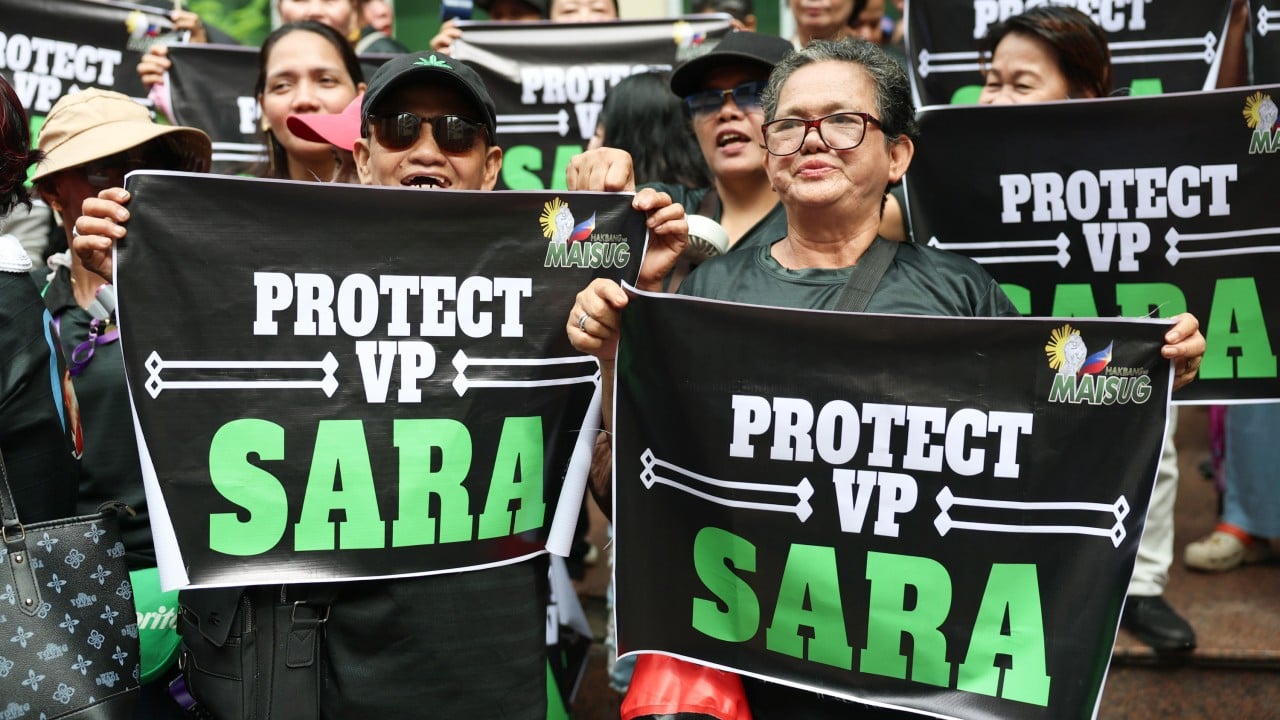
Let's look at the actual headcount and the political incentives driving these lawmakers. You have a core bloc of Duterte loyalists—figures like Ronald "Bato" dela Rosa, Bong Go, and Robin Padilla—who won't convict her under any circumstances. Even with the May 2025 midterm elections reshaping half the chamber, the Duterte brand still commands fierce loyalty in Mindanao and parts of the Visayas. No senator planning a national campaign in 2028 wants to alienate millions of solid Duterte voters unless they're certain the Duterte dynasty is permanently dead.
And right now, nobody in Manila is willing to bet their career on that.
The Confidential Funds Paper Trail Is Stronger Than You Think
Don't mistake my skepticism about the Senate math for a defense of the Vice President's legal position. On the merits, Duterte is in massive trouble.
The strongest pillar of the impeachment case isn't her unhinged late-night press conferences. It's the receipts. Specifically, the Commission on Audit (COA) disallowances and the House Good Government committee hearings that exposed how the Office of the Vice President (OVP) and the Department of Education (DepEd) spent hundreds of millions of pesos in confidential funds.
Consider what came out during those hearings:
- The 11-day burn rate. In December 2022, the OVP burned through 125 million pesos in confidential funds in just 11 days. That averages out to over 11 million pesos per day during the Christmas holidays, for an office that has no mandate over national security or intelligence gathering.
- The "Mary Grace Piattos" receipts. When COA demanded liquidation documents, the OVP submitted acknowledgment receipts signed by names that didn't exist in the Philippine Statistics Authority's birth, marriage, or death registries. One receipt was literally signed "Mary Grace Piattos"—combining the name of a popular local café chain and a brand of potato chips.
- Military certifications. High-ranking officials from the Armed Forces of the Philippines testified under oath that they never received the funds the OVP claimed to have used for youth leadership summits and anti-insurgency operations, contradicting the liquidation reports submitted by Duterte's staff.
In a regular courtroom, that kind of paper trail would lead to a swift conviction for plunder or malversation of public funds. The evidentiary standard in an impeachment trial is actually lower than "proof beyond a reasonable doubt" used in criminal courts. Senators vote based on their own conscience and appreciation of the evidence.
Yet evidence only matters when judges are willing to look at it without wearing partisan blinders.
How the 2025 Midterms Changed the Calculus
The May 2025 midterm elections were supposed to be the ultimate referendum on the Marcos-Duterte feud. Marcos's Alyansa Para sa Bagong Pilipinas slate poured immense resources into sweeping the 12 open Senate seats to guarantee a conviction bloc.
The results were far messier than Malacañang hoped. While administration-backed candidates won several seats, independent-minded politicians and opposition figures also broke through, alongside hardline Duterte allies who survived the administration's onslaught. The Senate that convened as an impeachment court isn't a monolithic Marcos machine. It's a fractured, hyper-ambitious body where every single vote is up for negotiation.
Think about the position a fence-sitting senator is in right now. If you vote to convict Sara Duterte, you permanently burn every bridge with Rodrigo Duterte's base. You guarantee that the Duterte machinery will campaign against you in 2028 or 2031. What do you get in return from President Marcos? By 2026, Marcos is already entering the lame-duck phase of his single six-year term. Philippine presidents cannot run for reelection. As Marcos's political capital naturally depreciates toward the end of his term, his ability to protect senators who take career-ending votes for him shrinks every month.
Politicians in Manila have a sixth sense for shifting winds. They remember how quickly alliances dissolved when Gloria Macapagal-Arroyo, Benigno Aquino III, and Rodrigo Duterte entered their final two years in office. Nobody wants to be the guy holding the bag for a president who leaves office in 2028 if Sara Duterte is still standing.
What Most Commentators Miss About the Timing
There's a massive procedural detail that almost every foreign observer overlooks when analyzing the Sara Duterte impeachment trial. Under the Philippine Constitution, impeachment proceedings can only be initiated against the same official once within a one-year period.
Because the House transmitted the impeachment articles in early 2025, the Senate's handling of the timeline became a weapon in itself. Senate President Francis "Chiz" Escudero initially resisted calls to rush the trial during the congressional break before the midterms, insisting on strict adherence to the rules of procedure. Critics accused him of stalling to protect Duterte. Allies argued he was ensuring the trial wouldn't be invalidated by the Supreme Court on a technicality.
That tension highlights a real danger for the prosecution. Sara Duterte's legal team isn't just fighting inside the Senate session hall. They're actively filing petitions with the Supreme Court, challenging the constitutionality of how the House consolidated four separate impeachment complaints to bypass the one-year bar rule.
If the prosecution moves too fast and tramples on due process, the Supreme Court—dominated by appointees from the Rodrigo Duterte era—could step in and halt the proceedings. If the Senate moves too slowly, public outrage over the confidential funds fades, replaced by inflation, rice prices, and local political horse-trading.
Comparing Duterte's Trial to Past Philippine Impeachments
To understand where this goes, you have to look at the only two completed impeachment trials in modern Philippine history.
In 2000, President Joseph Estrada was impeached by the House over jueteng payoffs and unexplained wealth. The Senate trial looked like it was heading toward a deadlock until a dramatic walkout by prosecutors—triggered when senator-judges voted 11-10 not to open a crucial bank envelope—sparked the EDSA II people power uprising that toppled him. Estrada wasn't convicted by the Senate. He was removed by the streets.
In 2012, Chief Justice Renato Corona was impeached by the House at the urging of President Benigno Aquino III over undeclared dollar accounts in his Statement of Assets, Liabilities, and Net Worth (SALN). The Senate convicted Corona by a landslide vote of 20-3. Why did the Senate cave so easily in 2012? Because Aquino was only two years into his term, enjoying sky-high approval ratings, and wielding total control over the national budget. Corona had no grassroots political base to defend him.
Sara Duterte is neither Joseph Estrada nor Renato Corona.
Unlike Corona, she commands a fiercely loyal, populist voter base that views attacks against her as attacks against Mindanao and the legacy of her father's presidency. Unlike Estrada in 2001, there is zero appetite among the Philippine middle class or the Catholic Church to take to the streets on behalf of the Marcos administration. People remember the Marcos family's own history too well to march in their name.
Without street pressure forcing hesitant senators to vote guilty, the trial stays strictly inside the realm of backroom politics. And in backroom politics, 16 votes is a steep mountain to climb.
What Happens If She Survives or Falls
You need to look at both outcomes because neither one brings stability to the Philippines.
If the prosecution manages to cobble together 16 votes—likely through intense executive pressure, promises of administration backing for 2028, and devastating witness testimony that makes acquittal politically toxic—Sara Duterte is removed from office and permanently disqualified from holding any public post. Marcos would then nominate a replacement Vice President from among the members of Congress, subject to confirmation by both chambers. That scenario would effectively decapitate the Duterte political dynasty at the national level, though it would likely trigger fierce regional backlash in Davao and across Mindanao, turning Sara into a political martyr ahead of the 2028 elections.
If she gets acquitted—meaning at least 9 senators vote not guilty or abstain—the political shockwaves will hit Malacañang immediately. An acquitted Sara Duterte becomes the instant, undisputed frontrunner for the 2028 presidential election. Every political clan in the Philippines would immediately start defecting from the Marcos coalition to cut deals with her before she takes power. Even if the Ombudsman or the Department of Justice pursues criminal plunder charges against her over the confidential funds, a sitting Vice President with a fresh Senate acquittal will claim political persecution and ride that narrative all the way to the ballot box.
How to Read the Trial Signals Yourself
Don't listen to the press releases coming out of the House prosecution team or the Vice President's camp. Both sides are spinning furiously. If you want to know whether the path to conviction is actually clearing, watch three specific indicators during the Senate hearings:
- Watch the evidentiary rulings on bank records. Just like in the Corona trial, the real smoking gun isn't political speeches—it's bank secrecy waivers and AMLC (Anti-Money Laundering Council) records. If a majority of senator-judges vote to subpoena Duterte's personal and campaign bank accounts, her defense is crumbling. If they block those subpoenas on technical grounds, she has the numbers to survive.
- Track the "swing" senators from political dynasties. Ignore the die-hard Duterte allies and the loyal Marcos lieutenants. Watch senators from entrenched political families like the Villars, Cayetanos, and Estradas. These families survive by always backing the winning horse. The moment you see them aggressively questioning Duterte's defense lawyers during cross-examination, you'll know they've decided she's finished.
- Monitor the International Criminal Court (ICC) developments. The impeachment trial doesn't exist in a vacuum. Rodrigo Duterte's legal jeopardy with the ICC over his drug war is unfolding simultaneously. If the Marcos government cooperates with ICC arrest warrants, it signals an all-out war of annihilation against the Duterte family—meaning Malacañang will spare no expense to secure those 16 Senate votes.
Right now, the path to impeaching Sara Duterte was wide open, and the House took full advantage of it. The path to convicting her is narrow, treacherous, and completely dependent on whether 16 ambitious politicians decide it's safe to pull the trigger. Until those 16 senators show their hands on a crucial procedural vote, anyone claiming her conviction is guaranteed isn't paying attention to how Manila actually works.