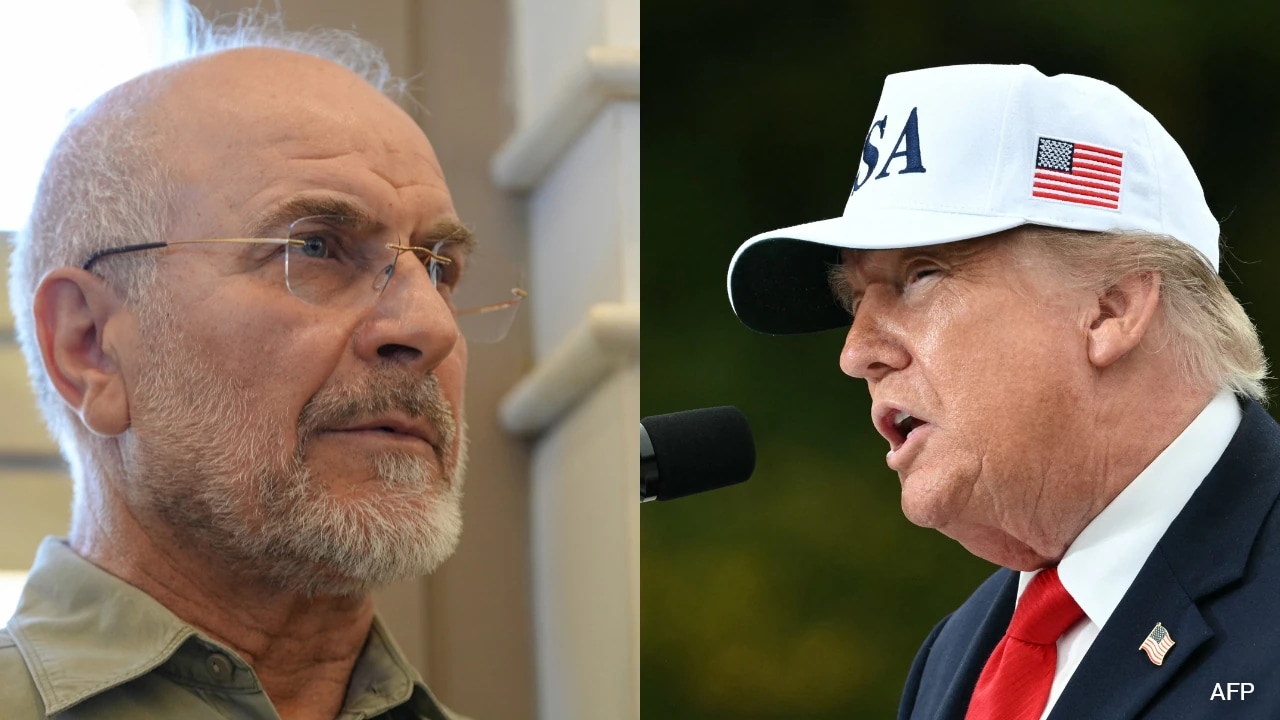
When Iran's Parliament Speaker and chief negotiator Mohammad Bagher Ghalibaf warned Donald Trump that any new American mistake would spark a wider regional fire, cable news treated it like standard diplomatic bluster. It isn't. If you look past the fiery press conferences and read the actual mechanics of the 2026 Persian Gulf standoff, you realize both sides are trapped in a structural deadlock that threatens global energy markets right now.
Let's cut through the noise. Trump wants a sweeping surrender on nuclear enrichment and regional proxies before lifting an American naval blockade that has already cost Tehran roughly $25 billion in lost revenue. Ghalibaf, speaking directly from the Iranian parliament floor, has countered with an absolute refusal to negotiate or reopen the Strait of Hormuz until Washington meets seven non-negotiable conditions. Neither man is bluffing, and the calendar is about to force their hands.
Why Ghalibaf's Warning Hits Differently in Late 2026
You can't analyze current threats using the playbook from 2018 or 2020. Everything changed after the joint U.S.-Israeli military strikes against Iranian targets in late February 2026 and the subsequent naval blockade. When Ghalibaf warns that another American mistake will expand the geographical scope of the conflict, he isn't just talking about tit-for-tat skirmishes in the Persian Gulf.
Tehran's leadership—now operating under Supreme Leader Mojtaba Khamenei's explicit directive to reject a permanent state of "neither war nor peace"—has fundamentally altered its deterrence math. Iranian officials believe that accepting prolonged economic strangulation without fighting back guarantees internal collapse.
Look at what Iranian military and security officials have actually put on the table over the last few weeks:
- Targeting European Staging Grounds: Supreme National Security Council Secretary Mohsen Rezaei explicitly warned that any U.S. military facility supporting renewed operations could be struck, even in Europe. That wasn't empty talk; the Pentagon already quietly shifted tankers and aircraft out of RAF Mildenhall and RAF Fairford in England over credible threat assessments.
- Testing Air Defense Thresholds: Revolutionary Guard units recently targeted Patriot air defense radar installations at bases in Riffa and Awali in Bahrain using coordinated drone and missile salvos. They're probing reaction times and demonstrating that Gulf bases remain inside their engagement envelope.
- Weaponizing the Strait of Hormuz: By keeping the chokepoint closed to hostile shipping, Tehran holds global oil transit hostage while demanding the U.S. drop its blockade first.
Honestly, most commentators miss the core asymmetry here. Washington possesses overwhelming conventional firepower and three carrier strike groups in the theater, yet military analysts like John Mearsheimer have pointed out that 8,000 regional troops and air power cannot occupy or remake a nation of 90 million people spread across forbidding mountainous terrain. Trump has the hammer, but Iran isn't a nail that can be flattened from 30,000 feet.
Inside Tehran's Seven Conditions That Nobody Reads
If you listen to White House press briefings, Trump dismisses Iranian diplomats as "professional tap dancers" who stall for time. From Tehran's perspective, they already laid out their terms following the June 2026 Islamabad framework—a document Hassan Ghashghavi of parliament's National Security Committee claims both presidents signed, though Trump has completely disowned it.
Ghalibaf's refusal to talk until seven specific conditions are met creates an impossible diplomatic knot. While Tehran hasn't published a formal treaty text, reporting from regional outlets and statements by Iranian officials show what those demands actually require:
- Immediate Cessation of Hostilities Across All Fronts: Washington must halt not only direct U.S. strikes, but also restrain allied operations against Iran's regional partners.
- Complete Lifting of Economic Sanctions: Iran wants full sanctions relief upfront. Here's the catch—no American president can legally wave a wand and erase statutory sanctions passed by Congress, let alone the United Nations snapback sanctions that returned in September 2025 or separate British and European Union restrictions.
- Release of Frozen Sovereign Assets: Tehran demands immediate access to billions in blocked overseas accounts before substantive nuclear talks even start.
- Termination of the Naval Blockade: The U.S. Navy must stop intercepting Iranian tankers and commercial vessels.
- War Reparations: Iran wants financial compensation for infrastructure and nuclear facilities damaged during the 2026 strikes.
- Binding Security Guarantees: Tehran insists on ironclad assurances against future U.S. withdrawal or military attack, haunted by Trump's 2018 exit from the Joint Comprehensive Plan of Action.
- Recognition of Iranian Control in Hormuz: Tehran refuses to surrender leverage over maritime traffic until its own economic lifelines are restored.
You don't need a doctorate in international relations to see why talks in Qatar and Switzerland keep stalling. Iran is demanding that Washington surrender every single piece of economic and military leverage before negotiations begin, while Tehran keeps its enriched uranium stockpile and its chokehold on the Strait of Hormuz until the final ink dries. No American administration—least of all Trump's—will ever sign off on that sequence.
What Trump's Early 2027 Deadline Really Means
Trump recently gave Iran until early 2027 to strike a deal, warning that large-scale military operations could resume early if diplomacy fails. Most observers read that timeline as presidential patience. Look closer at the Washington calendar, and you'll see a very different reality.
January 3, 2027, marks the seating of the newly elected Congress following the 2026 midterm elections. Once that calendar flips, the White House faces serious legislative constraints on funding open-ended military deployments and naval blockades without explicit congressional authorization. Trump's deadline isn't arbitrary generosity; it's a reflection of his shrinking political runway.
Secretary of State Marco Rubio summed up the administration's bet bluntly when he told reporters that economic pain eventually forces a government to compromise because "eventually you have to eat". Washington is wagering that domestic protests inside Iran, combined with the $25 billion blockade hole and secondary sanctions on oil buyers, will crack Tehran's resolve before January.
Yet Beijing and Moscow have quietly complicated that math. Even though Trump downplayed Chinese and Russian intelligence sharing after meeting Xi Jinping and Vladimir Putin in Shenzhen—arguing that real involvement means "shooting, not giving them little information"—commercial satellite and defense reports indicate Tehran still receives crucial external monitoring of U.S. naval movements. Meanwhile, Saudi crude exports have helped cushion Asian buyers from the loss of Iranian barrels, shielding global markets just enough to keep Washington from panicking, though not enough to eliminate price volatility.
How to Read the Next 30 Days Without Getting Played by Headlines
If you're tracking this crisis for business, energy exposure, or geopolitical risk, stop reacting to every cable news chyron. Both Ghalibaf and Trump use maximalist public rhetoric to satisfy domestic hardliners while backchannel mediators in Doha and Islamabad pass quiet messages.
Watch three concrete indicators over the coming weeks instead of listening to speeches:
- Maritime Interdiction Incidents: Pay attention to whether the Islamic Revolutionary Guard Corps actually orders commercial blockade runners to test U.S. Navy cordons. Trump publicly dared them to try, promising their ships would end up "at the bottom of the sea". A single sunk vessel turns a slow economic siege into an immediate shooting war.
- IAEA Access Negotiations: Watch whether Tehran allows International Atomic Energy Agency inspectors back into bombed nuclear sites. As Nuclear Threat Initiative experts like Eric Brewer have noted, satellite imagery can't tell you what's happening underground. Any quiet movement on inspector access signals real diplomatic traction; continued stonewalling means military escalation is back on the table.
- U.S. Force Posture in Europe and the Gulf: Keep an eye on aviation tracking and Pentagon basing notices. When tanker aircraft quietly disperse away from forward hubs like Cyprus, Britain, or Bahrain, planners are preparing for incoming ballistic missile salvos rather than another round of talks in Switzerland.
Check your own portfolio or supply chain exposure to Middle Eastern shipping lanes now, before tanker insurance rates spike again on a midnight headline. If diplomatic backchannels in Qatar fail to produce an interim freeze on enrichment and blockade enforcement before late December, prepare for January 2027 to open with a sharp military shock rather than a handshake.
For further video context on Mohammad Bagher Ghalibaf's parliamentary address and the Strait of Hormuz standoff, you can watch Iran's Top Negotiator Warns Trump Over Gulf Crisis.