You probably think bird watching is a passive hobby for retirees in lawn chairs. You picture someone sipping tea, looking through a kitchen window at a stray northern cardinal.
You’re completely wrong.
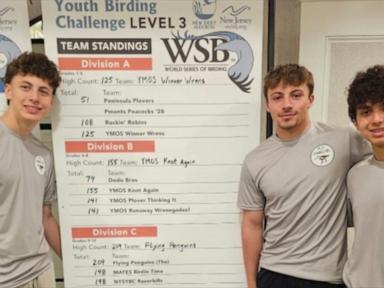
Every May, a subculture of hyper-competitive teenagers descends upon New Jersey for the World Series of Birding. They don't sit still. They don't drink tea. They sprint through swamps in the pitch black, map out driving routes down to the exact minute, and survive on energy drinks for twenty-four straight hours.
Organized by the New Jersey Audubon Society since 1984, this extreme event forces teams to identify as many bird species as possible by sight or sound within a single calendar day. It is part grueling marathon, part high-stakes scavenger hunt, and entirely exhausting. While elite adult teams face off for the historic Urner-Stone Cup, some of the most intense drama happens in the Zeiss Youth Birding Challenge, where middle and high school students regularly out-bird the adults.
The Brutal Reality of a 24-Hour Big Day
This isn't a casual walk in the woods. To win the youth division, teenagers undergo a physical and mental gauntlet that starts long before the clock strikes midnight.
The strategy is ruthless. Teams spend three to five days before the event scouting the entire state or their chosen county. They drop pins on digital maps, tracking exactly where a specific barred owl calls at 2:00 a.m. or which patch of woods holds a nesting hooded warbler.
When the competition officially starts at midnight, the adrenaline hits. Most hardcore teams start in northern New Jersey. Under the cover of total darkness, they navigate places like the Great Swamp National Wildlife Refuge. They stand in silence, straining their ears against the wind to catch the faint, wet grunt of a Virginia rail or the subtle whinny of a sora.
Missing a nocturnal species early can ruin your entire strategy. The pressure is immense, and sleep deprivation makes your mind play tricks on you. Every rustle in the brush matters.
Sprinting Against the Sunrise
By daybreak, the strategy shifts from patience to pure speed. Teams rush to the northernmost forests to tick off species like the common raven or purple finch before these birds stop singing and disappear into the canopy.
The hours between 5:00 a.m. and 10:00 a.m. are absolute chaos. This is the morning chorus, the peak window where hundreds of migratory birds are active. A youth team might rack up eighty species in this five-hour window alone, shouting out codes while a designated scribe frantically logs everything into the eBird app.
- The Golden Rule: Every single team member must see or hear the bird for it to count on the official log. If two kids spot a scarlet tanager but the third misses it, you can't log it. This creates intense group dynamics where teenagers are screaming directions at each other under a ticking clock.
- The Logistics: Teenagers obviously can't drive themselves across the state for twenty-four hours straight. Each youth team relies on a saintly parent driver and a coach. The adults are strictly forbidden from helping identify birds. They are essentially automated transport and safety monitors, keeping the kids hydrated while the teens call the shots from the back seat.
After cleaning up the northern forests, teams blast down the Garden State Parkway. They hit the salt marshes of the Edwin B. Forsythe National Wildlife Refuge or the thick woods of Belleplain State Forest. By afternoon, the heat sets in, the birds stop singing, and the dreaded "afternoon slump" tests everyone's sanity.
When Teenagers Out-Bird the Pros
Adult birders often underestimate these high school teams, which is a massive mistake. Teenagers possess a massive biological advantage in this game: flawless high-frequency hearing.
As people age, they lose the ability to hear high-pitched sounds. In birding, this is a devastating handicap. Many of the rarest warblers—like the cedar waxwing or the blackpoll warbler—have songs that sit at the absolute upper limit of human hearing.
While veteran adult birders are squinting through expensive scopes trying to find visual confirmation, a team of fourteen-year-olds can pull up to a woodlot, roll down the windows, log four separate species by sound in thirty seconds, and drive away.
It's not just a theoretical advantage. The Maryland Ornithological Society’s youth division, the Youth Maryland Ornithological Society, has fielded high school teams that recorded top overall species totals for the entire event, beating out seasoned adult biologists and professional guides. In 2015, a youth team named the Raucous Gulls set a staggering youth record by logging 217 unique species in twenty-four hours.
More Than Just Bragging Rights
While the competitive drive is real, the event serves a much larger purpose. It is a massive fundraising engine for global conservation.
Teams use their pages to raise money through flat donations or per-species pledges. If a local club sponsors a youth team for two dollars a species, and that team hits 150 species, that's a quick three hundred bucks from a single donor. Over the last four decades, the World Series of Birding has raised millions of dollars. These funds go directly toward mapping migration routes, buying up critical wetlands, and protecting threatened species like the saltmarsh sparrow and black skimmer.
It also changes how these kids look at the environment. They aren't just learning names; they are learning the exact habitat requirements of migratory animals. They see firsthand how a single housing development or a cleared woodlot completely breaks the chain for a bird traveling all the way from South America.
The day ends at the Cape May Point Science Center. Teams must submit their final digital checklists by midnight. The next morning, everyone gathers at the Grand Hotel of Cape May for the legendary awards brunch. Exhausted kids, fueled by nothing but pancakes and pride, take the microphone to share stories of flat tires, missed owls, and the rare birds that saved their day.
If you want to get involved or support a youth team in the next run, your next steps are simple. Don't just read about it. Go to the New Jersey Audubon website, look up the Zeiss Youth Birding Challenge rosters, and back a team with a per-species pledge. If you have kids who are obsessed with wildlife, look up local young birder clubs in your state. Most clubs start organizing their scouting routes months in advance, and they are always looking for the next generation of sharp ears to take down the adults.
For a closer look at the actual energy and community at the finish line, watch the 2026 World Series of Birding Awards Brunch highlight. This recording captures the unique atmosphere where youth teams and veteran conservationists gather to share their stories right after the 24-hour marathon ends.