Half a billion dollars sounds like a massive payday until you divide it by forty-six billion.
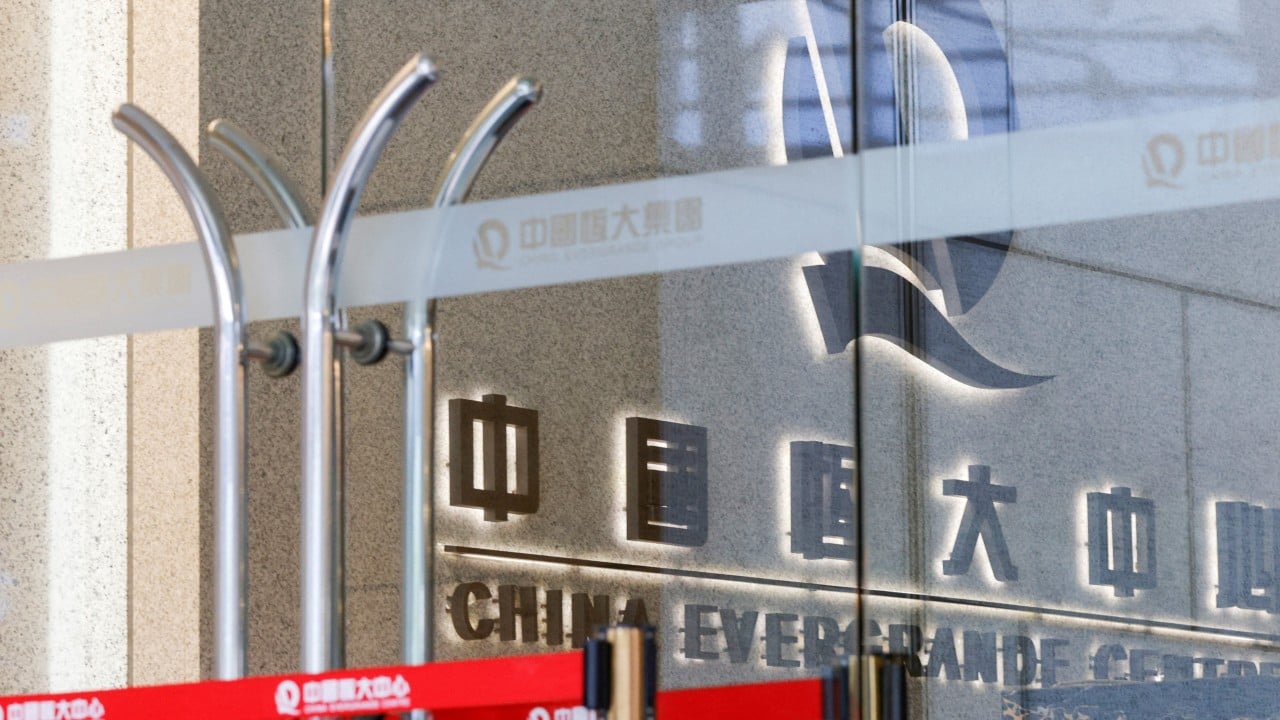
When China Evergrande Group's court-appointed liquidators finally struck a deal to offload a controlling 51.016% stake in Evergrande Property Services Group for roughly US$513 million (about HK$4.03 billion), the headlines treated it like a grand finale. It isn't. If you actually look at the balance sheets, the creditor recovery math, and the sheer operational baggage attached to this subsidiary, you realize this deal is less of a victory lap and more of a salvage operation. If you liked this piece, you should look at: this related article.
Most observers confuse the collapsing real estate developer with its property management arm. They shouldn't. While the parent company imploded under hundreds of billions in liabilities and saw its founder, Hui Ka Yan (Xu Jiayin), handed a life sentence by a Shenzhen court in August 2026, the services unit actually kept the lights on. Understanding why Asia-focused private equity giant PAG stepped up to buy this stake—and what it actually means for creditors and minority shareholders—requires looking past the headline number.
The Math Behind the Evergrande Property Services Stake Sale
Let's look at the actual transaction mechanics. Through an acquisition vehicle named Everest Holdings I Limited, PAG agreed to purchase roughly 5.52 billion shares of Evergrande Property Services (HKEX: 6666). Depending on the daily exchange rate fluctuations between the Hong Kong dollar and the greenback, the deal clocks in at US$513 million to US$514 million. For another look on this event, see the latest update from Business Insider.
That makes it the largest single asset disposal since a Hong Kong court ordered China Evergrande's liquidation back in January 2024. Before this, liquidators Tiffany Wong and Edward Simon Middleton of Alvarez & Marsal had been scraping together whatever they could find. They auctioned off roughly 100 artworks—including pieces by Picasso, Monet, and Andy Warhol—for HK$255 million. They chased down luxury mansions in Hong Kong and filed massive lawsuits against former auditors like PwC. By late October 2026, total asset recoveries stood at around US$435 million, representing less than 1% of the US$46 billion in offshore creditor claims.
Adding US$513 million to that pot more than doubles the cash available for distribution. Still, if you're an offshore bondholder holding Evergrande debt, don't pop the champagne. Even with this sale closed, your recovery rate moves from less than one cent on the dollar to maybe two cents. That's the brutal reality of distress investing in Chinese real estate.
Why PAG Wanted a Company Tied to a Collapsed Giant
You might wonder why a sharp private equity firm like PAG would touch anything carrying the Evergrande name. Honestly, it comes down to a classic corporate finance separation—good business, terrible parent.
Property management in China operates on recurring fee revenue, not speculative land banking or debt-fueled construction. People still live in those apartments. They still need security guards, elevator maintenance, landscaping, and trash collection. Evergrande Property Services manages over 600 million square meters of gross floor area across mainland China. That is a massive, sticky customer base that generates predictable cash flow every single month.
Look at the subsidiary's 2025 financial numbers, which laid the groundwork for the exclusive negotiations PAG entered in April 2026:
- Revenue climbed to roughly CNY 13.68 billion (around US$2.0 billion), up over 7% year-on-year.
- Net profit hit CNY 1.01 billion (about US$147.9 million).
- Cash and cash equivalents surged over 55% to CNY 4.19 billion.
- Net current assets flipped positive to CNY 87.5 million, recovering from a massive deficit of negative CNY 969 million at the end of 2024.
- Zero bank borrowings sat on its books.
Read those numbers again. PAG is buying a 51% controlling stake in a debt-free business generating nearly US$150 million in annual net profit and sitting on over US$600 million in cash, all for an equity check of around US$513 million. Even factoring in the risk discount of Chinese real estate, that valuation is extraordinarily cheap. PAG isn't betting on a miraculous rebound in Chinese homebuilding. They're buying a cash-flowing utility at a fire-sale price because the seller had a gun to its head.
The Hidden Traps Inside the Balance Sheet
Of course, nothing in the Evergrande orbit comes without severe structural headaches. If you're evaluating this deal like an institutional analyst, three specific risks immediately jump off the page.
First, there's the infamous missing deposits saga. Years before the collapse, China Evergrande raided its own property management subsidiary, using roughly CNY 13.4 billion (nearly US$2 billion) of the unit's cash deposits as pledge guarantees for parent-level loans that subsequently defaulted. Evergrande Property Services has been fighting an uphill legal battle to recover those funds from its bankrupt parent. In practice, that money is almost certainly gone forever, meaning PAG had to underwrite the business assuming zero recovery on those historical claims.
Second, pipeline growth is basically dead. Historically, Chinese property managers relied on their parent developers to hand over newly built residential towers every year, guaranteeing effortless revenue expansion. With China Evergrande liquidated and its onshore unit Hengda Real Estate placed into bankruptcy proceedings in Guangdong, that free pipeline vanished. Under PAG's ownership, the management team will have to fight tooth and nail in the open market to win third-party contracts from independent residential committees and commercial landlords.
Third, fee collection rates in lower-tier Chinese cities remain under intense pressure. When home values drop by 30% or 40%, homeowners get grumpy. Many refuse to pay their monthly management fees on time, or they demand fee cuts. Maintaining margins while dealing with frustrated residents requires tough operational discipline.
What Happens to Minority Shareholders Next
If you hold shares in Evergrande Property Services, or if you're watching the Hong Kong market for special-situation arbitrage plays, the regulatory mechanics here matter a lot.
Under Hong Kong's Takeovers Code, acquiring more than 30% of a publicly listed company triggers a mandatory general offer. Because PAG is buying 51.016%, Everest Holdings I Limited is legally required to extend an unconditional mandatory cash offer to all remaining minority shareholders at the exact same price per share.
PAG has explicitly stated in exchange filings that it intends to maintain the company's listing on the Hong Kong Stock Exchange and doesn't plan to overhaul its day-to-day operations. They aren't trying to take it private and strip it for parts. Instead, they want to scrub the toxic Evergrande association off the brand, install institutional governance, stabilize margins, and likely re-rate the stock's valuation multiple over a three-to-five-year private equity horizon.
For retail and institutional minority holders, this creates a clear decision point once trading resumes and the formal offer circular drops:
- Take the guaranteed exit. You can tender your shares into PAG's mandatory cash offer, lock in liquidity immediately, and walk away from Chinese property exposure entirely.
- Ride alongside private equity. You can hold your shares, betting that removing the Evergrande overhang and bringing in PAG's operational oversight will eventually push the stock price well above the buyout offer.
How to Apply These Lessons to Distressed Asset Investing
Watching a multi-billion-dollar empire get dismantled piece by piece offers a masterclass in how corporate distress actually plays out. Whether you're analyzing special-situation equities, credit recovery, or private equity buyouts, keep these hard rules in mind before putting capital to work:
- Separate operational cash flow from parent-level leverage. A subsidiary with clean unit economics and zero debt can survive a parent company's bankruptcy, provided ring-fencing holds up in court. Always check subsidiary-level balance sheets rather than assuming contagion kills everything equally.
- Ignore headline recovery numbers until you check the denominator. A US$513 million sale sounds huge in isolation, yet against US$46 billion in verified claims, it barely moves the needle for unsecured creditors. Always calculate recovery per dollar of senior and pari-passu debt before buying distressed bonds.
- Watch the regulatory triggers on controlling stakes. In jurisdictions like Hong Kong and the UK, crossing the 30% ownership threshold forces buyers to make a mandatory cash offer to minority holders. Tracking exclusive negotiation announcements—like the 30-working-day window Evergrande liquidators granted in April 2026—gives sharp investors months of lead time to position themselves before the final deal terms hit the tape.
- Discount intercompany receivables to zero. Whenever a distressed parent company controls a cash-rich subsidiary, assume any "loans" or "pledged deposits" owed back to the subsidiary are uncollectible. Value the operating business strictly on its standalone cash generation.
If you're tracking the remaining fallout of China's property crisis, pull up the formal offer circular once PAG files its unconditional cash offer terms with the Hong Kong Stock Exchange. Compare the implied enterprise-value-to-EBITDA multiple against healthy peers like China Overseas Property or Poly Property Services—that gap will tell you immediately whether PAG left any upside on the table for minority investors.