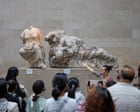
You can build a state-of-the-art glass museum right at the foot of the Acropolis, but you cannot force a London institution to hand back stone carvings it secured two centuries ago. Greek Prime Minister Kyriakos Mitsotakis keeps pushing the issue back into the headlines, arguing that a permanent reunion of the Parthenon sculptures comes down to basic political will.
If you look past the diplomatic posturing, the battle over these ancient artifacts reveals a stubborn clash between archaic legal definitions and modern cultural reality. Athens wants the fragments back where they belong. London worries about setting a slippery legal precedent for global institutions. Don't forget to check out our earlier coverage on this related article.
The Core of the Standoff
The historical facts aren't up for debate, though the interpretation certainly is. Between 1801 and 1805, Lord Elgin removed roughly half of the remaining sculptural decoration from the Parthenon while serving as the British ambassador to the Ottoman Empire. Greece argues this was an act of colonial looting. The British Museum maintains they were legally acquired under the geopolitical reality of the time and later purchased by a parliamentary vote in 1816.
Fast forward to today, and that two-century-old paperwork is the main shield keeping the marbles in Bloomsbury. British trustees routinely hide behind the British Museum Act of 1963, which legally restricts the institution from deaccessioning items in its collection except under very narrow circumstances. If you want more about the history here, The Guardian offers an in-depth breakdown.
Yet laws can be rewritten when governments choose to care. That is precisely the point Mitsotakis keeps driving home.
Why Loans Aren't Enough
Negotiators have spent years floating creative compromises. You might remember talk of a rotational loan agreement, where the sculptures would spend time in Athens and time in London.
Greece rejects that framework out of hand. Accepting a loan implies that the British Museum retains legal ownership of the artifacts. For Athens, acknowledging British ownership is a non-starter. They want a permanent reunification, not a polite timeshare arrangement that validates an old theft.
Mitsotakis famously compared the situation to cutting the historic Bayeux Tapestry in half. You wouldn't slice up a masterpiece to satisfy two different postal codes. The Parthenon frieze was conceived as a continuous narrative wrapping around a single temple. Splitting the visual story across continents ruins the artistic intent.
The Modern Museum Argument
For decades, the primary British defense for keeping the marbles was simple: Greece lacks a proper facility to safeguard antiquities of this magnitude.
That excuse expired.
The Acropolis Museum opened its doors in 2009, sitting just a few hundred meters from the ancient citadel. It features a top-floor gallery designed explicitly with the precise dimensions of the Parthenon frieze. Right now, empty spaces and plaster casts sit where the original London-held fragments belong. Anyone visiting Athens can walk through the gallery and feel the physical absence of the missing pieces immediately.
The museum matches any climate-control and security standard found anywhere in Europe. The infrastructure argument is dead.
Where Diplomacy Goes From Here
Public opinion in the United Kingdom has shifted significantly over the last decade. Polls routinely show that a majority of British citizens support returning the sculptures. People realize that holding onto fragments of another nation's primary cultural monument looks increasingly out of touch.
Yet political leaders in Whitehall tend to treat the issue as a hot potato. No prime minister wants to be the one presiding over the dismantling of imperial-era collections, fearing a domino effect that would empty out rooms across London.
Breaking this logjam requires the kind of imaginative diplomacy Mitsotakis points to. Greece has repeatedly signaled a willingness to send major, never-before-seen ancient treasures on rotation to London as part of a broad cultural partnership.
The technical solutions are obvious. Only the courage is missing.
Stop treating ancient art as a zero-sum game of diplomatic leverage. Open a genuine dialogue that respects the integrity of the monument, and let the stones finally go home.
Return Parthenon sculptures permanently, Greek PM urges UK.
This short video captures the core of the Greek Prime Minister's public stance demanding the permanent return of the sculptures to Athens.