Paris doesn't do winter halfway. When the clouds finally break and the flakes start sticking to the Haussmann rooftops, the city doesn't just get cold. It transforms. You've probably seen the viral photos of a white-dusted Eiffel Tower or the Tuileries looking like a literal Narnia. But there's a reality to a rare heavy snowfall in the French capital that a postcard simply cannot capture. It's quiet. The usual roar of scooters and the frantic energy of the Grands Boulevards vanish, replaced by a muffled, eerie stillness that feels like the city is holding its breath.
Heavy snow in Paris is statistically rare. We aren't talking about the slushy "mélange" that melts before it hits the pavement. I'm talking about the rare cycles—like those seen in 2018 or the more recent cold snaps—where several centimeters accumulate within hours. For a city built on limestone and narrow cobblestones, this is a beautiful disaster.
The Architecture Of A Parisian Snowfall
Most people think the Eiffel Tower is the star of the show. It's fine. It's iconic. But if you want to actually feel the weight of a Parisian winter, you head to Montmartre. The Sacré-Cœur sits at the highest point in the city, and when it snows, the funicular usually stops running. You have to climb.
The white stone of the basilica starts to blend into the sky. From the top, the view of the city is different than in summer. You don't see the individual streets; you see a textured, grey-and-white map of history. The zinc roofs, which usually look blue-grey, turn a brilliant, blinding white. It’s one of those moments where you realize why writers have spent centuries trying to describe this place. It’s not just pretty. It’s heavy with mood.
The parks offer a different vibe altogether. In the Jardin du Luxembourg, the statues of former queens look like they’ve put on thick white coats. The chairs—those famous green metal chairs—are usually stacked up or buried. It’s a ghost version of the park you know.
When The Metro Fails And The Skis Come Out
Here is the thing about Paris: it is completely unprepared for real snow. A few inches of the white stuff and the RER lines start acting like they've never seen a snowflake in their lives. Buses get stuck on the slopes of the 19th arrondissement. The city basically grinds to a halt.
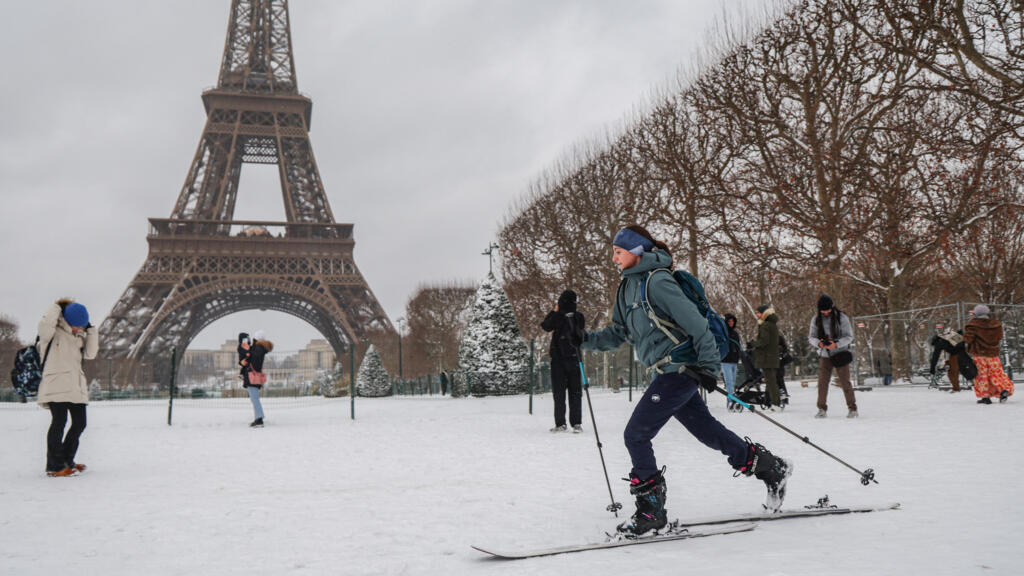
But that’s when the magic happens for the locals. During the heavy 2018 falls, people were actually skiing down the steps of Montmartre. I'm not kidding. Urban skiing became a temporary sport. You'd see people in full North Face gear trekking across the Pont Neuf as if they were in the French Alps instead of the 1st arrondissement.
It creates a strange sense of community. Parisians, who are usually rushing and maybe a bit short-tempered, suddenly stop to help push a car or laugh at the absurdity of a snowman sitting outside a Chanel boutique. The "In Pictures" articles usually focus on the monuments, but the real story is in the cafes. People crowd inside, the windows are completely fogged up, and the smell of hot chocolate and red wine is everywhere. It’s the ultimate "vin chaud" weather.
The Logistics Of A City Under White Out Conditions
If you're planning to be in Paris when a storm hits, you need to understand the logistics. This isn't Montreal or Moscow. The city doesn't have an army of snowplows waiting in every corner.
- Footwear is everything. Those fashionable leather boots you bought for a dinner at a bistro? They'll be ruined in ten minutes. The salt they use on the sidewalks is brutal, and the slush gets deep fast.
- The Parks close. This is a major bummer that catches tourists off guard. If the wind picks up or the snow gets too heavy, the city often closes the major parks like the Tuileries or Buttes-Chaumont to prevent falling branches from hitting people.
- The "Grey" Phase. Snow in Paris lasts about 48 hours before it turns into a grey, icy slush. That window of "perfection" is tiny. If you wake up and see white, you drop everything and go outside immediately. By tomorrow, it's just cold puddles.
Why We Are Seeing More Of This Now
Meteorologists at Météo-France have been tracking these "cold snaps" with increasing interest. While global temperatures are rising, the instability of the polar vortex means that when the cold hits, it hits hard. These aren't your grandfather's winters. They are erratic. You might have a 15-degree day in February followed by a sudden Siberian blast that dumps ten centimeters of snow in a single night.
This volatility makes the snow feel even more precious—and more disruptive. The city's infrastructure wasn't designed for extreme swings. The heating systems in old Haussmann buildings struggle. The pipes in the 17th-century cellars freeze. It’s a reminder that even a city as polished as Paris is still at the mercy of the Atlantic weather patterns.
Capturing The Moment Without The Clichés
If you're trying to take photos, skip the Trocadéro. It’s a circus of influencers tripping over themselves in the snow. Instead, head to the Canal Saint-Martin. The iron bridges and the leafless trees reflected in the dark water create a much more interesting, moody aesthetic. Or walk through the Marais. The narrow streets hold the snow better because there’s less wind, and the medieval architecture looks incredible under a fresh layer.
The real beauty of a rare Paris snow isn't in the "monumental" shots. It’s in the small details. A single red rose bush in a courtyard covered in white. A "Boulangerie" sign glowing through a flurry. The way the street lamps cast a yellow, cinematic glow on the drifts.
Don't just look at the pictures. Understand that for a Parisian, this is a day of total liberation from the routine. Work gets canceled, the streets become playgrounds, and for a few hours, the most photographed city on earth actually feels like a secret.
If you find yourself in the middle of a Parisian white-out, forget your itinerary. Walk until your feet are numb, find the nearest brasserie with a steaming window, and order a bowl of onion soup. The Louvre will still be there tomorrow, but this version of the city won't.