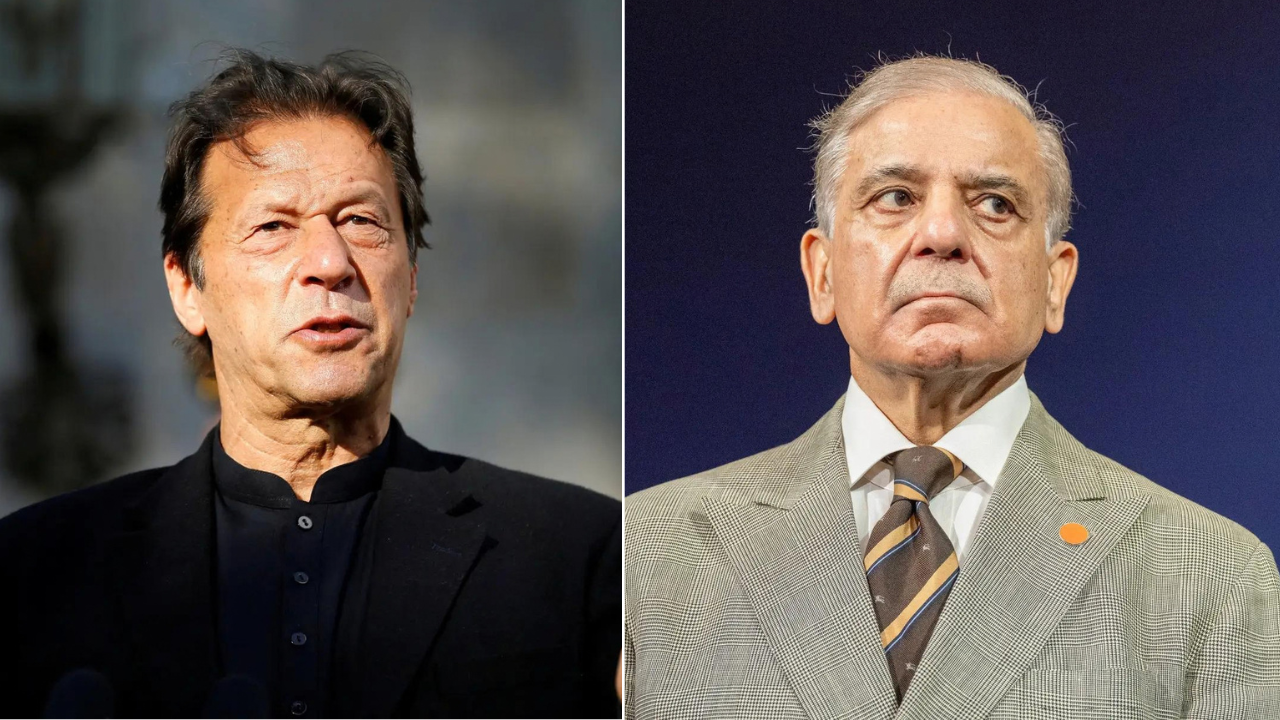
Read any mainstream report on Prime Minister Shehbaz Sharif telling Imran Khan’s Pakistan Tehreek-e-Insaf (PTI) to "come to your senses" before negotiations can begin, and you will see the exact same lazy framing.
The pundits treat it like a standard political standoff. One side sets preconditions; the other side balks; the middle ground supposedly lies somewhere in polite parliamentary dialogue.
That reading isn't just shallow. It completely misunderstands how power actually operates in Islamabad.
Shehbaz Sharif’s demand—that the PTI abandon its street agitation, accept the current constitutional setup, and apologize for the events of May 9—isn't an opening bid for reconciliation. It is a calculated political stranglehold disguised as statesmanship. If the PTI accepts those terms, they commit political suicide. If they reject them, they hand the ruling coalition and the military establishment the exact pretext needed to crush them further.
Stop asking whether Imran Khan will take the deal. Start asking why the Prime Minister offered terms designed specifically to be refused.
The Myth of the Benevolent Olive Branch
Mainstream news outlets love a horse-race narrative. When Shehbaz Sharif stands on the floor of the National Assembly and extends an invitation for dialogue—with the sharp caveat that the opposition must first "come to your senses"—reporters dutifully transcribe the quote as a conditional peace offering.
They miss the mechanics of asymmetric political warfare.
In healthy democracies, preconditions for talks are bargaining chips. You ask for a ceasefire; you settle for a cooling-off period. In Pakistan’s hybrid political system, preconditions are loyalty oaths.
Look closely at what "coming to your senses" actually entails according to the ruling Pakistan Muslim League-Nawaz (PML-N) and its coalition partners:
- Total capitulation on the February 2024 election results: The PTI must stop challenging the legitimacy of the current government, effectively erasing their core grievance that their mandate was stolen through systemic rigging and Form-45 manipulation.
- Unconditional contrition for May 9: The party must own the riots targeting military installations as an unforgivable crime, validating the state's crackdown, mass arrests, and military court trials.
- Severing ties with street mobilization: They must trade their only real point of leverage—massive public mobilization and digital dominance—for a seat at a table where the rules are written by their adversaries.
I have watched South Asian political coalitions play this exact hand for two decades. Whenever a civilian government lacks organic street power and relies entirely on institutional backing to govern, its biggest threat isn't a vote of no confidence. Its biggest threat is a legitimacy crisis.
By telling the PTI to "come to your senses," Sharif isn't trying to bring Imran Khan into the tent. He is trying to force Khan to validate the tent's existence.
Why "Dialogue" Is the Wrong Question Entirely
If you search online for updates on Pakistani politics right now, the dominant questions revolve around whether talks will happen, when Khan might be released from Adiala Jail, and what compromises the PTI needs to make to enter the mainstream again.
Every single one of those questions rests on a flawed premise. They assume the Prime Minister actually wants a negotiated settlement with the PTI.
He doesn't. Neither does the broader establishment backing him.
Think about the basic math of power in Islamabad. Right now, the PML-N holds the executive branch, the Pakistan Peoples Party (PPP) holds the presidency and key constitutional offices, and the military establishment enjoys uninterrupted alignment with the civilian setup on economic policy, foreign affairs, and internal security.
What happens if they genuinely reconcile with Imran Khan?
- The Coalition Fractures Instantly: The PML-N and PPP are historic rivals bound together solely by their mutual fear of Imran Khan’s populist wave. Remove the threat of Khan, and their marriage of convenience implodes within weeks.
- The Economic Narrative Collapses: Governing Pakistan right now requires brutal austerity—sky-high energy tariffs, IMF-mandated tax hikes, and shrinking purchasing power. A neutralized, jailed opposition allows the government to blame past mismanagement while pushing through unpopular reforms. A freed, legitimized Khan turns every inflation spike into an existential crisis for the cabinet.
- Institutional Authority Gets Diluted: For the security establishment, the post-May 9 environment reasserted strict boundaries over civilian politics. Bringing Khan back into the fold without breaking his political spine undoes two years of painstaking containment.
Political scientist Ayesha Siddiqa has long documented how Pakistan’s power structure manages civilian actors through cycles of co-optation and exclusion. Right now, we are squarely in the exclusion phase. The "talks" rhetoric is merely public relations maintenance for international lenders, Western diplomats, and frustrated domestic business elites who want the illusion of stability.
The Trap Inside the Preconditions
Let’s run a quick thought experiment. Imagine a scenario where Imran Khan wakes up tomorrow inside Adiala Jail, calls his legal team, and says, "Fine. Tell Shehbaz we accept. We drop the election rigging claims, we apologize for May 9, and we call off all protests."
What happens next? Does Khan walk out a free man and return to the Prime Minister’s office?
Of course not.
The moment the PTI concedes legitimacy to the current assembly, they forfeit their moral authority with their own voter base. Imran Khan’s entire political brand—the very thing that allowed his independent candidates to sweep urban centers despite losing their party symbol, the cricket bat—is built on uncompromising defiance against a corrupt status quo.
If he bends the knee to Shehbaz Sharif’s terms:
- His hardcore base fractures: The youth demographic and overseas diaspora that fund and amplify the PTI won't stomach a surrender to the families they spent a decade calling dynasties.
- The legal noose stays intact: Dropping political agitation doesn't automatically erase dozens of pending criminal cases, from cipher leaks to Toshakhana and Al-Qadir Trust prosecutions. The state simply trades the stick of street suppression for the slow grind of judicial disqualification.
- He becomes a junior partner in his own demise: Inside parliament, the PTI would be reduced to a noisy minority debating bills they cannot stop, legitimizing every piece of legislation passed by their rivals.
That is the genius—and the ruthlessness—of Sharif’s framing. By demanding that the PTI "come to your senses," the Prime Minister puts the burden of conflict entirely on the victims of the crackdown. If there is no peace, it is because Khan is stubborn. If the economy stumbles, it is because the opposition refuses to cooperate.
What the Pundits Get Wrong About Imran Khan’s Leverage
To be fair, the contrarian view cuts both ways. If you think the PTI is helplessly trapped, you are falling for the exact opposite illusion.
Many analysts in Islamabad and Lahore assume that prolonged incarceration and relentless state pressure will eventually force the PTI to fracture into pliable factions—much like what happened to the Muttahida Qaumi Movement (MQM) in Karachi or the PML-N itself during the Musharraf era.
That historical comparison fails because the information environment has permanently mutated.
In 1999 or 2008, controlling the state broadcaster and pressuring a handful of private TV networks meant controlling reality. If a politician was jailed and banned from the airwaves, they vanished from the public consciousness within six months.
Today, banning Imran Khan’s name and face from Pakistani television channels has achieved the exact opposite of its intended effect. It has turned him into a mythological figure on YouTube, X, and TikTok, while rendering traditional mainstream media completely irrelevant to anyone under forty.
Here is the real equation neither side wants to admit publicly:
- Shehbaz Sharif holds the institutional levers, the state machinery, and the backing of the men with the guns.
- Imran Khan holds the public mood, the street veto, and the electoral math.
Neither side can completely annihilate the other, yet neither side can survive an honest compromise. That is why every public statement about "negotiations" sounds like a threat.
The Downside of Permanent Stalemate
Admitting that Sharif’s offer is a trap doesn't mean the PTI’s current strategy of perpetual confrontation is a guaranteed winner. That is the uncomfortable truth hardline PTI supporters refuse to confront.
You cannot run a political party indefinitely from a prison cell while your second-tier leadership is either in hiding, tied up in daily court hearings, or publicly defecting under pressure. Street agitation without an actionable political exit strategy eventually exhausts itself. People have to feed their families. Inflation doesn't pause for ideological purity.
If Khan refuses every off-ramp—even poisoned ones—without building a viable backchannel to the actual decision-makers in Rawalpindi, he risks turning his movement into a permanent protest cult rather than a government-in-waiting. History is full of popular leaders who won the moral argument and died in prison while their rivals governed for decades.
How to Read the Next Move in Islamabad
Stop listening to the speeches on the floor of the National Assembly. Parliamentary rhetoric in Pakistan right now is pure theater performed for an audience of one.
If you want to know whether real negotiations are actually happening behind closed doors, ignore Shehbaz Sharif’s soundbites and watch three specific indicators instead:
- Media Blackout Enforcement: Watch the private news channels. The day anchors are suddenly permitted to say Imran Khan’s full name and broadcast his image without risking license suspension from PEMRA is the day a real backchannel deal has been struck.
- Bail and Case Consolidation: Ignore political statements about "dialogue committees." Watch the Islamabad High Court and Supreme Court cause lists. Real de-escalation in Pakistan always shows up first in sudden judicial relief, consolidated trials, and unopposed bail applications.
- Rhetoric Toward the Military, Not the Cabinet: The PTI knows Shehbaz Sharif does not hold the keys to Adiala Jail. When Khan’s lawyers and party spokespeople shift their tone from attacking the institutional leadership to targeting only the civilian cabinet, they are signaling readiness for a settlement with the real power brokers.
Until those three things shift, every headline about the Prime Minister inviting the opposition to "come to your senses" is just noise.
Shehbaz Sharif isn't waiting for Imran Khan to walk through the door of peace. He has locked the door from the inside, thrown away the key, and is lecturing the man on the porch for refusing to knock politely.