The mainstream media loves a predictable script. A professional fighter says something deliberately provocative, offensive, or downright bizarre during a press conference. The cameras click. The blogs light up. Within hours, a wave of high-minded editorials crashes down, demanding accountability, corporate apologies, and public reckonings.
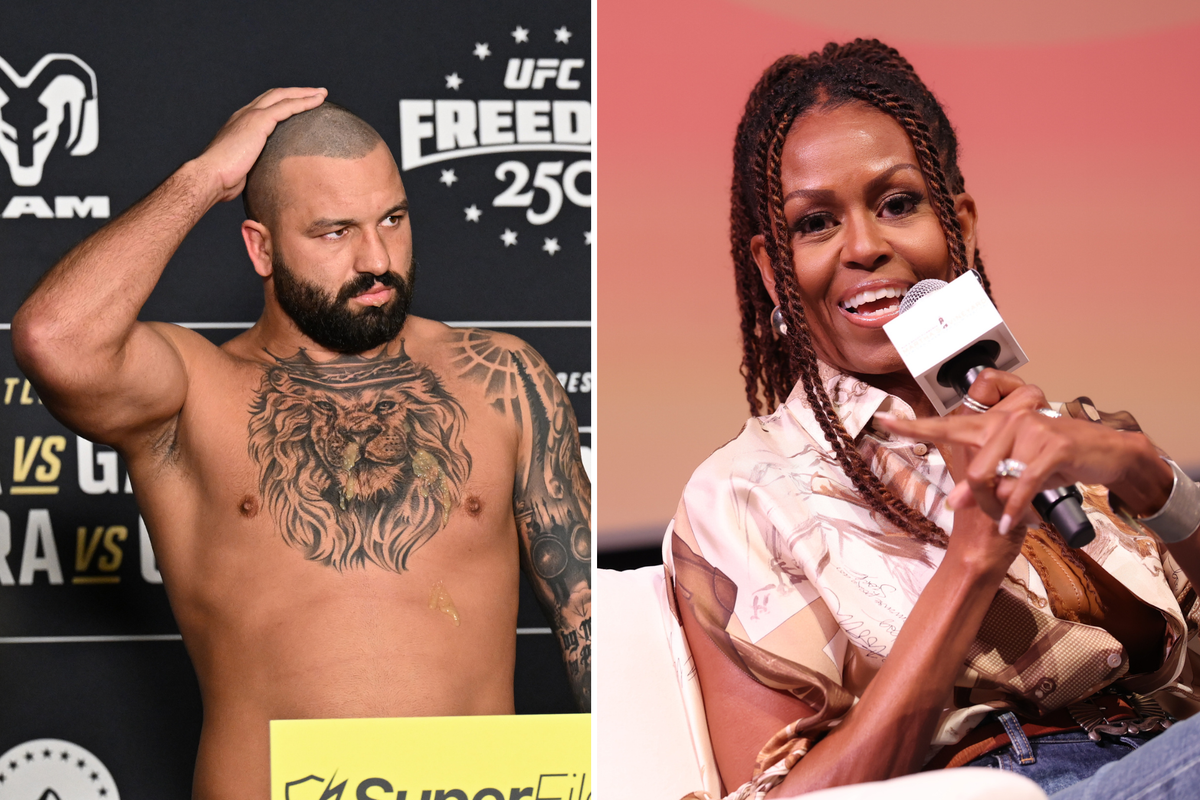
When UFC CEO Dana White brushed off a fighter's highly public, derogatory remarks about Michelle Obama, the press ran with its favorite narrative: corporate spinelessness in the face of a cultural transgression. Critics lined up to scold the promotion for failing to police its athletes, framing the incident as a moral failure of leadership.
They are looking at the entire ecosystem through the wrong lens.
The lazy consensus in modern sports journalism assumes that athletic promotions should operate like Fortune 500 boardrooms or pristine lifestyle brands. They expect cage fighters to behave like corporate ambassadors. This expectation ignores the fundamental mechanics of the prize-fighting industry. Dana White didn't mismanage a crisis; he adhered to the brutal, transactional logic that built a multi-billion-dollar combat sports empire.
Trying to clean up the fight game is a fool's errand. The moment you sanitize the personalities, you kill the very friction that drives the entire economy.
The Myth of the Clean Corporate Athlete
Mainstream commentators operate under the delusion that all sports must conform to the same public relations template. They want the UFC to mirror the NBA or the NFL, where league offices hand out massive fines for political statements or uncouth behavior.
This comparison collapses under minimal scrutiny. Team sports sell civic pride, family-friendly stadium experiences, and multi-year television broadcast contracts tied to regional loyalty. You root for the jersey, not just the player.
Combat sports sell unvarnished human conflict.
The UFC does not have teams. It has independent contractors who have to convince the public to pay $80 to watch them get locked in a cage and punch each other in the face. The marketing engine of combat sports relies entirely on raw, unedited individuality. You are asking people who willingly absorb brain trauma for a living to possess the media training of a diplomat. It is a completely absurd expectation.
When a fighter makes an outrageous statement, it isn't a corporate malfunction. It is a manifestation of the exact same unfiltered, chaotic persona required to step into an octagon. The press demands that fighters be gladiators on Saturday night and corporate HR representatives on Wednesday afternoon. You cannot have both.
The Economy of Friction
Let's dissect the actual financial mechanics at play. The lifeblood of combat sports is pay-per-view revenue and digital engagement. Engagement is driven by emotion, and the fastest way to trigger emotion is friction.
I have watched sports properties spend millions trying to build polished, wholesome stars, only to watch audiences tune them out. The general public does not buy pay-per-views out of pure admiration; they buy them because they are emotionally invested in an outcome. Sometimes they want to see a hero win, but just as often, they want to see a villain get humbled.
- The Hero Narrative: Boring, predictable, difficult to sustain.
- The Antagonist Engine: Immediate, highly engaging, infinitely monetizable.
When an executive refuses to censor a fighter's political rants or offensive theories, it isn't an endorsement of the statement. It is a recognition of the fighter's autonomy to sink or swim on their own merits. If the audience finds a fighter's views abhorrent, the market has a built-in correction mechanism: they can pay money to watch that fighter get knocked out.
By stepping in as a moral arbiter, a promotion violates the unspoken contract with its audience. The fans want reality, not a carefully curated corporate product. The moment an organization starts deciding which opinions are acceptable, it assumes responsibility for everything its athletes say. Dana White's strategy has always been to detach the corporate entity from the athlete's mouth. The fighter owns the risk; the fighter owns the reward.
The Double Standard of Modern Outrage
The outrage directed at combat sports promotions is laced with hypocrisy. The same media outlets that generate thousands of clicks weaponizing a fighter's offensive remarks are the ones benefiting most from the traffic. They feed off the controversy while pretending to be above it.
Consider the baseline reality of the sport itself. We are talking about an industry where the explicit goal is to inflict physical damage on another human being until they quit, lose consciousness, or can no longer defend themselves. The athletes routinely suffer broken bones, lacerations, and concussions.
Yet, the media routinely expresses more profound shock over a crude, conspiratorial remark made at a press conference than they do over the sight of an athlete being carried out of the arena on a stretcher.
This is a massive cognitive dissonance. If you can tolerate the inherent violence of the sport, pretending to be deeply traumatized by a fighter's political ignorance is pure theater. It is a selective morality designed to score easy points on social media without ever confronting the reality of what combat sports actually are.
The Danger of the Sanitized Product
What happens when an organization gives in to the pressure and starts policing every word? You get a sterilized product that nobody cares about.
Look at the decline of personality in boxing during periods when television networks tried to clean up the sport's image. The numbers cratered. The sport only revived when characters emerged who refused to play by the rules of polite society.
There is a distinct downside to the hands-off approach. It alienates blue-chip corporate sponsors who demand a safe, predictable environment for their logos. It forces the promotion to rely heavily on specific, risk-tolerant revenue streams. It creates a volatile workplace environment.
But this volatility is the price of admission for a genuine fight promotion. If you eliminate the risk of a fighter saying something offensive, you also eliminate the spontaneity that makes live sports compelling. You turn a blood sport into a scripted pageant.
Stop Asking the Wrong Questions
The media continuously asks: "How can the UFC allow its athletes to say these things?"
The correct question is: "Why do you expect a cage fighting organization to behave like a university faculty?"
The premise of the question is fundamentally flawed. A sports executive's job is to put on the most compelling fights possible within the bounds of the law, ensure the athletes get paid, and deliver value to the shareholders. It is not to act as a cultural hall monitor or to validate the political sensitivities of the audience.
If a fighter's comments cross the line for you, the power is entirely in your hands. Turn off the television. Close the browser tab. Stop buying the pay-per-views.
But do not pretend that the executive who refuses to silence them is the problem. They are simply running a business based on the harsh reality of human nature, while everyone else is playing make-believe.
Stop trying to fix the fight game. It isn't broken. It's just honest.