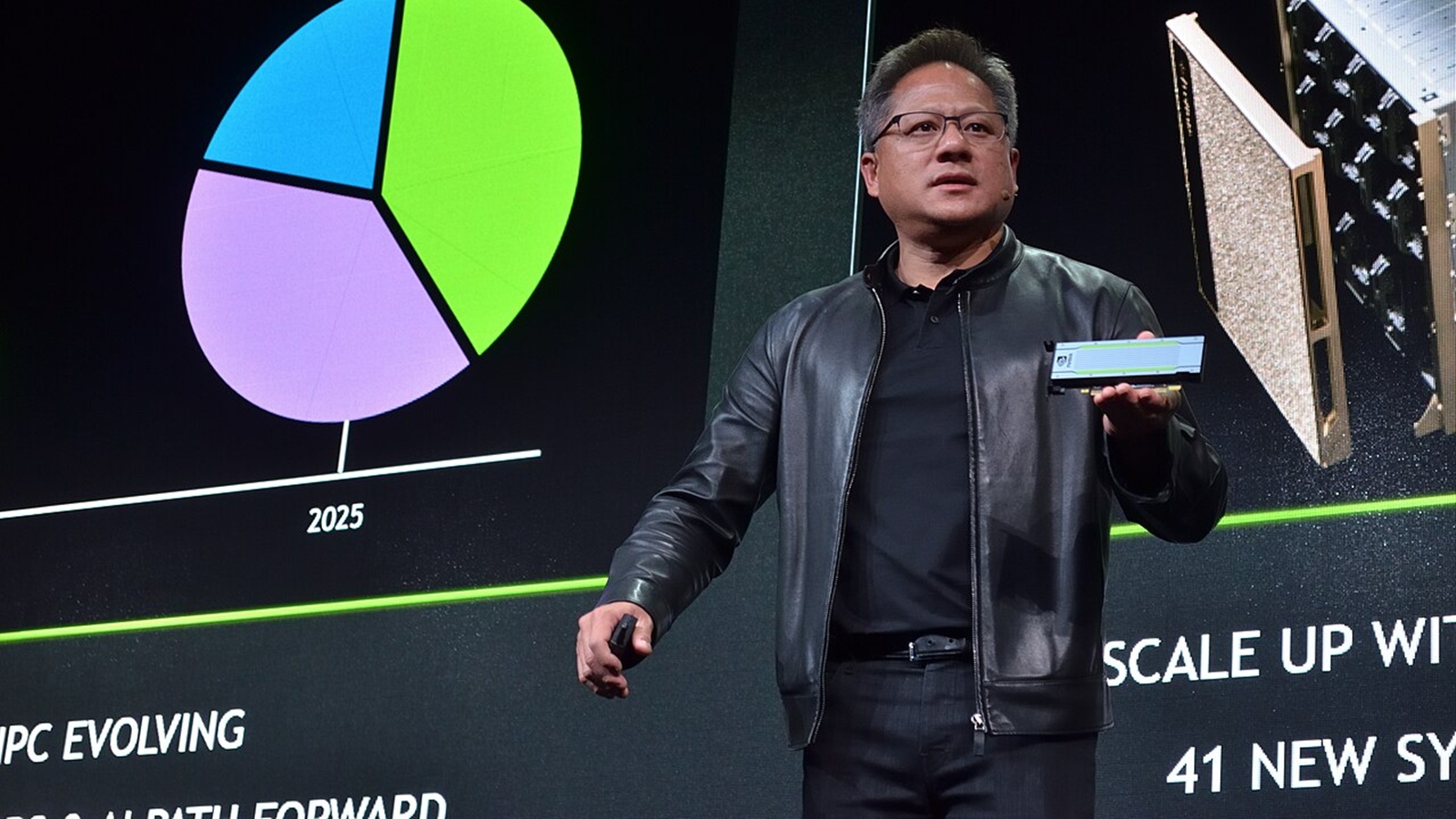
Public humiliation as a management mechanism operates on a simple economic trade-off: an executive exchanges employee psychological safety for immediate cognitive compliance and accelerated error detection. Reports detailing Nvidia CEO Jensen Huang’s management style—specifically allegations of harsh public reprimands, including graphic metaphors about "peeing on your brain" to demand absolute mental focus—often frame the behavior as simple workplace toxicity. That framing misses the structural reality of semiconductor engineering. To understand why such methods persist at a multi-trillion-dollar hardware monopoly, analysts must evaluate the organizational architecture, capital intensity, and error-cost functions that govern Nvidia’s operations.
The Structural Economics of Semiconductor Management
Software companies operate under low marginal costs of failure. A flawed code deployment in a web application can be rolled back within minutes via continuous integration pipelines. Hardware and semiconductor architecture operate under the opposite physical constraint: extreme capital irreversibility.
- The Tape-Out Bottleneck: Designing a flagship graphics processing unit (GPU) or AI accelerator requires billions of dollars in research and development before a single physical wafer is fabricated. Once a design reaches the "tape-out" phase—sending the final photomask blueprints to a foundry like TSMC—a single architectural flaw or logic error cannot be patched over the air. It requires a physical re-spin of the silicon, costing tens of millions of dollars and delaying market entry by quarters.
- Product Cycle Compression: Nvidia maintains an aggressive annual cadence for new data center architectures (transitioning from Hopper to Blackwell to Rubin). This compressed timeline eliminates operational slack. Any undetected engineering bottleneck in month three cascades into a catastrophic supply chain failure in month twelve.
- Asymmetric Information Risk: In a hierarchical organization of over 30,000 employees, bad news naturally slows down as it travels upward. Middle managers filter, soften, or delay reports of technical failures to protect their departmental standing.
Huang’s management architecture is explicitly designed to destroy this information filtering. By flattening the organizational chart—maintaining dozens of direct reports rather than insulating himself behind a small C-suite—and conducting public post-mortems of failures, he forces unfiltered technical reality to the surface immediately.
Deconstructing the Confrontational Feedback Loop
Allegations regarding Huang’s abrasive rhetoric—ranging from tearing up presentation decks to issuing blunt, visceral directives during meetings—represent an extreme application of radical transparency combined with aversive conditioning. While human resources frameworks categorize this as abusive supervision, its functional mechanics inside Nvidia follow a distinct four-stage operational loop.
Stage 1: Ego Stripping and Cognitive Reset
When an executive uses shocking, visceral language—such as the reported "pee on your brain" remark—the immediate physiological effect on the recipient is an acute stress response. In behavioral psychology, this serves as a pattern interrupt. It strips away rehearsed corporate defensiveness, prepared talking points, and bureaucratic posturing. The employee is forced out of narrative defense and into raw analytical problem-solving.
Stage 2: Public Signal Broadcasting
Critiques at Nvidia rarely occur behind closed doors. Reprimanding a vice president or lead architect in front of peers serves a dual purpose beyond correcting the individual. It broadcasts a high-cost signal to the entire room regarding acceptable standards of rigor. Every observer updates their internal risk model: showing up to a review without mastering the underlying physics, supply chain constraints, or mathematical proofs carries an immediate reputational penalty.
Stage 3: The Torture-to-Greatness Hypothesis
Huang has openly acknowledged in public interviews that he prefers to "torture" employees into greatness rather than fire them. From an operational standpoint, replacing a senior semiconductor architect carries immense friction costs. Institutional knowledge regarding proprietary interconnects, CUDA software stacks, and thermal dissipation physics cannot be easily recruited on the open market. Therefore, the firm substitutes termination with high-intensity internal pressure, betting that existing talent will adapt to the cognitive threshold rather than exit.
Stage 4: Rapid Resolution and Amnesia
A critical distinction between calculated high-pressure management and petty workplace bullying lies in the post-conflict phase. In functional high-pressure environments, once the root cause of an engineering failure is exposed and a corrective path is established, the hostility terminates immediately. Grudges distort future operational decisions; therefore, the confrontation remains strictly bounded to the technical artifact under review.
The Cost Function of High-Pressure Cultures
Operating an enterprise at maximum thermal capacity generates predictable systemic wear. While Nvidia’s market capitalization and gross margins validate the short-term execution speed of this model, the underlying organizational physics impose severe hidden costs that degrade long-term resilience.
- The Innovation-Compliance Paradox: Public humiliation optimizes for execution and error prevention within known parameters. It excels at forcing teams to hit impossible deadlines on defined architectures. However, acute fear suppresses divergent thinking. When the penalty for being wrong in public is severe, engineers naturally gravitate toward safe, incremental design choices rather than high-variance, speculative breakthroughs. The organization risks becoming brilliant at executing existing roadmaps while growing blind to paradigm shifts that require psychological safety to explore.
- Single-Point-of-Failure Leadership: A culture built around the intellectual dominance and intimidating presence of a single founder creates an acute succession crisis. The system relies on Huang’s specific technical intuition to calibrate when the pressure is productive versus when it is destructive. If a successor attempts to replicate the abrasive mechanics without possessing the founder’s encyclopedic command of the technology, the culture collapses into pure dysfunction and mass attrition.
- The Talent Retention Cliff: High-compensation equity packages (RSUs) act as golden handcuffs that offset the psychological toll of an abrasive environment. During periods of exponential stock appreciation, employees tolerate extreme stress because the financial payout is generational. The moment stock growth plateaus or competitors offer comparable compensation without the emotional tax, voluntary turnover accelerates rapidly among top-tier principal engineers who possess the highest market mobility.
Distinguishing Known Facts from Organizational Hypotheses
Evaluating executive behavior requires strict separation between documented operational structures, verified public statements, and unverified media narratives.
Verified Operational Facts:
- Nvidia operates with an unusually flat hierarchy for a company of its market capitalization, with reports indicating between 40 and 60 executives reporting directly to Huang.
- Huang does not hold traditional one-on-one meetings with his direct reports, preferring group settings where information is shared simultaneously across functions to eliminate political silos.
- Huang has publicly stated on record (including in interviews with 60 Minutes and Stanford Graduate School of Business) that he holds brutally high standards, rarely gives praise, and believes failure must be shared openly so the entire company learns from it.
Alleged Behaviors and Unverified Accounts:
- Specific verbal phrasing—including the "pee on your brain" anecdote and accounts of throwing objects or screaming in early-stage company meetings—stems from anonymous employee leaks and investigative journalism profiles rather than primary recordings.
- While the frequency and severity of these outbursts are corroborated across multiple independent accounts over two decades, the exact context—whether directed at negligent execution or honest technical miscalculation—remains subject to perspective bias.
Strategic Hypotheses:
- The hypothesis that Nvidia could not have achieved its AI hardware dominance without this specific management style cannot be proven empirically, as no control group exists. Competitor firms like AMD and Intel operated under vastly different cultural norms during the same period, yet their strategic missteps were largely driven by capital allocation errors and foundry execution failures rather than a lack of verbal aggression from their CEOs.
Auditing Your Own Organizational Pressure
Executives attempting to import "founder mode" or abrasive management tactics from Silicon Valley monopolies into standard enterprises usually trigger immediate organizational collapse. Before adjusting internal pressure mechanisms, leadership must audit three foundational variables:
- Compensation-to-Stress Equilibrium: Extreme accountability only functions when paired with extreme asymmetric upside. Demanding relentless cognitive perfection while paying median market salaries guarantees adverse selection—the best talent leaves immediately, leaving behind only those with no external options.
- Technical Competence of the Aggressor: Harsh technical interrogation only commands respect when the leader can actually solve the underlying engineering problem. When non-technical managers mimic abrasive styles, employees immediately recognize the bluff, converting fear into cynicism.
- Error Reversibility: Apply high-friction review processes exclusively to irreversible, high-capital decisions (e.g., hardware tape-outs, major M&A, core security architecture). Applying that same intensity to reversible, low-cost operations wastes executive bandwidth and paralyzes mid-level execution.
The Strategic Play for Enterprise Leaders
Do not copy the rhetoric; copy the information architecture. The true competitive advantage of Nvidia’s internal model is not the volume of the CEO's voice, nor the shock value of his metaphors—it is the complete elimination of corporate latency between failure occurrence and executive awareness.
To capture the operational speed of this system without incurring the fragility of toxic attrition, implement structural transparency without personal humiliation:
- Eliminate One-on-One Status Updates: Replace private executive briefings with open, cross-functional technical reviews where raw metrics and failure points are visible to all stakeholders simultaneously. This removes the incentive for middle managers to spin data.
- Separate the Engineer from the Artifact: Enforce ruthless, uncompromising scrutiny of the work—the code, the financial model, the silicon layout—while maintaining strict professional respect for the person. Attack weak logic, unverified assumptions, and sloppy preparation directly, but strip away personal insults that trigger defensive paralysis rather than analytical focus.
- Calibrate Pressure to Capital Risk: Reserve high-intensity, zero-margin-for-error scrutiny strictly for irreversible bottlenecks. Keep the rest of the organization operating with high autonomy and psychological safety so teams remain willing to surface bad news early—before a minor flaw becomes a billion-dollar write-off.