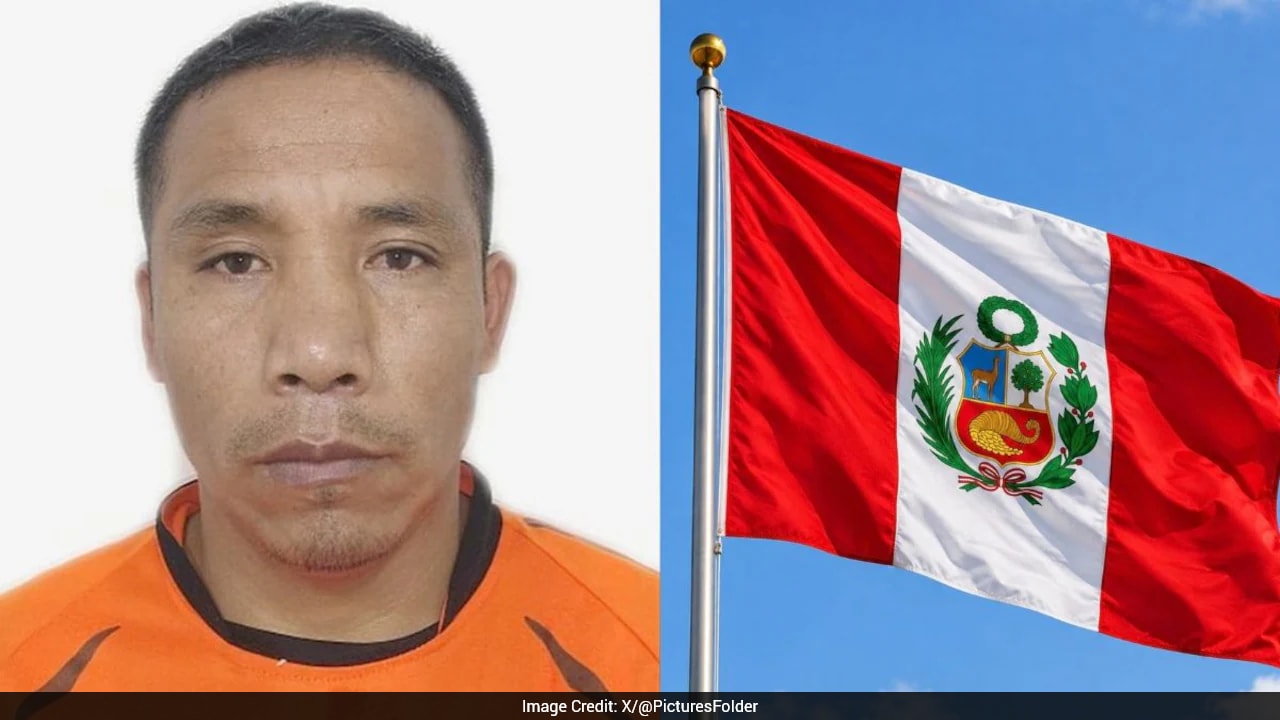
The October 2026 mayoral election in Queropalca, a remote district nestled in the high-altitude terrain of Peru's Huánuco region, generated global media interest almost exclusively due to the candidate's nomenclature. Hitler Mussolini Simeón Flores, a 45-year-old businessman affiliated with the centre-left party Ahora Nación, secured the mayoral seat by a margin of 25 votes. While international commentary treated the event as a bizarre anomaly rooted in dark historical irony, a rigorous examination of the political mechanics reveals that this outcome is a product of structural linguistics, rural voting behavior, and the distinct socio-historical trajectory of naming conventions in the Peruvian Andes.
To understand why a local election in a town of roughly 730 registered residents commands analytical attention, one must deconstruct the interplay between onomastic heritage—the study of the history and origin of proper names—and the local electoral market. Western media frameworks frequently project European historical traumas onto entirely distinct geopolitical landscapes, misinterpreting the semiotic value of historical figures in isolated regions of South America.
The Onomastic Vector in Rural Peru
The presence of figures bearing totalitarian-associated names in Latin American public office is not an isolated clerical error; it is part of a documented socio-cultural phenomenon. Peru, specifically, has recorded multiple instances of political candidates bearing names such as Hitler or Lenin. In 2018, an Andean mayoral race in Yúngar featured a contest between candidates named Hitler Guesclin Alba Sánchez and Lenin Vladimir Rodríguez Valverde. Similarly, national legislator Hitler Saavedra Casternoque served in the Peruvian parliament prior to his passing. Beyond Peru, instances such as the political career of Adolf Hitler Uunona in Namibia demonstrate that the global transmission of European history did not always carry the uniform semiotic weight assigned to it in Western educational systems.
The underlying causal mechanism is rooted in phonetic aesthetics, historical detachment, and the prestige associated with foreign orthography. In many rural and semi-urban communities throughout the mid-20th century, parents selected names from foreign print media, encyclopedias, or historical dictionaries based on aesthetic resonance, cadence, or perceived strength rather than ideological alignment with European fascism or communism. To a semi-literate or rural parent in the mid-1900s Andes, names like Hitler, Mussolini, or Stalin often functioned simply as exotic signifiers of power, modernity, or global historical magnitude, devoid of the complex moral baggage codified in post-war Europe.
Consequently, the bearer grows up within a local social fabric where the name loses its shock value through continuous domestic usage. By the time the individual enters public life, the moniker functions strictly as a nominal identifier rather than a political program.
Electoral Dynamics in Micro-Constituencies
Analyzing Queropalca’s municipal contest requires evaluating the mathematics of micro-constituencies. In local government districts with small voter pools, electoral outcomes are rarely determined by macro-ideological platforms or national party brand alignment. Instead, they operate on relational proximity, family networks, and localized patronage systems.
Simeón Flores secured victory with a narrow margin of 25 votes, translating to approximately 34 percent of the total ballots cast in a polarized local field. In districts of this scale:
- Social Proximity Supersedes Global Signifiers: Voters evaluate candidates based on direct personal interactions, familial lineage within the valley, and community participation. A lifelong local businessman is judged by his trade relationships and contribution to communal labor (faena), rendering abstract global historical associations secondary to immediate social utility.
- Party Realignment as a Tactical Vehicle: Simeón Flores transitioned through different political alignments, eventually running under the centre-left banner of Ahora Nación—a party that has sought to capture rural and regional discontent. In remote highland districts, national party labels often serve as empty vessels utilized by local elites to secure ballot access, while actual mobilization relies entirely on local machinery.
- The Marginal Utility of Name Recognition: In a fragmented field where multiple candidates split a tiny total pool of votes, even controversial or hyper-visible names can paradoxically function as an accidental mnemonic device. However, qualitative interviews with local electorate subsets indicate that voters frequently look past the anomaly out of pragmatic resignation, focusing instead on municipal water management, agricultural road access, and local budget allocation.
The Structural Divergence Between Global Optics and Local Realities
The friction between international media coverage and local electoral results highlights a fundamental divergence in political communication. Global media organizations process elections through a universalized ethical and historical lens, where names like Hitler or Mussolini trigger immediate semiotic alarms regarding democratic backsliding or ideological extremism.
Locally, however, the political economy of a remote Andean district is governed by immediate material constraints. Queropalca faces structural challenges typical of high-altitude Peruvian provinces: limited integration into national markets, infrastructure deficits, and reliance on subsistence agriculture or small-scale commerce. For the electorate, the primary performance metric of a mayor is administrative competence in securing central government transfers and executing local public works, not ideological purity judged by European historical standards.
Furthermore, the categorization of candidates along traditional left-right axes breaks down when mapped onto rural Andean political behavior. While Ahora Nación occupies a centre-left institutional space nationally, local candidates frequently pivot between clientelist networks, populist appeals, and pragmatic localism. The candidate's name became the focal point of foreign analysis precisely because it violated global semiotic norms, yet it remained entirely incidental to the domestic calculus of municipal governance.
Strategic Outlook for Micro-Municipal Administration
Managing a district like Queropalca under the microscope of international media introduces a unique operational constraint: reputational friction. While the novelty of the mayor's name guarantees initial media visibility, it complicates external stakeholder management, NGO relations, and bureaucratic interactions with regional ministries in Lima.
For the incoming administration, the operational priority must shift rapidly from nominal controversy to execution capacity. The structural reality of small-town Andean administration dictates that success is measured by transparent execution of local infrastructure projects and effective mediation with regional authorities. Future municipal stability will depend entirely on institutional output rather than the symbolic noise generated by an anachronistic naming convention.