Two words. That is all it took to expose the fault line running right through the center of modern geopolitics.
Friend. Killer.
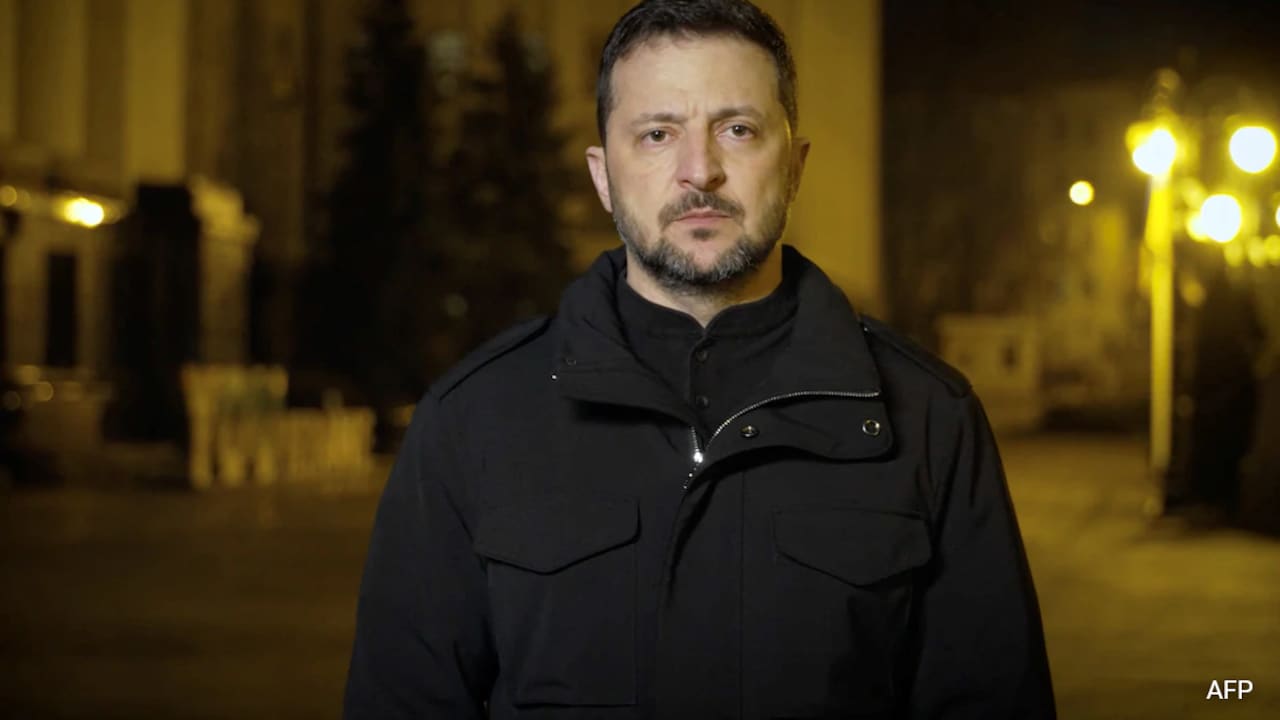
In one broadcast interview, Donald Trump referred to Russian President Vladimir Putin as his "friend," leaning into a familiar diplomatic instinct built on personal rapport, transactional leverage, and the belief that direct warmth between strong leaders can unlock stalled negotiations. Almost immediately, Ukrainian President Volodymyr Zelensky responded with a single, unvarnished label for the same man. A "killer."
On paper, this looks like another cable-news spat, a fleeting clash of soundbites destined to vanish beneath tomorrow’s headlines. It is not. Those two words represent two incompatible theories of how the world works, how wars end, and what happens to ordinary people caught between a handshake in Washington and a missile strike in Kyiv.
The Anatomy of a Four-Letter Word
To understand why those two labels collided with such force, you have to strip away the podiums and look at what each leader is actually trying to do.
When Donald Trump uses the word "friend" to describe Vladimir Putin—or when he emphasizes their strong personal relationship, as he has done repeatedly across rallies, press conferences, and interviews—supporters and political analysts point to a specific strategic playbook. In Trump’s worldview, diplomacy is personal before it is institutional. You do not bring an adversary to the negotiating table by calling them a monster on live television. You keep the door ajar. You flatter the ego across the table so that when you demand a ceasefire, the person on the other end feels they are dealing with an equal rather than an executioner.
From that perspective, calling Putin a friend is not necessarily an endorsement of Russian foreign policy; it is a tool. Defenders of this approach argue that previous administrations tried moral condemnation and isolation, and the war dragged on anyway. By projecting warmth and personal chemistry, Trump signals to Moscow that a deal is possible—that the United States under his leadership would prioritize ending the bloodshed quickly over litigating historical grievances.
Now walk four thousand miles east, into the concrete reality of Ukraine, and listen to how that same word lands.
For Volodymyr Zelensky, language is not an abstract bargaining chip. Since Russia launched its full-scale invasion in February 2022, Ukraine has endured tens of thousands of military casualties, thousands of verified civilian deaths according to United Nations monitoring missions, millions of displaced citizens, and the systematic destruction of entire cities like Mariupol and Bakhmut. When Zelensky calls Putin a "killer," he is not reaching for rhetorical flourish. He is describing a documented reality from the perspective of a wartime president whose citizens sleep in subway stations to survive overnight drone barrages.
To Zelensky and millions of Ukrainians, calling Putin a "friend" does not sound like clever statecraft. It sounds like amnesia. It suggests that the invasion of a sovereign neighbor, the bombing of maternity wards and power grids, and the abduction of Ukrainian children can be smoothed over with a warm adjective.
A Kitchen Table in Kharkiv
Consider a hypothetical scenario to make the abstract concrete. Picture a family in Kharkiv—let us call them Olena and Taras—sitting at a kitchen table taped with plastic sheeting because a shockwave shattered the glass two winters ago.
Their reality is measured in air-raid sirens, generator fuel, and the names of neighbors who never came back from the front line in Donetsk. When Olena turns on her phone and sees an American leader describe the architect of that invasion as a "friend," she does not hear a nuanced theory of realist diplomacy. She hears that the suffering outside her window is negotiable—that her country’s survival might be traded away in a room where two powerful men smile for the cameras.
Now shift the camera to a living room in Ohio or Pennsylvania. Picture a voter—let us call him Mark—watching the exact same clip after a twelve-hour shift, frustrated by rising costs at home and skeptical of open-ended foreign commitments.
Mark sees billions of taxpayer dollars flowing overseas with no clear exit ramp in sight. He worries about nuclear escalation between the world’s two largest atomic arsenals. When Mark hears Trump talk about getting along with Putin, he does not hear a betrayal of democracy. He hears someone who knows how to talk to dangerous men without dragging American sons and daughters into World War III. He thinks about Richard Nixon flying to Beijing to shake Mao Zedong’s hand, or Ronald Reagan sitting across from Mikhail Gorbachev in Reykjavik. Sometimes, Mark believes, peace requires talking to people you do not like—and using whatever language gets them in the room.
Both Olena and Mark are looking at the exact same broadcast. Neither of them is crazy. Yet they are living inside completely different moral universes.
The Weight of Words in Wartime
History shows us that leaders rarely choose their adjectives by accident, especially when the stakes involve war and peace.
In March 2021, President Joe Biden made headlines around the world when an interviewer asked if he thought Vladimir Putin was a "killer," and Biden replied, "I do." Moscow immediately recalled its ambassador from Washington for consultations. Kremlin officials warned that relations had hit a historic low. Even then, diplomats quietly debated whether moral clarity helped or hurt—whether naming the brutality of the Russian state rallied democratic allies, or whether it cornered an autocrat and made compromise harder.
Zelensky’s use of the word "killer" sits squarely in that tradition of moral clarity, sharpened by existential survival. Throughout the war, the Ukrainian president has consistently argued that appeasing or flattering Putin does not tame him; it feeds him. Zelensky frequently points to the historical trajectory of Russian aggression—Georgia in 2008, Crimea and the Donbas in 2014, the full-scale invasion in 2022—as proof that every pause in fighting without ironclad security guarantees simply gives Moscow time to rearm. In Zelensky’s framing, calling Putin a killer is a warning to the West: do not mistake a smile for safety.
Trump’s framing pulls in the opposite direction. Throughout his political career, he has argued that the war in Ukraine would never have happened if he had been in office, precisely because of his personal dynamic with Putin. In Trump’s telling, strength and rapport go hand in hand. By calling Putin a friend while simultaneously claiming he would end the war in twenty-four hours, Trump positions himself as the indispensable mediator—the only leader capable of picking up the phone and forcing both sides to settle.
Critics of Trump’s approach, including many European diplomats and former national security officials, warn that flattering an authoritarian leader hands him a propaganda victory before negotiations even begin. In Russian state media, every friendly remark from a prominent American figure is replayed on a loop as evidence that Western resolve is cracking and that Moscow can simply outlast Kyiv.
Supporters of Trump counter that moral grandstanding has produced three years of trench warfare, hundreds of thousands of dead and wounded soldiers on both sides, and a shattered European economy. To them, refusing to speak cordially to Putin is a luxury paid for in Ukrainian blood and American treasure.
The Invisible Trap Between Pragmatism and Principle
What makes this clash so unsettling is that both arguments carry a kernel of uncomfortable truth—and a massive blind spot.
If you lean entirely into Zelensky’s moral clarity, you preserve principle, honor international law, and refuse to normalize aggression. Yet you still face the brutal math of a war of attrition: manpower shortages, munitions bottlenecks, and the reality that wars almost always end at a negotiating table rather than a victory parade. Eventually, someone has to talk to the person who ordered the invasion.
If you lean entirely into Trump’s transactional pragmatism, you open a channel for dialogue and potentially accelerate a ceasefire. Yet if you erase the distinction between aggressor and victim—if the killer becomes just another "friend" having a border dispute—you signal to every authoritarian regime on earth that borders can be redrawn by force, provided you wait out the news cycle.
This is the invisible tension humming beneath every press conference in Washington, Kyiv, Brussels, and Moscow. It is not merely a disagreement over personality. It is a collision between two fundamental questions: What does peace actually cost, and who gets stuck paying the bill?
What Happens When the Cameras Turn Off
Away from the microphones, the consequences of those two words ripple outward into concrete policy decisions.
Every time language shifts in Washington, defense planners in Warsaw, Tallinn, and Berlin recalculate their own security. NATO’s eastern flank watches closely to see whether American commitment is anchored in shared democratic values or in the shifting personal chemistry of whoever occupies the Oval Office. Meanwhile, inside the Kremlin, strategists study every nuance of Western rhetoric for signs of fatigue, division, or willingness to trade Ukrainian territory for a quick diplomatic win.
And in Ukraine, soldiers in muddy trenches along the Zaporizhzhia front check their phones during brief lulls in artillery fire. They read the headlines. They see their president calling the man trying to erase their country a killer, and they see a powerful American leader calling that same man a friend.
No press release can bridge that gap. No diplomatic clarification can soften the contrast.
Late at night in Kyiv, when the air-raid sirens wail across the river and the anti-aircraft tracers streak upward into the dark, nobody argues about rhetorical strategy. There is only the sound of the blast, the tremor in the floorboards, and the quiet, stubborn morning after—where a single word still separates a handshake from a grave.