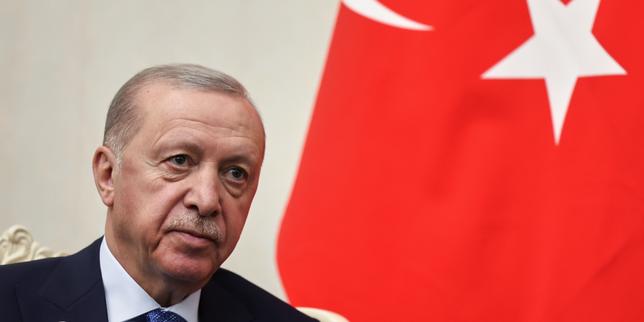
Mainstream political coverage treats Recep Tayyip Erdogan's push for a snap election in April 2028 like a clever legal heist. Pundits love to gasp at the mechanics. They point at Article 116 of the Turkish Constitution, wring their hands over democratic norms, and frame the entire story around whether a strongman can outsmart a two-term limit by moving the ballot box forward by thirty days.
That analysis is lazy. It mistakes the legal trigger for the political reality.
If you spend your time arguing about whether holding a vote on April 16, 2028 instead of May 14 counts as a constitutional loophole, you have already lost the plot. Legal pedantry has never decided an election in Ankara, and it will not decide this one. The real story is not that Erdogan wants to run again despite the rules. The real story is that the ruling coalition does not have the parliamentary votes to call the snap election on its own, which hands the Turkish opposition a loaded weapon they are almost guaranteed to misfire.
The Myth of the Unstoppable Loophole
When presidential chief advisor Mehmet Uçum floated the idea of advancing the 2028 general election by a few weeks, Western and European commentators immediately defaulted to their favorite script: Erdogan bends the law, the courts rubber-stamp it, and the game ends before the first ballot is cast.
Look at the math. It tells a completely different story.
Under Turkey's 2017 constitutional overhaul, a president is limited to two five-year terms. Erdogan won under this executive system in 2018 and again in 2023. On paper, he is barred from running in May 2028. The sole constitutional escape hatch sits inside Article 116. If the Grand National Assembly votes to dissolve itself and renew elections during a president's second term, the incumbent is legally permitted to run one more time.
Here is the catch that superficial reporting glosses over. Dissolving parliament requires a three-fifths supermajority—360 votes out of 600 seats. Erdogan's Justice and Development Party (AKP) and its nationalist allies in the People's Alliance do not have 360 seats. Depending on recent defections and minor party realignments, the ruling bloc hovers around 326 to 331 lawmakers.
They are roughly thirty votes short.
Erdogan cannot simply decree a snap election to reset his term clock. If he dissolves parliament himself using executive authority, Article 116 does not grant him an extra term; it terminates his presidency alongside the legislature. To get back on the ballot, he needs parliament to pull the trigger. And to get 360 votes in parliament, he needs help from the very opposition parties he has spent two decades crushing.
Why the Opposition Will Hand Him the Keys
Anyone who has covered emerging-market politics or watched parliamentary maneuvers in Ankara knows how this trap works. Years of watching opposition coalitions self-destruct over pride and short-term polling teach you one brutal rule: authoritarian incumbents rarely steal power alone; fractured oppositions usually hand it to them on a silver platter.
Consider the psychological bind facing the Republican People's Party (CHP) and smaller conservative or Kurdish-aligned factions.
For years, the opposition's entire political identity has been built around demanding early elections. Every economic downturn, every currency slide, every inflation spike gets met with the exact same chant from opposition rallies: Bring the ballot box now.
Now imagine a scenario where Erdogan's team walks into parliament in late 2027 or early 2028 and offers an election just four weeks ahead of schedule.
If the opposition votes no, AKP media machines will spend months hammering them as cowards who spent five years begging for a vote only to run away when the dates were set. Worse, refusing to let Erdogan run turns him into a political martyr. His base will rally around the narrative that the opposition could only beat him on a technicality, not at the ballot box.
If the opposition votes yes, they hand Erdogan the exact constitutional legitimacy he lacks. Even Supreme Election Council (YSK) objections—like the ones raised in 2023 when critics argued his 2014–2018 term already counted toward his limit—evaporate the moment a supermajority of parliament formally votes to renew elections under Article 116.
| Strategic Choice | Immediate Political Cost | Constitutional Consequence | Long-Term Risk for Opposition |
|---|---|---|---|
| Vote Yes (Approve April 2028 Vote) | Appears consistent with demands for early polls | Validates Erdogan's candidacy under Article 116 | Faces an undefeated campaigner with full state media control |
| Vote No (Block the 360-Vote Threshold) | Branded as afraid to face Erdogan directly | Forces AKP to pursue a full constitutional rewrite | Triggers aggressive legal pressure or defection poaching |
This is not a legal loophole. It is a psychological hostage situation.
The People Also Ask Trap
Search engines are flooded with variations of the same basic questions whenever Ankara floats a new election date. Most of them rest on false premises.
Is Erdogan actually allowed to run for a fourth term?
Stop counting to four. Under Turkish constitutional law, the count is two—or three, depending on whose legal brief you read.
Erdogan was first elected president in 2014 under the old parliamentary system, when the presidency was largely ceremonial. Following the 2017 referendum that abolished the prime minister's office and created an executive presidency, Erdogan's allies successfully argued before the Supreme Election Council in 2023 that the clock reset in 2018. By that logic, 2018 was term one, 2023 was term two, and a snap election in 2028 would be his third term under the current charter. Calling it a "fourth term" is journalistic shorthand that ignores how the 2017 regime change actually operates in Turkish courts.
Can Erdogan just rewrite the constitution instead?
He has been trying to since 2023, and the math is even worse.
Passing a constitutional amendment without a referendum requires 400 votes in parliament. Passing one that goes to a national referendum still requires 360 votes. If the ruling alliance cannot scrape together 360 lawmakers for a routine snap election motion, it certainly cannot pass a sweeping new constitution. Furthermore, a constitutional referendum forces Erdogan to win two national campaigns back-to-back—one to change the rules, and another to win the presidency—at a time when Turkish voters are exhausted by ballot fatigue and stubborn living costs. Advancing the election by a month avoids a messy referendum entirely.
What happens if Erdogan does not run in 2028?
This is the question Western analysts ask while assuming a peaceful, orderly handover to a technocrat. That assumption ignores how personalist regimes function.
Erdogan has publicly floated the idea of stepping aside for a younger generation before, notably after the 2023 vote and again during the 2024 municipal cycle. Nobody in Ankara takes those remarks at face value. In a system where every ministry, judicial appointment, and state-backed conglomerate answers to one man, there is no designated heir because naming a successor immediately turns the incumbent into a lame duck. Whether observers look at his son Bilal, intelligence chief İbrahim Kalın, or foreign minister Hakan Fidan, none of them command the cross-factional loyalty required to hold the AKP coalition together. Erdogan is not running in 2028 out of mere vanity; he is running because the system he built cannot survive his departure without fracturing.
The Real Blind Spot in This Strategy
To be completely candid, betting everything on an April 2028 snap election carries massive risks for Erdogan, too. Assuming this maneuver guarantees another five years in the presidential palace is just as naive as assuming the constitution will stop him.
First, poaching thirty opposition lawmakers is dirty, expensive, and unpredictable. Smaller conservative splinter parties—such as DEVA, Future, or Felicity—and the pro-Kurdish DEM Party have their own survival instincts. If the AKP tries to buy support through backroom deals or selective judicial pressure, it risks alienating its own hardline nationalist base in the MHP, whose leader Devlet Bahçeli fiercely opposes any concessions to Kurdish political actors.
Second, a snap election only clears the legal hurdle to get on the ballot. It does not fix inflation, restore household purchasing power, or neutralize popular opposition figures. Even with Istanbul Mayor Ekrem İmamoğlu facing relentless legal battles and CHP leadership rocked by court interventions, municipal election results proved that Turkish voters will punish the ruling party at the ballot box when economic pain becomes unbearable.
Third, time is no longer Erdogan's ally. By spring 2028, he will be 74 years old, having governed Turkey continuously since 2003. Stamina matters in Turkish politics, where winning requires surviving brutal, multi-month campaign tours across eighty-one provinces.
What Observers Should Actually Watch
If you want to understand where Turkey is heading before 2028, stop reading constitutional law primers and start tracking three concrete pressure points in Ankara:
- Parliamentary Defections in 2027: Watch the exact seat count of the People's Alliance. You do not need to guess Erdogan's intentions; the moment independent or minor-party deputies start quietly migrating toward the AKP, the 360-vote assembly is underway.
- The Timing of Economic Stimulus: Turkish governments never enter a snap election without opening the fiscal taps six months prior. Look for unscheduled minimum wage hikes, public-sector hiring sprees, and cheap credit lines—not legal debates—to signal the real election date.
- Opposition Discipline on Boycotting the Vote: Watch whether CHP leadership has the nerve to tell Erdogan to run a successor instead of helping him dissolve parliament. If the opposition takes the bait and supplies the missing votes just to prove they are not scared of a fair fight, they will be validating a contest whose rules were written specifically to ensure they lose.
Competitor outlets want you to believe Turkey's 2028 election is a story about a president breaking the rules. They have it backward. The rules were built with a side door from day one—and the only question left is whether Erdogan's opponents will be foolish enough to hold it open for him.
For further context on the mechanics of this constitutional maneuver, watch Turkish President to seek another term despite constitutional limits.