Every major newsroom in Brussels, London, and Washington is running the exact same lazy script about Warsaw this week.
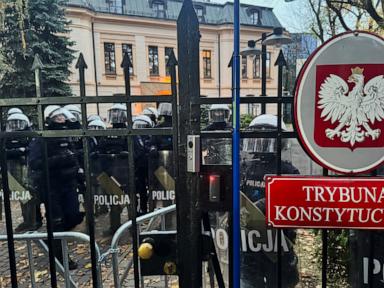
Donald Tusk suspends the president of Poland’s Constitutional Tribunal. Protesters flood the streets waving flags. Pundits clutch their pearls, asking whether the former European Council president is using the exact same authoritarian playbook as the Law and Justice (PiS) party he replaced.
Stop asking if Donald Tusk is breaking the rules. You are looking at the wrong crime scene.
The mainstream press treats Poland’s Constitutional Tribunal as if it were the United States Supreme Court or Germany’s Federal Constitutional Court—a neutral, sacred referee suddenly being tackled by a partisan prime minister. That premise is completely detached from reality. You cannot break a vase that was shattered into dust eight years ago and glued back together with partisan epoxy.
To understand what is actually happening in Warsaw, you have to strip away the polite diplomatic fiction that Western commentators love to maintain. This is not a story about a prime minister attacking an independent court. It is a story about what happens when a democratic government inherits a captured state apparatus—and realizes that playing strictly by the Marquis of Queensberry rules guarantees permanent paralysis.
The Myth of the Neutral Referee
Let’s get our definitions straight, because sloppy language is the oxygen of bad political analysis.
A constitutional court only exists as a legitimate institution when its judges are appointed through lawful, transparent procedures and command baseline public trust as impartial arbiters of a nation’s founding charter. By every objective legal standard established by the European Court of Human Rights (ECtHR) and the Court of Justice of the European Union (CJEU), Poland’s Constitutional Tribunal ceased to meet that definition years ago.
Between 2015 and 2023, the PiS government systematically dismantled the court’s independence. They refused to publish inconvenient rulings. They installed "dublerzy"—so-called double judges—into seats that had already been lawfully filled by the previous parliament. They elevated Julia Przyłębska, a close personal ally of PiS leader Jarosław Kaczyński, to the Tribunal’s presidency through procedural maneuvers that violated the Polish Constitution itself.
When you pack a court with loyalists using unlawful appointments, the resulting body is not a court. It is a political veto machine wearing judicial robes.
I have watched political transitions across Central and Eastern Europe for two decades, and the pattern is always identical. Authoritarian populists spend years hollowing out democratic institutions from the inside, stuffing courts, state media, and regulatory boards with partisan enforcers. Then, the moment voters throw them out, those same populists wrap themselves in the language of "the rule of law" and scream tyranny the second the new government tries to clean out the wreckage.
The international press falls for this trap every single time. Why? Because foreign correspondents love symmetry. "Both sides are politicizing the courts" is an easy, risk-free headline to write. It sounds balanced. It requires zero deep legal literacy. And it is dead wrong.
The Catch-22 of Restoring Democracy
Imagine a scenario where a burglar breaks into your house, changes the locks, and squats in your living room. When the police finally arrive, the burglar points at the new deadbolt and argues that breaking down the door would violate property rights.
That is the exact legal trap Donald Tusk’s coalition walked into when it took power.
Here is the structural problem that Western commentators refuse to confront: how do you restore the rule of law when the very institutions required to validate your reforms have been captured by the people you just defeated?
Under Poland’s constitutional framework, passing new legislation to overhaul the judiciary requires the signature of President Andrzej Duda—a staunch PiS ally who holds veto power until his term expires. Even if Tusk bypasses a presidential veto or waits out the clock, any law restructuring the courts gets referred straight to the Constitutional Tribunal. And who sits on that Tribunal? The very judges whose unlawful appointments the new government is trying to annul.
No judge is going to rule that their own paycheck and pension are unconstitutional.
If Tusk waits for the captured Tribunal to bless its own dissolution, nothing changes. Every democratic reform, every media law, every anti-corruption investigation gets struck down by a panel of partisan holdovers. The voters who delivered record turnout in October 2023 to end illiberal rule get told, in effect, that their ballots do not matter because a captured court has permanent veto power over elected lawmakers.
On the other hand, if Tusk uses executive resolutions, parliamentary declarations, and administrative suspensions to bypass the Tribunal, he hands his opponents—and lazy Western columnists—ammunition to accuse him of acting outside the strict letter of the law.
This is the fundamental dilemma of militant democracy, a concept first articulated by German constitutional theorist Karl Loewenstein in the 1930s. Loewenstein argued that democratic systems cannot afford to be suicidal; they cannot allow antidemocratic actors to use legal technicalities as a shield to destroy the constitutional order from within.
What the Street Protests Actually Mean
Look closely at the footage of protesters gathering outside the Tribunal in Warsaw. The framing in mainstream coverage suggests a spontaneous, organic uprising of citizens defending judicial independence.
Look again.
Poland has a deeply polarized electorate, split nearly down the middle between liberal, pro-European urban centers and conservative, nationalist heartlands. Mobilizing several thousand loyalists in Warsaw is standard operating procedure for PiS, which maintains a tightly disciplined party apparatus and a loyal media ecosystem that frames every administrative move by Tusk as an existential assault on Polish sovereignty.
Comparing these demonstrations to the massive, decentralized pro-democracy protests of 2017—when hundreds of thousands of ordinary Poles took to the streets with candles to defend the Supreme Court—is a category error. One was a broad civic movement defending European legal norms; the other is a partisan mobilization defending the institutional remnants of a defeated political machine.
Does that mean the protesters’ anger is fake? No. Millions of Polish voters genuinely believe PiS was defending traditional values and national sovereignty against Brussels elites. Ignoring their grievances is political malpractice.
But conflating partisan street mobilization with a genuine constitutional defense of judicial independence is journalistic laziness. You do not protect the rule of law by treating an unlawfully constituted body as sacrosanct just because its defenders know how to organize a rally.
The Dangerous Precedent Nobody Wants to Admit
Now, let’s get brutally honest about the downside of Tusk’s strategy, because pretending there is no risk here would be just as dishonest as pretending the Tribunal is legitimate.
When a democratic government uses blunt political tools—parliamentary resolutions, executive decrees, administrative suspensions—to dismantle an entrenched institutional blockade, it normalizes executive overreach. Even when the intent is restorative, the method leaves scars.
Here is the cold reality: every norm Tusk bends today becomes a weapon PiS—or an even more radical nationalist coalition—will wield without hesitation the next time they win an election.
If parliamentary resolutions can nullify judicial appointments today, what stops the next majority from using parliamentary resolutions to nullify the appointments Tusk’s coalition makes tomorrow? If the executive branch can suspend a court’s leadership through administrative action, what prevents a future prime minister from suspending a genuinely independent court that blocks an authoritarian power grab?
Legal scholars like Wojciech Sadurski and Laurent Pech have spent years documenting the precise mechanics of Poland’s constitutional breakdown. Even among rule-of-law defenders, there is fierce debate over where surgical restoration ends and dangerous precedent begins. The Venice Commission—the Council of Europe’s premier advisory body on constitutional matters—has repeatedly warned Warsaw that you cannot fix the rule of law by ignoring legal procedures, no matter how noble the goal.
Tusk is playing a high-stakes game of chicken with institutional norms. He is betting that he can clear out the captured apparatus quickly, rebuild legitimate courts with broad European backing, and lock in institutional guardrails before the political pendulum swings back.
If he succeeds, historians will view his tactics as bitter medicine necessary to save a failing patient. If he stalls, or if his coalition fractures before those guardrails are built, he will have handed future autocrats a masterclass in how to dismantle a court with a stroke of a pen.
Stop Asking "Is It Legal?" and Start Asking "What Is the Exit Strategy?"
If you want to understand whether Poland is heading toward democratic renewal or endless institutional warfare, stop obsessing over the daily shouting matches outside the Constitutional Tribunal. Watch three concrete metrics instead:
- Speed of Replacement: A suspension or parliamentary resolution is only defensible as a temporary bridge to a lawful, transparent appointment process. If Tusk’s government leaves judicial seats vacant or fills them with its own partisan loyalists rather than candidates vetted by independent judicial councils, the restorative argument collapses entirely.
- Alignment with European Courts: Watch how Strasbourg and Luxembourg react, not how Brussels politicians talk. The European Commission is a political body that wants Warsaw to be a stable, pro-EU partner. The ECtHR and CJEU, by contrast, apply strict, binding legal standards. If Tusk’s reforms satisfy the judges in Luxembourg and Strasbourg, he has genuine legal cover. If they start ruling against him, his credibility evaporates.
- Presidential Transition Dynamics: Nothing in Poland’s constitutional standoff can be permanently resolved while the presidency and the prime minister’s office remain locked in mutual institutional sabotage. The real test of whether Poland can codify permanent democratic safeguards begins the day a new president takes office—and whether Tusk has the political discipline to bind his own hands alongside his opponents’.
The tragedy of modern political journalism is that it mistakes procedural politeness for democratic health. It prefers a quiet, orderly slide into competitive authoritarianism over a messy, confrontational attempt to claw democracy back from the brink.
Poland’s Constitutional Tribunal died years ago in the dark, killed by partisan capture while the world watched and issued strongly worded statements. What you are seeing in Warsaw today is not a murder. It is an autopsy—and a brutal, imperfect fight over whether anything living can be built on the grave.


