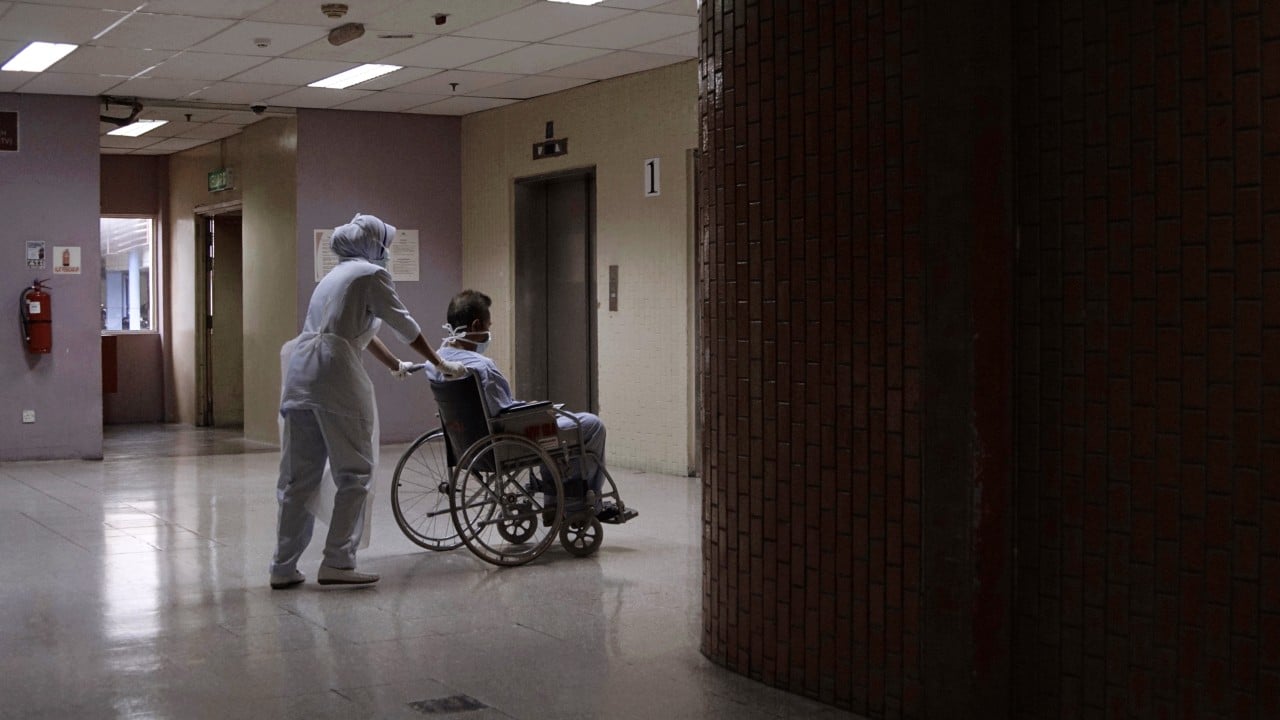
The rain in Sabah does not fall so much as it arrives, heavy and indifferent, turning the jungle tracks into red clay soup. Inside the concrete walls of a district clinic two hours outside Kota Kinabalu, the air smells of wet earth, damp linoleum, and the sharp, clean burn of antiseptic.
It is three in the morning. Dr. Amira sits at a steel desk, rubbing her eyes with the heels of her palms. Across from her, a mother holds a toddler whose breathing is a shallow, ragged whistle. There is no pediatrician on duty. There hasn't been one in this district for fourteen months. There is only Amira, a general practitioner who graduated from a university in Kuala Lumpur three years ago, and a stack of referral forms that will take half a day to process if the ambulance ever makes it through the washed-out pass. Don't miss our recent coverage on this related article.
This is the quiet exodus.
We talk about the healthcare crisis in grand economic terms. We track retention rates, budget allocations, and ministry memos like weather patterns moving across a distant sea. But numbers on a spreadsheet do not capture the weight of a stethoscope in an empty corridor. They do not show the exhausted young doctors staring at a resignation letter drafted on a cracked laptop screen, weighing the quiet guilt of leaving against the crushing daily reality of staying. If you want more about the history here, Medical News Today offers an in-depth summary.
Borneo is vast. It is an expanse of ancient rainforests, jagged mountain ranges, and coastal settlements where the nearest specialist is a four-hour bone-jarring drive or a boat ride away. For the men and women trained to heal, these physical distances translate into professional isolation.
Consider what happens when a young physician arrives here fresh from housemanship. They come with a textbook full of advanced protocols and a head full of idealism. They expect to save lives. They do. But they also find themselves running an entire rural clinic single-handed, managing everything from tropical fevers to emergency trauma, often working thirty-six-hour stretches without a break.
The ministry calls it a distribution challenge. The doctors call it burnout.
Warm welcomes do not fix a broken shift schedule. A garland around the neck and a speech from a visiting official about serving the nation do not replenish empty medicine cabinets or repair leaking roofs in government quarters. When the novelty of the posting fades, what remains is the grinding reality: inadequate infrastructure, limited career advancement opportunities for spouses, and children who must be sent hundreds of miles away for secondary education.
The pull of the peninsula is strong. Kuala Lumpur, Johor, Penang—these are places where specialization tracks are clear, where peer networks offer daily support, and where a doctor can eventually see a path toward balance. Borneo, by contrast, often feels like a dead end disguised as a calling.
Every time a contract doctor packs two suitcases and books a one-way flight back across the South China Sea, something irreplaceable goes with them. It is not just a pair of hands. It is institutional memory. It is the accumulated trust of local communities who have learned, generation by generation, to be suspicious of outsiders in white coats. When a doctor leaves every two years, that trust has to be rebuilt from scratch.
Yet, some stay.
Walk into a rural clinic in Sarawak and you might meet Dr. Tan, ten years into a posting he initially swore he would escape within six months. He knows every family in three longhouses. He knows which grandmothers have hypertension and which teenagers sneak out to the river. He has traded the sleek anonymity of a city hospital for a deep, localized belonging that money cannot easily buy.
Ask him why he didn't leave, and he will not talk about policy or patriotism. He will talk about a specific child he pulled through a severe bout of dengue ten winters ago. He will talk about the silence of the forest at dawn, broken only by the call of hornbills.
But love for a place is a fragile engine. Without structural repair, it eventually burns out.
Fixing the exodus requires more than appealing to a sense of sacrifice. It demands a fundamental redesign of how rural medicine is valued and supported. It means hazard pay that actually reflects the isolation. It means guaranteed educational pathways for doctors who choose to anchor themselves in East Malaysia, ensuring that choosing Borneo does not mean professional stagnation. It means mental health support systems that recognize the unique psychological toll of rural isolation.
The rain outside Amira's clinic finally slackens, replaced by the heavy, dripping silence of a tropical night. The toddler’s breathing has steadied, the nebulizer treatment having done its work. The mother whispers a tired thank you and carries the child out into the pre-dawn mist.
Amira watches them go. She turns off her desk lamp, leaving the room half-dark, and walks over to the window to look out at the dark silhouette of the mountains. On her desk, tucked beneath a stack of patient files, the resignation form waits. She hasn't signed it yet. But the pen is right there.