Listen.
Before you see the grey plastic shell, before the fiber-optic spool catches the pale morning sun, you hear a high-pitched whine that sounds like an angry wasp trapped inside a tin can. For anyone who has spent time near a modern conflict zone, or even watched the grainy, breathless footage leaking out of Eastern Europe over the last few years, that frequency triggers an immediate, primal freeze in the base of the skull. It is the sound of a five-hundred-dollar commercial quadcopter carrying a strapped-on mortar round, piloted by a twenty-year-old sitting in a concrete basement three miles away with a pair of virtual reality goggles strapped to his face.
For decades, the infantryman's greatest fear fell from miles above, announced by the whistling roar of artillery or the thunder of a fast-moving jet. You dug deep. You waited it out. You trusted that dirt and concrete could absorb the fury of heavy metal.
That era is dead.
Today, the threat does not just fall from the sky; it hovers at eye level. It peeks around the corners of shattered brick walls. It flies through open doorways, chases running soldiers down muddy trenches, and waits patiently behind rusted-out trucks until a squad steps out for a cigarette. And halfway across the world, inside the vast, dust-choked training grounds of the People's Liberation Army, military planners have been watching this terrifying evolution with a mixture of cold fascination and urgent dread.
To understand how Chinese infantry units are rewriting their survival manuals for a sky choked with killer robots, let us step into a hypothetical scenario grounded in the documented drills of the PLA's Eastern and Central Theater Commands.
The Ghost in the Tree Line
Meet Private Chen. He is nineteen years old, hails from a quiet farming county in Sichuan, and weighs sixty-five kilograms soaking wet. In a traditional infantry exercise ten years ago, Chen's job was straightforward: carry his rifle, follow his squad leader, dig a fighting position, and lay down suppressive fire when told.
Today, Chen is crouched in a narrow, zigzagging trench in the Gobi Desert, his knuckles white around the grip of a modified Type 191 assault rifle. Overhead, the sky is empty, yet every muscle in his back is coiled like a spring. Beside him sits a bulky, matte-black backpack fitted with stubby, directional antennas.
Suddenly, the air vibrates.
A blue-force opposing squad—playing the role of an enemy reconnaissance team—has just launched a swarm of first-person-view (FPV) racing drones from behind a sand dune two kilometers away. In the old days, Chen's squad would have bunched together behind a ridge, shouting commands over the wind. Now, doing so is a death sentence. Modern drone operators look for clusters of heat and movement; a tight squad is simply a high-value target waiting to be erased by a single tandem-charge warhead.
"Scatter!" the squad leader hisses, not via a loud radio broadcast that enemy direction-finders could triangulate in seconds, but through short-range, low-power hand signals and burst transmissions.
Chen does not run in a straight line. He has spent the last six months having his natural human instincts systematically broken down and rebuilt. When a predator chases you, every cell in your body screams at you to sprint away as fast as possible. Against an FPV drone traveling at ninety miles per hour, running in a straight line just makes the pilot's job easier. Instead, Chen drops into a sharp, erratic sprint—five paces left, a sudden dive behind a scrub bush, a rapid roll into a pre-dug slit trench covered with thermal-blocking netting.
This is the first brutal truth of modern infantry training: human biology is now a liability. Our body heat glows like a beacon through inexpensive infrared cameras. Our footsteps kick up dust trails visible from a thousand feet up. Even the metallic glint of a wristwatch or an uncovered rifle scope can betray an entire platoon's position to an automated optical tracking algorithm.
Rewiring the Soldier's Brain
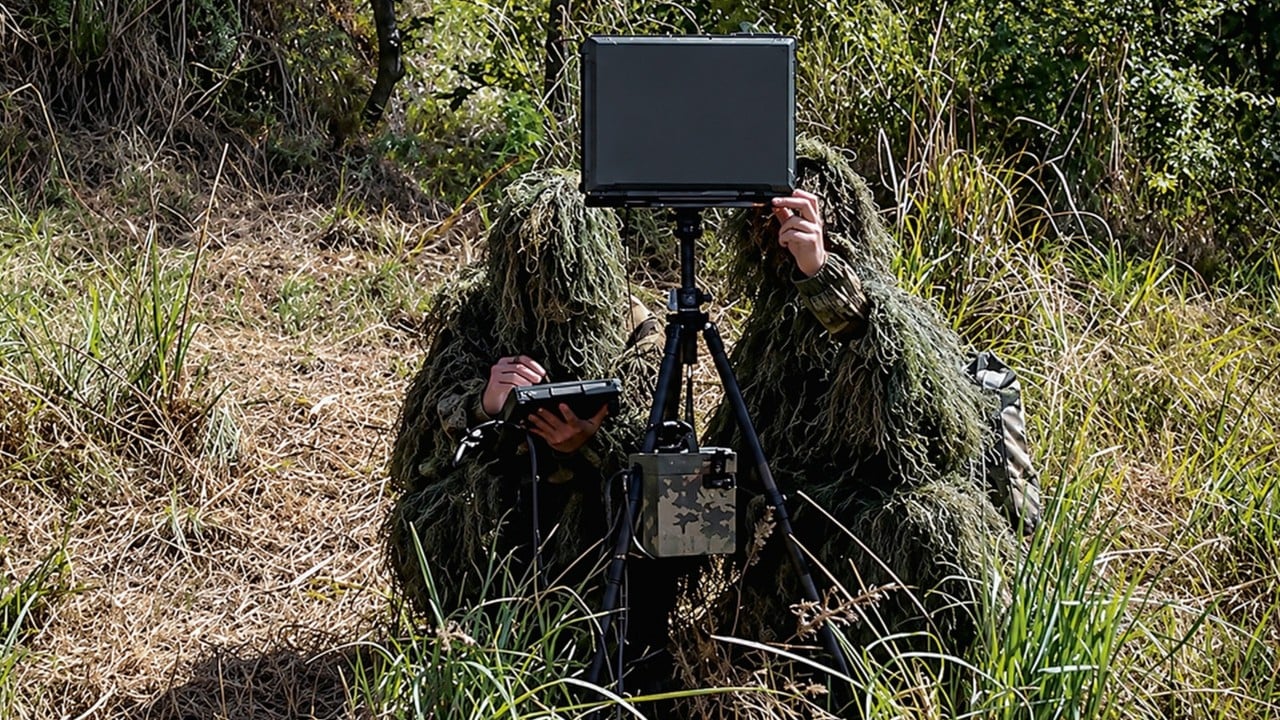
If you look closely at official Chinese military broadcasts and state media reports from late 2024 through 2026, a striking pattern emerges. The glossy, choreographed parades of massed armor and marching columns have quietly taken a back seat to messy, claustrophobic footage of small infantry squads crawling through ruined urban mock-ups, draped in thermal cloaks that make them look like walking piles of rubble.
Military analysts who study the PLA—from think tanks in Washington to defense journals in Tokyo—have noted a massive doctrinal shift. The PLA calls it "intelligentized warfare," a dense bureaucratic phrase that, down in the mud where Private Chen lives, translates to a simple, terrifying reality: if you can be seen, you can be killed, and something is always watching.
To survive this, Chinese infantry training has absorbed the hard, bloody lessons of the Russo-Ukrainian war at breakneck speed. When you peel back the layers of these new training regimens, four core survival pillars stand out:
- Radical Dispersion and Micro-Tactics: The classic infantry squad of nine to twelve men moving as a cohesive unit is fracturing into two- or three-man fire teams. Exercises now penalize soldiers who stray within fifteen meters of one another in open terrain. Movement happens in short, unpredictable bounds, timed to coincide with artillery bursts or vehicle noise that might mask the sound of footsteps.
- The Death of Electronic Noise: A soldier's smartphone, an unencrypted walkie-talkie, or even a poorly shielded battery pack emits an electromagnetic signature. In PLA red-versus-blue exercises, specialized electronic reconnaissance teams hunt infantry squads purely by sniffing out their radio emissions. Soldiers are trained to operate under strict "emission control," relying on runners, visual markers, and directional, low-probability-of-intercept burst radios that transmit data in milliseconds.
- Physical Countermeasures and the Return of the Shotgun: For decades, military planners scoffed at the idea of issuing shotguns to regular infantrymen in open warfare. Now, state television regularly shows PLA troops storming trenches armed with semi-automatic 12-gauge shotguns loaded with tungsten birdshot, alongside rifles fitted with specialized net-launching attachments. When electronic jamming fails—especially against newer drones guided by spools of hair-thin fiber-optic cable that cannot be jammed—old-fashioned kinetic pellets remain the last line of defense.
- Overhead Concealment as Muscle Memory: Digging a foxhole is no longer enough. Soldiers are timed on how fast they can erect overhead chicken-wire cages, camouflage netting woven with radar-absorbent threads, and "cope cages" over their armored personnel carriers. Every halt longer than three minutes requires immediate overhead cover.
Think of a modern battlefield not as a chessboard, but as a dark room filled with motion sensors. Moving across it requires patience, deception, and an obsessive control over every trace you leave behind.
The Invisible Shield and Its Fatal Flaw
Let us return to Private Chen in the Gobi trench.
The enemy FPV drone has spotted movement near the ridge. It banks hard, its rotors screaming as it dives toward Chen's position at a forty-five-degree angle. This is the moment where old-school courage means nothing. You cannot out-shoot a diving drone with a standard assault rifle unless you are extraordinarily lucky or extraordinarily skilled.
Beside Chen, Corporal Wang flips a switch on the bulky electronic warfare backpack.
An invisible dome of radio-frequency noise erupts outward, flooding the 2.4 GHz and 5.8 GHz bands—the frequencies most commercial and modified tactical drones use to talk to their pilots. Two hundred meters out, the diving drone's video feed dissolves into gray static. Deprived of human guidance, its flight controller loses orientation, clips a scrub pine, and slams harmlessly into the sand.
Relief washes over the trench, brief and fragile.
Because here is the catch that keeps military commanders awake at night: turning on a jammer is like lighting a flare in a pitch-black forest. The moment Corporal Wang activates that backpack, he blinds the incoming drone, yes—but he also broadcasts his exact GPS coordinates to every enemy artillery battery and anti-radiation drone within twenty miles.
I remember speaking with a veteran communications engineer who worked on early counter-drone systems, and he described electronic warfare as "shouting at the top of your lungs so the guy next to you can't hear a whisper." It works, until everyone else in the room realizes where the shouting is coming from.
PLA trainers know this trap intimately. In their exercises, keeping a portable jammer switched on for more than thirty seconds almost always triggers a simulated artillery strike on the squad's position. Consequently, infantrymen are taught to use jamming like a sniper uses a rifle: pulsed, directional, and brief. You point a handheld "drone gun" at the threat, fire a two-second burst of electromagnetic interference to sever the link, and immediately sprint fifty meters away before the sky falls on your head.
Even more sobering is the rapid proliferation of artificial intelligence and fiber-optic guidance. You cannot jam a spool of glass fiber unspooling behind a drone like a spider's thread. And you cannot jam an autonomous drone whose onboard computer has already locked onto a soldier's silhouette and is executing its terminal dive without any radio contact with its operator at all.
When the invisible shield fails, the infantryman is thrown back into the Stone Age—relying on a shotgun, a wire net, a thick layer of mud, and sheer human nerve.
Fighting Fire with Swarms
Of course, Chinese infantry units are not merely learning how to hide and cower beneath camouflage nets. Defense alone never wins a battle; it only delays defeat.
Walk through the simulated urban combat towns built across China's military bases— sprawling replicas of dense East Asian cities complete with multi-story apartment blocks, narrow alleys, and subterranean subway tunnels—and you will see that every PLA infantry squad now carries its own miniature air force.
Down at the platoon and squad level, soldiers are being cross-trained as drone operators. Before a single rifleman steps across an open street, a pair of micro-reconnaissance drones—some small enough to fit in the palm of a hand—zip ahead through broken windows to map out hidden machine-gun nests. If a sniper is spotted on a third-floor balcony, the squad does not waste lives storming the stairwell. Instead, a dedicated loitering munition operator launches a tube-fired killer drone that curves gracefully through the window frame and detonates inside the room.
They are also experimenting heavily with human-machine teaming: quadrupedal "robot dogs" strapped with light machine guns or reconnaissance pods trotting ahead of infantry fire teams, drawing enemy fire and mapping minefields before human boots ever touch the pavement.
Yet, beneath all the gleaming hardware—the thermal cloaks, the AI-assisted optical sights, the robotic scouts—there lies an uncomfortable psychological burden that no piece of technology can erase.
The Weight of the Open Sky
Ask any soldier who has endured weeks under constant aerial surveillance what it does to the human mind, and they will tell you it is not the explosions that break you. It is the waiting.
In traditional warfare, there were rear areas. You rotated off the front line, walked a few miles back, took off your boots, boiled water for tea, and slept under a canvas tent without looking up. Today, drones with extended battery life and relay networks reach ten, twenty, even thirty kilometers behind the front lines. There is no rear area anymore. Going to the latrine, unloading crates of ammunition from a truck, or carrying a wounded comrade on a stretcher can become a viral snuff film broadcast across the internet within an hour.
For a young conscript like Private Chen, this creates a relentless, grinding paranoia. Every rustle of wind in the grass sounds like a descending rotor. Every patch of open sky feels like an exposed nerve. Training in the PLA has had to evolve to account for this psychological toll, incorporating high-stress sleep deprivation drills, continuous simulated drone harassment over seventy-two-hour periods, and strict discipline around light and noise hygiene even miles behind the simulated front.
You learn to hate clear blue skies. You learn to love fog, driving rain, and thick blizzards—weather that grounds small quadcopters and blinds optical sensors, giving human beings a brief, precious window to move across the earth without a mechanical eye watching from above.
It is a strange, inverted world we have built. For thousands of years, soldiers prayed for clear weather so they could see their enemies coming across the valley. Now, the infantryman prays for the storm, pulling a thermal blanket tightly over his shoulders in the mud, listening intently to the wind, hoping the faint hum in the distance is just an insect passing by.