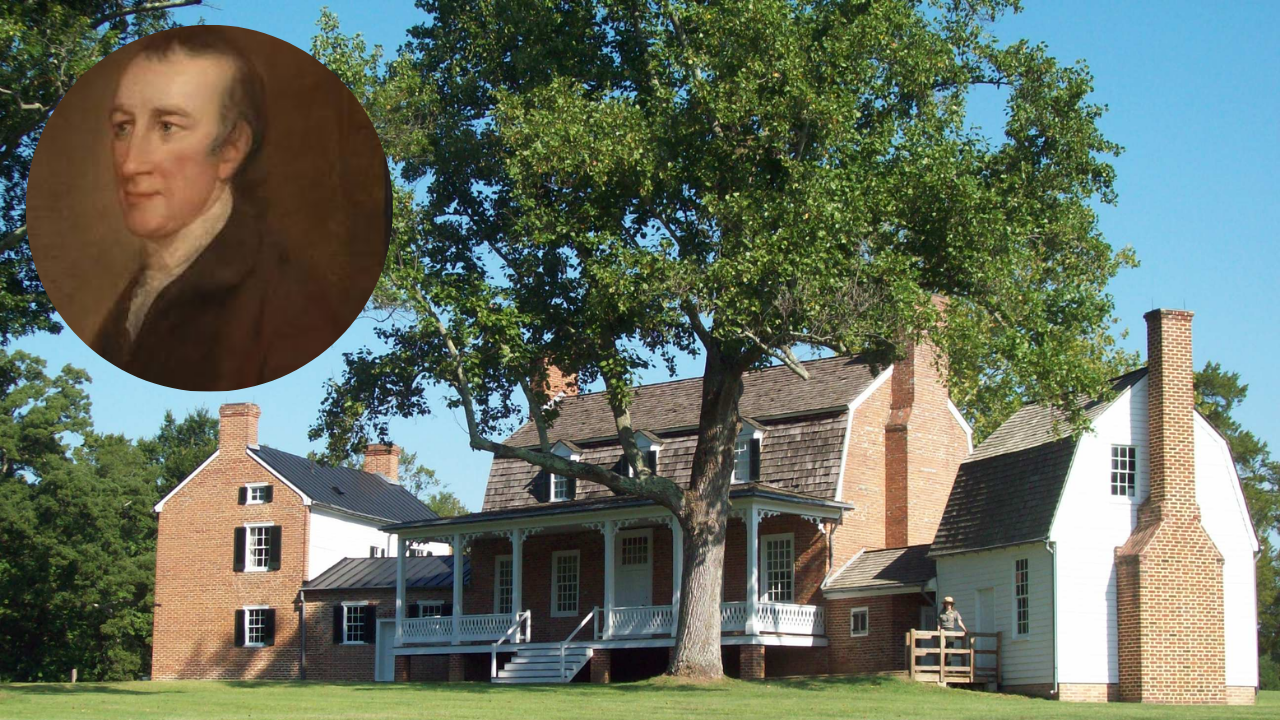
We love the romanticism of the ancestral estate. The folklore of a visionary patriarch snapping up hundreds of acres for a pittance, only to watch it turn into a multi-million-dollar dynastic empire handed down across centuries. Real estate media eats this up. They point to historical anomalies like Thomas Stone’s 442-acre Maryland acquisition in 1770 and hyperventilate about the staggering compound return over 166 years of family ownership.
It makes for great historical fiction. It makes for terrible financial strategy.
Every time a viral piece drops about a plot of land bought for the price of a mid-tier livestock auction and held through the generations, middle-class investors nod along, convincing themselves that buy-and-hold real estate is a bulletproof ticket to dynastic immortality. They think time in the market cures all sins. They think holding acreage like a religious relic is how fortunes survive the test of time.
They are completely, fundamentally wrong.
I have spent two decades watching family offices, private equity syndicates, and legacy landowners bleed dry while chasing the ghost of the multi-generational land grab. The romanticized narrative of the century-old family property ignores taxes, liquidity constraints, catastrophic depreciation, asset partition lawsuits among estranged heirs, and the brutal reality of opportunity cost.
It is time to dismantle the fairy tale of the permanent family estate and look at the brutal economic math that the real estate industrial complex refuses to admit.
The Compound Interest Fallacy of Land Ownership
Let us address the core delusion: the idea that raw land held for over a century represents an elite compounding machine.
When financial commentators calculate the annualized return of an estate held for 160-plus years, they almost universally commit a primary analytical sin. They calculate the nominal price appreciation from point A to point B and pretend nothing happened in between. They ignore the invisible cash bleed that slowly strangles every static asset over a multi-generational timeline.
Imagine a scenario where a family acquires 400 acres in the late eighteenth century. For the first fifty years, it generates modest agricultural yield. Then, the industrial revolution shifts economic gravity to urban centers. The land sits dormant or under-utilized for generations because the family views it as a sacred trust rather than an active capital asset.
Meanwhile, what is happening to the wealth?
Property taxes compound annually. Local municipalities expand, assessments rise, and inflation eats away at purchasing power. To pay the tax burden during down agricultural cycles, generations of heirs are forced to sell off parcels piecemeal, carving up the original empire just to keep the lights on. By the time the final valuation hits the headlines, the actual net internal rate of return, adjusted for taxes, maintenance, legal fees, and the sheer capital inefficiency of raw dirt, looks pathetic compared to a boring, diversified equity portfolio or a modern productive enterprise.
Land does not magically appreciate because time passes. It appreciates because surrounding infrastructure, population density, and capital investment force it to. If you are sitting on rural acreage waiting for urban sprawl to bail out your family tree, you are not an investor. You are a speculator praying for a demographic miracle.
Why Long-Term Holding Is Often Financial Suicide
The traditional real estate mantra tells you to buy land, bury the deed in a vault, and let your grandchildren cash the check. This is an exceptional way to manufacture generational litigation.
As an insider, I have seen families implode over legacy properties. When wealth is tied up in an indivisible, illiquid brick-and-mortar or dirt asset, you create a psychological and financial trap for your descendants.
Consider the mechanics of generational handoffs. Real estate does not divide cleanly like shares of an index fund. When an estate passes down three tiers of descendants, fractional ownership splits among cousins who have never met, have zero alignment on risk tolerance, and possess entirely different liquidity needs. One cousin wants to develop the property; another wants to preserve it as a nature sanctuary; a third is drowning in personal debt and forces a partition sale through the courts.
The result? Fire sales. Liquidating centuries of accumulated equity at a massive discount because the asset structure lacked flexibility.
True generational wealth is not about holding a single asset until it turns to dust. True wealth is about dynamic capital allocation. It is about mobility, liquidity, and the ability to redeploy capital into higher-yielding opportunities at a moment's notice. An acre of dirt is the exact opposite of mobile. It is a financial anchor tied around your family's neck.
The Cost of Ignoring Opportunity Cost
Let us look at the numbers through a sharper lens.
If Thomas Stone had taken that initial capital in 1770 and deployed it into productive, compounding instruments that evolved alongside the American economy—early industrial enterprises, railroads, blue-chip equities, and eventually technology and logistics—the resulting portfolio would have lapped the physical land value a thousand times over, without a single property tax bill, zoning dispute, or boundary dispute with a neighbor.
Real estate enthusiasts love physical tangibility because they can touch it. There is a psychological comfort in pointing to a tree line and saying, "My family owns that." But comfort is the enemy of alpha.
When you lock capital into non-producing or low-yielding real estate for decades, you pay a devastating opportunity cost. You miss every major secular shift in the global economy because your net worth is trapped in dirt that requires constant defense against encroaching local ordinances, environmental regulations, and eminent domain threats.
How to Actually Build Long-Term Wealth
If you want to build a portfolio that survives a century without collapsing under its own administrative weight, you must abandon the 18th-century peasant mindset of accumulating acreage like a feudal lord.
Adopt these core principles instead:
Prioritize Liquidity Over Legacy
An asset you cannot quickly convert to cash without destroying its value is a liability disguised as an asset. If your wealth strategy depends on holding a piece of real estate unchanged for 50 years, you have built a fragility into your balance sheet that a single regulatory shift can shatter.Treat Real Estate as an Operating Business, Not a Heirloom
If you own property, it must generate cash flow that scales with inflation, or it must be aggressively developed and monetized. Passive holding of raw land is a luxury reserved for institutional players with infinite balance sheets—not families trying to secure generational security.Separate Family Dynamics from Capital Structure
Never tie family emotional attachment to hard assets. If you want to pass down wealth, pass down liquid equity, governance structures, and family bank frameworks that allow descendants to invest intelligently, rather than forcing them into reluctant co-ownership of a depreciating physical artifact.
The next time you read a breathless retrospective about a centuries-old property deal, look past the romantic headline. Ask about the transaction costs, the tax drag, the family infighting, and the staggering opportunity cost of capital left to rot in the sun.
Stop treating dirt like a religion. It is just an asset class. And right now, your strategy for it is stuck in the past.