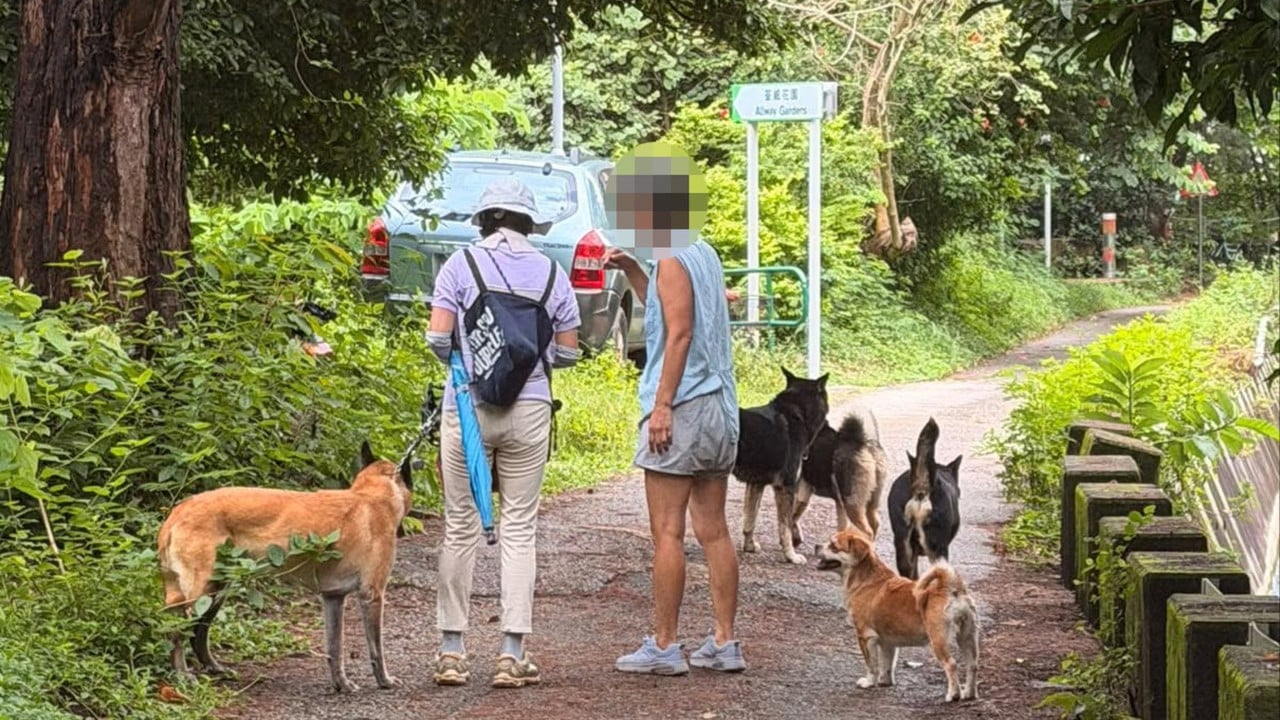
Dawn in Hong Kong rarely arrives in silence. Long before the sun burns through the heavy humidity hanging over the harbor, the concrete arteries of the city wake up. You hear the rhythmic sweep of bamboo brooms against the pavement. You hear the distant, hollow clatter of an empty tram car shifting onto a siding. And, if you listen closely enough as you walk your dog down a narrow neighborhood lane, you hear the sharp, sudden jingle of a quickened metal chain and the hot, frantic breath of an animal lunging before its owner can anchor their footing.
I know that sound. It lives in the muscle memory of anyone who has ever walked a smaller dog past a coiled, unpredictable shadow waiting in a stairwell or around a blind corner. You feel the instantaneous spike of adrenaline. Your grip tightens on the nylon lead until your knuckles turn white. You pull your companion close, praying that the invisible barrier of distance and a few feet of tether will hold.
Most days, it does.
Until it doesn't.
Two recent canine attack cases shattered the morning routine across different corners of the city, leaving physical wounds and lingering dread in their wake. In one flashpoint, a domestic pet was torn and battered; in another, a human hand bore the jagged imprint of a panicked bite. Two isolated incidents on paper. Two police reports, two veterinary bills, two sudden interruptions in an otherwise ordinary urban rhythm. But look past the sterile police blotters. Look at the trembling hands of the people involved. What these headlines fail to capture is the fragile pact we strike every single day when we bring wild-descended predators into concrete boxes suspended forty stories in the air.
We live stacked on top of one another here. Hong Kong is a vertical labyrinth of steel, glass, and neon, where personal space is an expensive illusion. We share elevators the size of closets, narrow corridors, and pocket-sized parks carved out between high-rise monoliths. In this pressure cooker, our pets are our anchors. They represent raw, unvarnished nature—a living, breathing antidote to the cold geometry of our architecture.
Yet, we often forget that bringing a dog into the city means importing an untamed dynamic into a crowded ecosystem.
Consider what happens next when an owner loses control, even for a fraction of a second. A split second of distraction. A frayed leash. A misunderstanding of canine body language. The animal reacts out of fear, territorial instinct, or sheer overstimulation, and the consequences ripple outward with devastating speed.
It is easy to point fingers when these tragedies strike. The blame game is swift and predictable. We blame the breed. We blame the owner for not paying attention. We blame the lack of enforcement, the crowded parks, the lack of proper training. But pointing fingers is a comfortable substitute for confronting a harder truth.
Our city's infrastructure for pet ownership is lagging decades behind its reality.
Walk through any neighborhood park on a Sunday morning and watch the invisible tension dance between strangers. Parents pull their toddlers closer. Dog owners tense up, shouting hurried assurances across the grass. Everyone is calculating risks in real-time. Is that dog friendly? Is my dog too close? Will the sudden noise of a passing scooter trigger a lunge?
This is the invisible tax of urban living with animals. We are constantly bracing for impact.
When a dog bites a person or mauls another animal, the public reaction is swift and reactionary. Calls for bans echo through social media. New restrictions are floated. But restrictions without education are just band-aids on a fracture. We need a fundamental shift in how we prepare people to handle animals in high-density environments. Owning a dog in a metropolis like this is not a casual lifestyle choice; it is a profound responsibility that requires spatial awareness, emotional regulation, and an intimate understanding of canine psychology.
Imagine walking down a steep incline in Mid-Levels. Your dog catches the scent of something below and bolts. The leash is jerked from your hand. In that microsecond, you are no longer a pet owner; you are a spectator to chaos.
That is the nightmare scenario haunting thousands of urban pet owners every single day.
We cannot pave over our density, nor can we scrub the unpredictable nature out of our animals. What we can change is our vigilance. We can stop treating leash laws as bureaucratic nuisances and start treating them as vital safety valves. We can invest in better behavioral training resources that are accessible to everyone, not just those who can afford private trainers. We can design our public spaces with clear sightlines and designated zones that reduce the friction between different types of animals and pedestrians.
The sun sets over Victoria Peak, casting long, bruised shadows across the harbor. Down below, in the quiet courtyards and alleyways, the evening dog walks are beginning.
Another morning is coming. Another walk down the same concrete lane. The leash is in your hand, light, flexible, and terrifyingly fragile, holding back the wild world from the edge of the abyss.


