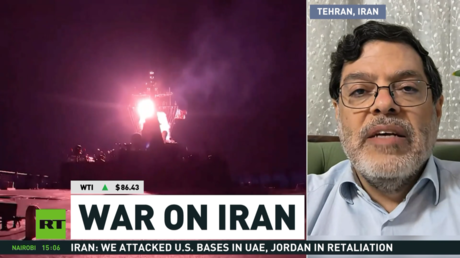
Iran's new Supreme Leader Mojtaba Khamenei is shifting tactics. Instead of just firing retaliatory missiles, Tehran is building a massive international legal case against Washington and Tel Aviv. The catalyst is the horrific February 28 airstrike on the Shajareh Tayyebeh Elementary School in Minab, a southern town near Bandar Abbas. That attack killed 156 civilians, including 120 children, making it the bloodiest single civilian disaster of the brief but brutal 2026 U.S.-Iran war.
If you want to understand where the Middle East conflict goes next, don't look at the battlefields. Look at the courtrooms. Khamenei recently used his platform on X to signal that Iran is treating every single casualty from the recent conflict as an independent legal file. Tehran is going after what it calls admissions of guilt from Western leaders who publicly boasted about the success of Operation Epic Fury.
The Cold Intelligence Failure Behind the Minab Tragedy
To understand why this legal strategy might actually carry weight internationally, you have to look at how the strike happened. On February 28, 2026, U.S. and Israeli forces launched nearly 900 strikes in a lightning 12-hour window. The primary objective was to decapitate Iranian leadership, a goal achieved when a first-wave strike killed the former Supreme Leader, Ali Khamenei.
But midmorning, precision-guided Tomahawk missiles hit the school in Minab.
A preliminary investigation by the U.S. military leaked to the media showed that U.S. Central Command officers used outdated target data provided by the Defense Intelligence Agency. The building originally belonged to an Islamic Revolutionary Guard Corps (IRGC) naval brigade base. However, Human Rights Watch verified via high-resolution satellite imagery that a physical wall had been built back in 2016 to completely separate the school from the active military compound.
The U.S. military failed to update its target folders. They completely missed a decade of local pattern-of-life data.
Even worse, the school was "triple-tapped." It was hit three separate times between 10:23 a.m. and 10:45 a.m. Local medics recounted that after the first missile struck, the school principal gathered children into a prayer room to shelter while calling parents. The second and third strikes hit that exact shelter area and a nearby medical clinic treating the initial wounded.
Western Admissions as Legal Leverage
Mojtaba Khamenei isn't just venting grief. He's exploiting a major strategic blunder made by Western politicians. In the immediate aftermath of Operation Epic Fury, U.S. and Israeli officials openly celebrated the tactical precision of the campaign.
Khamenei explicitly noted that these brazen public confessions effectively amount to legal admissions of crime.
When President Donald Trump and Defense Secretary Pete Hegseth defended the campaign, they insisted the U.S. didn't target civilians intentionally. Senator John Kennedy even told reporters that "other countries do that sort of thing intentionally... We would never do that."
But under international humanitarian law, intent isn't just about what you wanted to happen. It's about recklessness. If a military force slashes its programs to mitigate civilian harm—as critics allege the current administration did upon taking office—and fires precision weapons into a dense area without checking if a building is still a military base, that constitutes systematic recklessness. That's the exact threshold required to establish a war crime.
The Legal Trajectory for Tehran
Don't expect immediate indictments from the International Criminal Court (ICC). Iran isn't a state party to the Rome Statute, and neither is the United States or Israel. However, Mojtaba Khamenei's directives focus on a dual-track strategy.
First, Iran is compiling domestic judicial files. These will likely lead to in-absentia trials of U.S. and Israeli commanders, allowing Tehran to issue regional arrest warrants and freeze any accessible assets.
Second, they are leveraging third-party human rights groups. Backing from organizations like Amnesty International, which recently lambasted the Pentagon for stalling its internal investigation, helps Iran build a narrative of Western impunity. Amnesty pointed out that the military has had months to release its findings but continues to delay, even as Congress limits Secretary Hegseth's travel funds in protest over the lack of transparency.
Real Accountability or Political Theater
Let's be clear about the limits of this strategy. International law is dictated by power, not just precedents. Tehran will not force a U.S. president into a Hague courtroom.
But this legal push achieves something else for Mojtaba Khamenei. It provides an essential narrative pivot. The 2026 war left Iran's top leadership decimated and its air defenses shattered. By focusing heavily on the 120 dead schoolchildren of Minab, the regime shifts the conversation from military defeat to moral victimhood. It solidifies domestic support for the new Supreme Leader during a fragile transition period and complicates future Western diplomatic maneuvers in the region.
If you are tracking the next steps of this geopolitical fallout, keep a close eye on the Senate Armed Services Committee's upcoming budget hearings. The pressure to release the full Pentagon report on the Minab school strike will determine whether Washington acknowledges its intelligence breakdown or digs in for a long legal war of attrition with Tehran.