For centuries, biology has been a science of autopsy. We learned how bodies worked by taking them apart, freezing them, slicing them into transparent wafers, and peering at the quiet wreckage under glass. We mapped the human form like cartographers charting an abandoned continent—deducing rivers from dried riverbeds, assuming the geography of life remained constant even after the breath had stopped.
The compromise was absolute. If you wanted to see the individual cell, you had to kill the creature. If you wanted to watch the creature live, the cell blurred into an anonymous haze.
Consider what that blindness cost us. Imagine trying to understand a symphony by staring at a single violin string while someone else plays a trumpet two rooms away, and a third person measures the heat of the brass section after the concert has ended. You get fragments. You get correlations. You get educated guesses. But you miss the terrifying, breathtaking coordination of the orchestra itself—the way a single thought in the conductor’s mind cascades instantly into the trembling pressure of wood and gut and air.
That era of isolation is over.
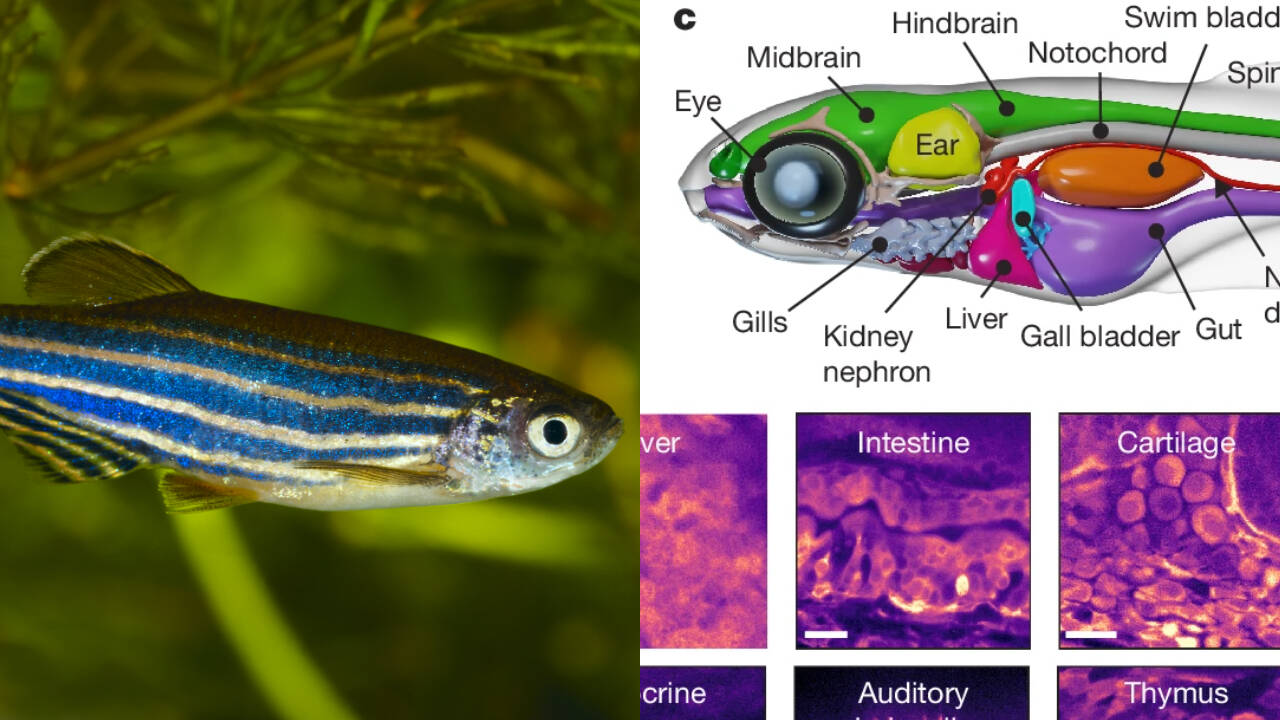
In laboratories at the Howard Hughes Medical Institute’s Janelia Research Campus, a team led by researchers including Virginie Ruetten and Misha Ahrens has built a system that refuses to choose between the micro and the macro. They call the method WHOLISTIC—short for WHole-Organism Live-Imaging System for recording Tissue and IntraCellular activity.
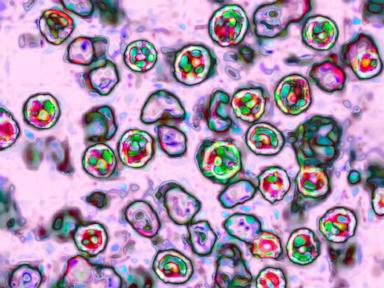
To understand what they have achieved, picture a tiny, completely transparent larval zebrafish gliding through water. Now, imagine flooding that living body with genetically encoded calcium sensors—microscopic molecular flags that flare with a bright yellow light the exact millisecond a cell fires, contracts, or metabolizes. Using high-speed volumetric fluorescence imaging paired with custom machine learning, these scientists are no longer guessing how organs talk to one another.
They are listening to the conversation live.
Watch what happens when the water temperature drops just a few degrees. In the past, a physiologist might have measured the fish's overall metabolic slowdown or tracked shivering muscles. Today, through the lens of whole-body cellular imaging, a startling ballet emerges across the organism. You watch the brainstem instantly command a redistribution of blood flow, prioritizing vital cores while peripheral tissues adapt. You see cartilage cells—humble chondrocytes once thought to be passive structural blocks—waking up and reacting directly to environmental stress. You see that common drugs like ketamine do not merely tickle isolated neurons in the skull; they light up the meninges, the delicate sheets of connective tissue guarding the brain, in a synchronized wave that spans far beyond the central nervous system.
The body is not a federation of independent city-states. It is an entanglement.
For generations, medical science has treated the human body as a collection of specialized specialties. Cardiologists look at the heart. Neurologists look at the brain. Gastroenterologists map the gut. When a drug is administered, we watch for its primary target while crossing our fingers about off-target effects elsewhere.
We do this because we have been blind to the feedback loops. When a drug alters the brain, how does the bone marrow respond three seconds later? When the gut experiences inflammation, what microscopic whispers are sent across the vagus nerve to reshape the microvasculature of the skin? Until now, those signals were ghosts in the machine.
This breakthrough changes the resolution of human curiosity. By bridging the fundamental chasm between cellular biology and organismal physiology, science has filled a massive observability gap. We are moving from static anatomical atlases to dynamic, living maps where behavior, cardiovascular pulses, muscular contractions, and neural firings are witnessed as a single, indivisible event.
The implications stretch far beyond aquatic model organisms. Every new circuit uncovered in a transparent vertebrate lays down a foundational blueprint for understanding complex mammalian—and eventually human—biology. When we can finally watch drugs, diseases, and environmental stressors ripple through an entire living system in real time, the way we design therapeutics will undergo a profound transformation. We will stop treating symptoms in isolation. We will begin managing the entire symphony.
The dark spaces between our cells are shrinking. Life, in all its furious, microscopic synchronization, is finally stepping out of the shadows.