Extreme thermal anomalies no longer represent tail-risk events for specialty crop production; they are the baseline operational reality. While commodity crops like corn and soy rely on massive scale and broad-spectrum crop insurance to buffer climate volatility, specialty crops—such as berries, stone fruits, leafy greens, and nuts—operate on high-margin, high-input microeconomics. A single heatwave during a critical phenological stage can compromise an entire fiscal year of capital investment.
To survive this operational shift, producers must move past reactive mitigation and adopt a structured framework that views extreme heat as a multi-layered tax on biological systems, labor capital, and infrastructure longevity.
The Core Triad of Thermal Degradation
The economic impact of extreme heat on specialty agriculture can be isolated into three distinct vectors: enzymatic breakdown, moisture transport failure, and labor capacity degradation.
1. The Biological Rate Limit (Enzymatic Breakdown)
Every specialty crop operates within an optimal thermal band. Above specific critical thresholds (typically between 32°C and 38°C for most temperate cultivars), the photosynthetic apparatus fails. Enzymes responsible for carbon fixation denature, causing the plant to shift from a net-positive energy producer to a net-negative energy consumer via accelerated respiration.
This metabolic inversion triggers rapid cellular degradation. In stone fruits and berries, it manifests as structural softening, sunscald, and uneven ripening. The market pricing for specialty crops is highly binary: premium grades command exponential margins, while sub-standard crops are either diverted to low-value processing channels or abandoned entirely in the field due to negative harvesting margins.
2. Vapor Pressure Deficit (VPD) and Hydrodynamic Failure
The relationship between atmospheric temperature and moisture capacity is non-linear. As air temperature climbs, its capacity to hold water increases exponentially, driving up the Vapor Pressure Deficit (VPD)—the difference between the moisture inside the leaf tissue and the drying power of the surrounding air.
When VPD crosses critical thresholds, plants execute an emergency shutdown. Stomata close to preserve internal moisture, halting transpiration. While this mechanism prevents immediate dehydration, it removes the plant’s primary method of self-cooling. The internal canopy temperature can quickly surge 5°C to 10°C above the ambient air temperature, cooking the fruit on the vine and causing irreversible vascular damage to the root-to-shoot hydraulic pathway.
3. Labor Capital Depreciation
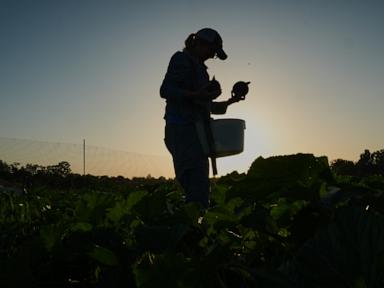
Unlike broad-acre grains managed via autonomous or mechanized combines, specialty crops require intensive, manual human labor for thinning, pruning, and harvesting. Extreme heat compresses the viable working window.
When ambient temperatures exceed safety thresholds, regulatory mandates and human biology require frequent rest cycles, shifting operational hours to nocturnal schedules. This nocturnal shift introduces new logistical friction: increased artificial lighting costs, higher accident rates, and reduced sorting accuracy under suboptimal visibility.
Technical Mitigation Frameworks
Managing these thermal taxes requires a capital allocation strategy split between microclimate engineering and physiological defense mechanisms.
Overhead Canopy Engineering: Netting and Photofractionation
Deploying protective overhead infrastructure is the most effective capital expenditure for high-value orchards and vineyards. This strategy operates on three distinct mechanisms:
- Spectral Manipulation: Modern shade cloths do not merely block sunlight; they filter specific wavelengths. By utilizing photoselective netting (typically 10% to 30% density), growers block destructive ultraviolet and near-infrared radiation while maximizing the transmission of photosynthetically active radiation (PAR).
- Microclimate Boundary Layer Modification: Netting restricts wind velocity directly above the canopy, trapping a layer of higher-humidity air. This localized pocket lowers the ambient VPD, allowing the plant's stomata to remain open and active even during peak afternoon heat.
- Physical Diffusive Barriers: Direct solar radiation creates localized hotspots on fruit surfaces. Netting diffuses light, distributing photon energy evenly across the canopy architecture and eliminating the direct thermal energy spikes that cause sunscald.
The primary limitation of this infrastructure is its capital intensity. The return on investment (ROI) is highly sensitive to the lifespan of the material under intense UV exposure and the structural cost of anchoring systems capable of withholding high winds.
Micro-Sprinklers and Hydro-Evaporative Cooling
Direct application of water via overhead micro-sprinklers leverages the high latent heat of vaporization of water to artificially depress canopy temperatures. When ambient sensors detect critical thresholds, short, pulse-driven irrigation cycles deliver a fine mist over the crop.
As this water evaporates from the leaf and fruit surfaces, it extracts thermal energy directly from the plant tissue, lowering crop temperatures by up to 8°C.
However, this strategy introduces a significant operational bottleneck: it requires flawless water quality. Using water with high electrical conductivity (EC) or elevated sodium and calcium levels leaves a crystalline mineral crust on the fruit as it evaporates. This residue reduces cosmetic value and requires costly post-harvest washing. Furthermore, sustained high humidity within the canopy increases the probability of fungal pathogen proliferation, requiring highly precise timing and advanced fungicide integration.
Chemical and Exogenous Protectants
For crops where physical infrastructure is economically unfeasible, growers rely on topically applied chemical barriers to alter the plant’s physical properties:
- Particle Films (Kaolin Clay): Spraying a liquid suspension of kaolin clay leaves a reflective white film over the foliage and fruit. This layer increases the plant’s albedo, reflecting solar radiation and reducing surface temperatures. The primary drawback is post-harvest removal, which increases processing labor costs.
- Exogenous Osmoprotectants: Applying formulations containing amino acids, glycine betaine, or seaweed extracts helps stabilize cellular membranes and proteins during thermal stress. These compounds allow cells to retain water molecules more effectively, maintaining turgor pressure when VPD levels spike.
- Abscisic Acid (ABA) Analogues: Exogenous application of stress hormones can artificially force stomatal closure ahead of a forecasted heatwave, pre-conditioning the plant for extreme conditions, though this typically comes at the cost of short-term growth deceleration.
The Structural Constraints of Technological Adaptation
While these technical interventions are viable on a localized scale, their broad deployment is restricted by underlying macro realities.
The first limitation is water scarcity. Evaporative cooling and increased irrigation demand occur precisely when regional water tables are at their lowest and regulatory allocations are most restricted. A strategy that relies on increasing volumetric water delivery to combat atmospheric dryness is structurally unsustainable in arid agricultural basins.
The second bottleneck is grid capacity and energy cost profiles. Running high-pressure irrigation pumps and automated netting deployment systems during peak-demand afternoon hours exposes operations to volatile time-of-use energy pricing. Without co-located solar generation and localized battery storage, the utility costs of climate mitigation can quickly erode the margin premium of the protected crop.
Finally, soil chemistry dynamics shift under prolonged heat mitigation. Frequent micro-irrigation cycles alter the oxygen-to-water ratio in the root zone. Anaerobic conditions can develop rapidly in heavier soils, impairing root respiration and rendering the plant even more vulnerable to nutrient deficiencies and systemic root rot pathogens.
Tactical Reallocation Model
To maintain solvency and yield stability over a ten-year horizon, agribusinesses must transition from emergency crop management to a structural capital reallocation model.
First, audit all current acreage through a localized microclimate lens, mapping historical wet-bulb temperatures and VPD durations against cultivar-specific failure points. Acreage falling consistently outside viable envelopes must be transitionally retired or converted to less thermal-sensitive crops rather than subsidized with escalating infrastructure costs.
Second, pivot capital expenditure from late-stage interventions to early-stage genetic and architectural design. This involves top-working existing orchards with heat-tolerant rootstocks and redesigning row orientations to leverage passive wind cooling and self-shading canopy geometries.
The final strategic move requires restructuring supply chain contracts to reflect variable yield qualities. Fixed-volume forward contracts are dangerously punitive in an era of volatile climates. Growers must negotiate dynamic pricing structures that account for thermal stress events, ensuring that the financial burden of climate adaptation is shared equitably down the supply chain to the end retailer. Focus immediate liquidity on upgrading automated sensor networks; real-time, leaf-level crop water stress index (CWSI) data is the single most critical asset for determining whether to deploy costly cooling measures or preserve resources for the next production cycle.