The current shift in service industry compensation, colloquially labeled "tipflation," represents a fundamental breakdown of the traditional signaling mechanism between consumer and provider. Historically, tipping functioned as a discretionary performance bonus designed to mitigate the principal-agent problem—aligning the interests of the server with those of the customer. However, the systematic expansion of tip prompts into non-traditional sectors and the upward creep of percentage floors has converted a merit-based incentive into a ubiquitous, "dark pattern" tax. This transition creates an economic friction that degrades consumer sentiment and threatens the long-term viability of service-based business models.
The Tripartite Engine of Gratuity Expansion
The rapid acceleration of tipping expectations is not a singular cultural phenomenon but the result of three converging structural shifts.
1. The Digital Intermediation Effect
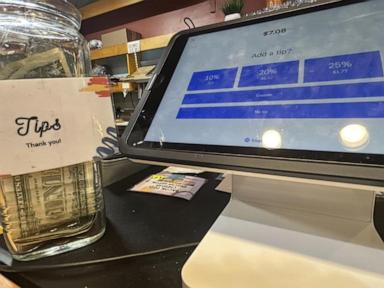
The replacement of physical cash with Point-of-Sale (POS) systems (e.g., Square, Toast, Clover) has altered the psychology of the transaction. Digital interfaces utilize "choice architecture" to influence behavior. By presenting pre-calculated options—often starting at 18%, 20%, or 25%—these systems exploit social friction. The physical presence of a service worker while a customer selects a tip on a screen creates a high-pressure environment where the "default" choice becomes the path of least resistance.
This digital nudging bypasses the cognitive evaluation of service quality. It shifts the burden of proof from the server (who previously had to earn the tip) to the consumer (who must now actively "opt-out" or "downgrade" to a lower percentage). This is a classic application of the default effect, where the pre-selected or most prominent option becomes the standard regardless of its appropriateness to the level of service rendered.
2. Labor Cost Externalization
Business owners increasingly view the tip line as a tool for wage stabilization without direct margin compression. By relying on consumer-funded gratuities to supplement base pay, firms can maintain lower "sticker prices" on menus or service lists while effectively increasing total worker compensation. This creates a hidden inflationary loop. As the cost of living rises, the pressure to increase worker pay is redirected toward the customer via higher tip percentages rather than being absorbed into the business's COGS (Cost of Goods Sold).
3. Sector Contamination
Tipping has migrated from high-touch environments (sit-down dining, hospitality) to low-touch or zero-touch environments (counter service, self-service kiosks, automated car washes). This expansion dilutes the definition of "service." When a customer is prompted to tip for a transaction involving zero human interaction or minimal task complexity—such as handing a pre-packaged item over a counter—the logical link between effort and reward is severed.
The Utility Curve of the Consumer
To analyze why "tipflation" causes such visceral frustration, one must look at the consumer's utility function. In a standard transaction, the price is fixed and known ex-ante. Tipping introduces an ex-post price volatility.
The Violation of Social Contracts
The traditional social contract suggested that $15%$ was the baseline for "good" service. As the baseline shifts toward $20%$ or $22%$, the consumer experiences a loss of agency. The "gratitude" component of the tip is replaced by a "guilt" component. When the tip becomes mandatory in practice if not in law, it ceases to be an incentive and becomes a surcharge.
The second limitation of this model is the "tip fatigue" threshold. Consumers have a finite amount of psychological capital for social pressure. When every interaction—from buying a bottle of water to picking up a dry-cleaning order—includes a tip prompt, the consumer develops a defensive posture. This leads to "transactional cynicism," where the individual begins to avoid certain establishments altogether to bypass the awkwardness of the digital prompt.
Quantitative Distortion of Service Quality
Vague claims about "rising expectations" ignore the mathematical reality of how tip percentages interact with underlying inflation.
If a restaurant meal cost $50 in 2019 and a $15%$ tip was applied ($7.50), the total cost was $57.50.
In 2026, due to food cost inflation, that same meal may cost $70. If the expected tip has also risen to $20%$, the tip is now $14.00.
The server's tip income has increased by $86%$ while the underlying price of the meal only increased by $40%$. This "compounding inflation" means that tip-earners in high-growth sectors may see wage increases that far outpace the value of the service provided, while consumers see their purchasing power eroded from two directions simultaneously: the menu price and the percentage expectation.
The Principal-Agent Breakdown
The primary economic justification for tipping is to solve the problem of monitoring service quality. A manager cannot watch every table; therefore, the customer is deputized to reward the server directly.
This model fails in three specific scenarios:
- The Counter-Service Paradox: In a 30-second interaction at a coffee shop, there is insufficient time for "service quality" to manifest in any meaningful way. The tip becomes a random variable rather than a performance metric.
- The Kitchen Wage Gap: Tipping primarily benefits front-of-house staff. As tip percentages rise, the income disparity between the server and the cook (who actually prepares the product) widens. This creates internal labor friction and high turnover in back-of-house roles, ultimately harming the product quality.
- The Pre-Service Tip: Delivery apps often ask for a tip before the service is rendered. This completely flips the incentive structure. If the reward is guaranteed before the task is completed, the worker has no performance-based motivation to ensure the quality of the delivery. It becomes a "bid for service" rather than a gratuity.
Strategic Operational Risks for Businesses
Firms that lean too heavily on "tipflation" to solve labor issues face significant long-term risks. The most immediate threat is the "churn of the affluent." While lower-income consumers may cut back on frequency, higher-income consumers—who drive the majority of service revenue—are often the most sensitive to perceived "nickel-and-diming."
This creates a bottleneck in customer acquisition. If a brand is perceived as having hidden costs or aggressive tipping prompts, the "all-in" price of the experience becomes uncompetitive.
The Regulatory Counter-Pressure
As public outcry grows, legislative bodies are beginning to scrutinize "junk fees" and "dark patterns" in digital payments. There is a high probability of future regulation requiring:
- Clearer disclosure of service charges versus discretionary tips.
- Requirements for "No Tip" options to be as prominent as preset percentages.
- Elimination of the tipped minimum wage in more jurisdictions, forcing businesses to move to a flat-wage model.
Realigning the Value Exchange
For a service business to remain viable in an era of tip fatigue, the focus must shift from maximizing the tip-per-transaction to stabilizing the value-per-visit.
The first step is a rigorous audit of the customer journey. Identify points where a tip prompt adds zero value. In quick-service environments, removing the prompt entirely and slightly adjusting the base price can actually improve customer loyalty and "speed to checkout," which are higher-order KPIs (Key Performance Indicators) than marginal tip gains.
The second step is the "Professionalization of Wages." Transitioning to a model where staff are paid a competitive, living wage with a "service included" or "no tipping" policy removes the psychological friction for the customer. While this requires a one-time upward adjustment of menu prices, it creates a transparent, premium brand image that differentiates the business from competitors who rely on aggressive digital prompts.
The third step involves the internal redistribution of service charges. Instead of relying on the whim of the customer, a fixed service fee (e.g., 18%) that is transparently distributed between front and back-of-house ensures equitable pay and reduces the income volatility that plagues the service industry.
The current trajectory of tipping is unsustainable. The "social tax" model is nearing a breaking point where the friction of the transaction outweighs the utility of the service. Businesses must preemptively pivot toward price transparency and wage stability before consumer resentment triggers a more permanent contraction in the service economy. Those who continue to hide labor costs behind digital guilt prompts will find themselves with high-turnover staff and a shrinking, cynical customer base. The strategic play is to exit the "tip-creep" arms race and compete on the basis of a clear, honest, and predictable price-to-value ratio.