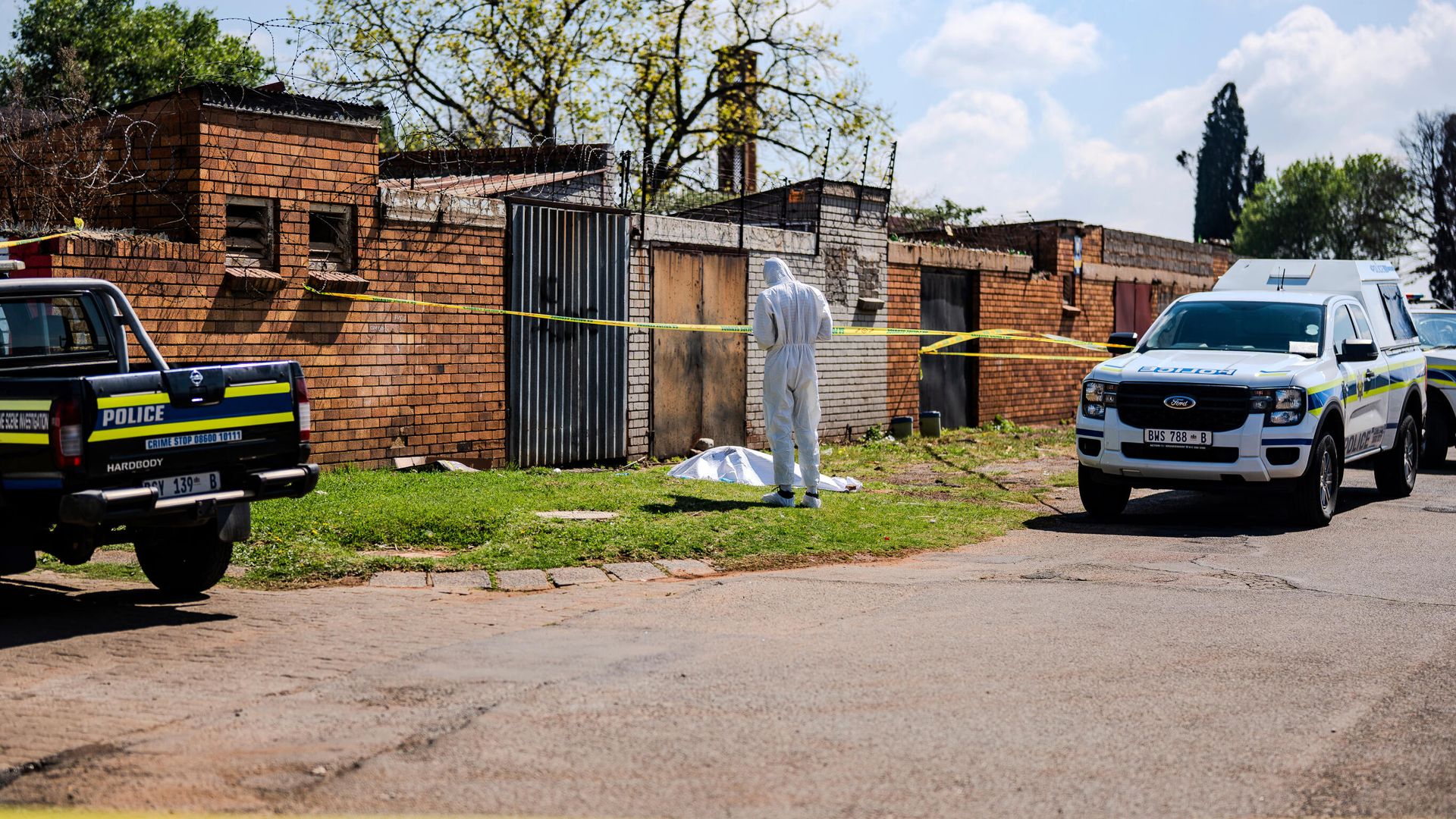
The headline drops like clockwork. Nine bodies discovered. A community terrorized. Whispers of a lone wolf stalking the shadows, picking off victims with chilling calculation. The media machine spins into immediate overdrive, manufacturing the exact kind of high-octane horror that keeps eyeballs glued to screens and panic bubbling in the streets.
We love the serial killer narrative. It gives a messy, chaotic world a neat, terrifying villain. It allows us to point at a monster, lock our doors, and pretend that danger always wears a stranger's face.
It is also a comforting, dangerous lie.
When authorities and journalists rush to link a string of violent deaths in South Africa or anywhere else to a single elusive predator, they are usually selling a narrative that serves institutional anxiety rather than public safety. The lazy consensus says that horrific violence against women is the work of extraordinary anomalies—isolated psychopaths who break the mold of normal society.
The data tells a vastly different, more uncomfortable story.
The Comfort of the Monster Myth
Let us look at how the machinery of crime reporting operates. When multiple women turn up dead in a specific geographic area, the immediate reflex among sensationalist commentators is to dust off the serial killer playbook. It triggers our primal fascination with true crime tropes. Profilers are quoted, maps are drawn with ominous red circles, and communities are told to watch the shadows.
This framing is intellectually lazy and practically disastrous. It allows society to treat systemic failures as localized weather events.
Imagine a scenario where a city experiences a sudden spike in bridge collapses. If engineers stood in front of the rubble and blamed a rogue band of structural saboteurs, you would call them incompetent or corrupt. Yet, when women are systematically targeted, marginalized, and murdered in environments devoid of basic policing, infrastructure, or community support, we swallow the lone wolf explanation without blinking.
Criminology and public health data consistently show that extreme violence against women is rarely perpetrated by an opportunistic stranger leaping out of the bushes. The vast majority of fatal violence occurs at the hands of intimate partners, family members, or acquaintances within the victim's immediate sphere. When bodies are found dumped in open spaces, abandoned buildings, or industrial outskirts, it points less to the meticulous tradecraft of an organized serial killer and more to a grim reality: an environment where disposing of a body carries zero immediate risk because law enforcement infrastructure is functionally absent.
We want a monster because monsters have weaknesses. They get caught. They die in shootouts. They leave DNA.
Systemic rot, institutional apathy, and the normalization of gender-based violence do not fit into a neat two-minute news segment. They require hard looks at police response times, forensic backlogs, socio-economic desperation, and cultural tolerance for abuse.
Dismantling the Panic Industrial Complex
Let us define terms precisely. A serial killer, by strict definition, involves a specific psychological compulsion, a cooling-off period, and a pattern of repetitive murder driven by internal gratification. It is a statistical rarity. Most multiple-victim homicides are spree killings, gang-related, or driven by localized criminal economies like drug distribution, human trafficking, or opportunistic robbery where witnesses are eliminated.
When police prematurely brand a cluster of murders as the work of a serial killer, two things happen.
First, public panic spikes while investigative efficacy plummets. Resources get funneled into high-profile task forces chasing phantoms based on psychological profiles, while routine, grinding detective work—canvassing neighborhoods, processing backlog-riddled rape kits, analyzing local phone records, and protecting vulnerable populations—gets starved of attention.
Second, it shifts the burden of survival entirely onto the victims. Women are told to avoid walking alone at night, to carry pepper spray, to share their locations. This victim-blaming masquerading as common sense ignores the fundamental failure of the state to guarantee basic security in broad daylight, let alone after dark.
I have watched local governments and law enforcement agencies blow millions on panic-driven task forces while basic municipal lighting remains broken, emergency dispatch systems fail, and domestic violence shelters sit underfunded. It is a shell game. By framing the crisis as a hunt for a serial predator, authorities buy time. They create a temporary state of emergency that justifies extraordinary measures while deflecting accountability for the everyday violence they are paid to prevent.
The Real Threat is Boring and Structural
If you want to understand why women are dying in alarming numbers, stop looking for Hannibal Lecter. Look at the mundane mechanics of institutional failure.
In many developing regions and under-resourced communities across the globe, the police force is not an instrument of public protection; it is an afterthought. Response times measured in hours rather than minutes create a fertile playground for predators of all stripes. When a society fails to track missing persons reports filed by marginalized citizens—especially sex workers, the impoverished, and women of color—it sends a silent invitation to anyone with violence on their mind. You can kill with impunity not because you are a genius mastermind, but because no one is looking.
That is the unvarnished truth the media refuses to print. It is not a cinematic cat-and-mouse game between a brilliant detective and a shadowy killer. It is a slow-motion administrative catastrophe fueled by neglect.
Addressing this requires discarding the comforting thrill of the true-crime narrative. We need to stop waiting for a savior in a trench coat to solve a systemic crisis.
Real protection does not look like a neighborhood watch staring nervously into the fog. It looks like functional forensic labs, independent police oversight, rapid emergency response, severe penalties for domestic abusers, and economic independence for vulnerable populations.
The next time a headline screams about a mysterious serial killer stalking the streets, ask yourself a simple question: Whose incompetence is this story hiding?
Stop waiting for the monster to be caught. Fix the system that lets him operate in broad daylight.