The sentencing of a Syrian national to 26 years in prison by a Dutch district court in The Hague marks a structural shift in how domestic legal systems operationalize universal jurisdiction. This legal mechanism allows national courts to prosecute individuals for severe violations of international law, regardless of where the crimes were committed or the nationality of the victims and perpetrators. While the court's decision establishes a significant judicial marker, the case exposes the friction between international legal theory and the operational constraints of gathering evidence in active conflict zones.
Understanding the true impact of this ruling requires looking past the headline sentence. The case provides a blueprint for how European prosecutors are increasingly stepping in to fill the vacuum left by the deadlocked United Nations Security Council, which has consistently blocked the referral of the Syrian conflict to the International Criminal Court (ICC). The Dutch judgment rests on three distinct operational pillars: the expansion of universal jurisdiction boundaries, the validation of open-source digital evidence, and the legal categorization of non-state militia actions as crimes against humanity.
The Architecture of Universal Jurisdiction in the Syrian Context
Universal jurisdiction operates on the principle that certain crimes are so egregious that they offend the global conscience, granting any state the authority to prosecute. In practice, however, its application is highly selective. The Dutch prosecution of the 36-year-old Syrian defendant, a former member of the pro-regime Liwa al-Quds militia, relied on a specific statutory framework: the Dutch International Crimes Act (Wet internationale misdragingen).
This framework requires an assessment of jurisdictional nexus. Unlike pure universal jurisdiction, which allows for trial in absentia or without any domestic connection, the Dutch system generally requires the suspect to be physically present on Dutch soil. The defendant had applied for asylum in the Netherlands in 2020, inadvertently establishing the necessary territorial custody that triggered the Dutch prosecution service's (OM) mandate.
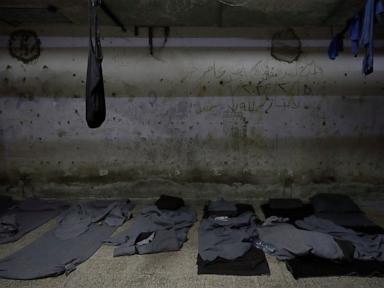
The legal strategy deployed by the prosecution succeeded by shifting the focus from isolated criminal acts to systemic state-sponsored violence. To secure a conviction for crimes against humanity, prosecutors had to satisfy a rigorous legal threshold: proving that the individual acts were part of a "widespread or systematic attack directed against any civilian population." The court validated this by linking the defendant's specific actions—the violent arrest and subsequent torture of civilians in the Nayrab camp near Aleppo in 2012 and 2013—to the broader, documented operational patterns of the Syrian regime and its allied militias.
The Evidence Bottleneck and Digital Authentication Mechanisms
The core vulnerability in universal jurisdiction cases is the collection of admissible evidence. When crimes occur thousands of miles away in a hostile environment, traditional policing methodologies fail. Investigators cannot secure crime scenes, interview local witnesses under protected conditions, or subpoena state records.
To overcome this bottleneck, the Dutch court relied on a hybrid evidentiary matrix combining three distinct vectors:
- Civil Society Documentation: Non-governmental organizations (NGOs) and international bodies, such as the Commission for International Justice and Accountability (CIJA), provided intercepted regime documents and organizational charts that established the command structure of the Liwa al-Quds militia.
- Digital Forensic Verification: Digital footprints, including social media posts, videos, and photographs uploaded by militia members themselves, were authenticated using geolocation, metadata analysis, and shadow verification techniques to prove the defendant’s presence at specific interrogation sites.
- Witness Corroboration: Testimony from Syrian refugees residing across Europe provided the human element needed to corroborate the digital timeline. The fear of reprisal against family members still in Syria remains a significant variable, limiting the pool of available witnesses and introducing structural friction into the trial process.
This hybrid approach establishes a clear precedent. Digital evidence, once viewed skeptically by conservative judiciaries, now carries equal weight to physical evidence when subjected to rigorous cryptographic and contextual verification. This shifts the cost function of international prosecutions, lowering the barrier to entry for domestic war crimes units across Europe.
Legal Classification and the Militia Dilemma
A critical pivot point in the judgment is the explicit classification of the Liwa al-Quds militia as an extension of the Syrian state apparatus. The defense argued that the militia operated independently or that individual actions did not mirror the official policy of the state. By rejecting this argument, the Dutch court formalized a critical legal interpretation regarding proxy forces.
Under international humanitarian law, attributing the conduct of a militia to a state requires proving "overall control." The court found that the Liwa al-Quds functioned in close coordination with the Syrian Armed Forces and intelligence agencies, specifically the Air Force Intelligence Directorate. Consequently, the acts of its members were not treated as localized thuggery, but as institutionalized state terror.
This classification carries severe implications for thousands of former militia members who have sought, or are currently seeking, refuge in Europe. It strips away the defense of "just following orders" or operating within a gray zone of non-state combatancy. If a militia is legally intertwined with the state apparatus, every member becomes a potential target for crimes against humanity charges, provided an organized, systematic campaign against civilians can be proven during their tenure.
Operational Bottlenecks and Systemic Limitations
Despite the successful prosecution, the reliance on domestic courts to enforce global justice contains inherent structural limitations. National judicial systems are designed for domestic criminal management, not the resolution of geopolitical atrocities.
The first limitation is resource asymmetry. Investigating a single case of international crimes demands disproportionate financial and human capital from domestic police forces. The Dutch International Crimes Team (Team Internationale Misdragingen) must deploy specialized investigators, historians, translators, and digital forensic experts for years to secure a single conviction. This creates an operational bottleneck, meaning only a fraction of identifiable perpetrators will ever face trial.
The second limitation is the risk of fragmented jurisprudence. Because universal jurisdiction is governed by national laws, different European states apply different standards of proof, definitions of complicity, and sentencing guidelines. For instance, a war crimes trial in Germany under the Völkerstrafgesetzbuch may yield different procedural outcomes or sentencing structures than a similar trial in France or the Netherlands. This fragmentation prevents the creation of a unified, predictable international legal standard outside of treaty-based courts.
The third limitation involves the politics of asylum and extradition. The discovery of war criminals within refugee populations creates a complex policy loop. While it highlights the efficacy of immigration screening mechanisms that flag suspicious military histories, it also risks politicizing the asylum system. Furthermore, because extradition to Syria is impossible due to the ongoing conflict and the certainty of extrajudicial execution or torture, European states are forced to bear the long-term logistical and financial costs of incarcerating these individuals within their own domestic prison systems.
The Strategic Shift in European Transnational Justice
The 26-year sentence handed down in The Hague is not an isolated event; it is part of a coordinated, decentralized European strategy to enforce accountability for the Syrian conflict. With Germany leading via the landmark Al-Khatib trial in Koblenz, and countries like Sweden, France, and the Netherlands following suit, a de facto European war crimes tribunal is emerging through the networking of domestic judiciaries.
This trend signals a transition from the era of centralized international tribunals (like those for Rwanda and the Former Yugoslavia) to an era of distributed transnational justice. This distributed model is highly resilient against geopolitical vetoes, as no single superpower can shut down the domestic courts of a sovereign European nation.
The long-term viability of this model depends on structural coordination. Eurojust and the European Genocide Network must continue to standardize evidence collection, share witness databases, and harmonize legal strategies to ensure that national borders within Europe do not become shields against prosecution. For corporate entities, state actors, and security analysts, this case confirms that the legal risks associated with complicity in human rights abuses are no longer deferred to a distant, easily politicized international court. They are active, localized liabilities enforceable across multiple European jurisdictions.