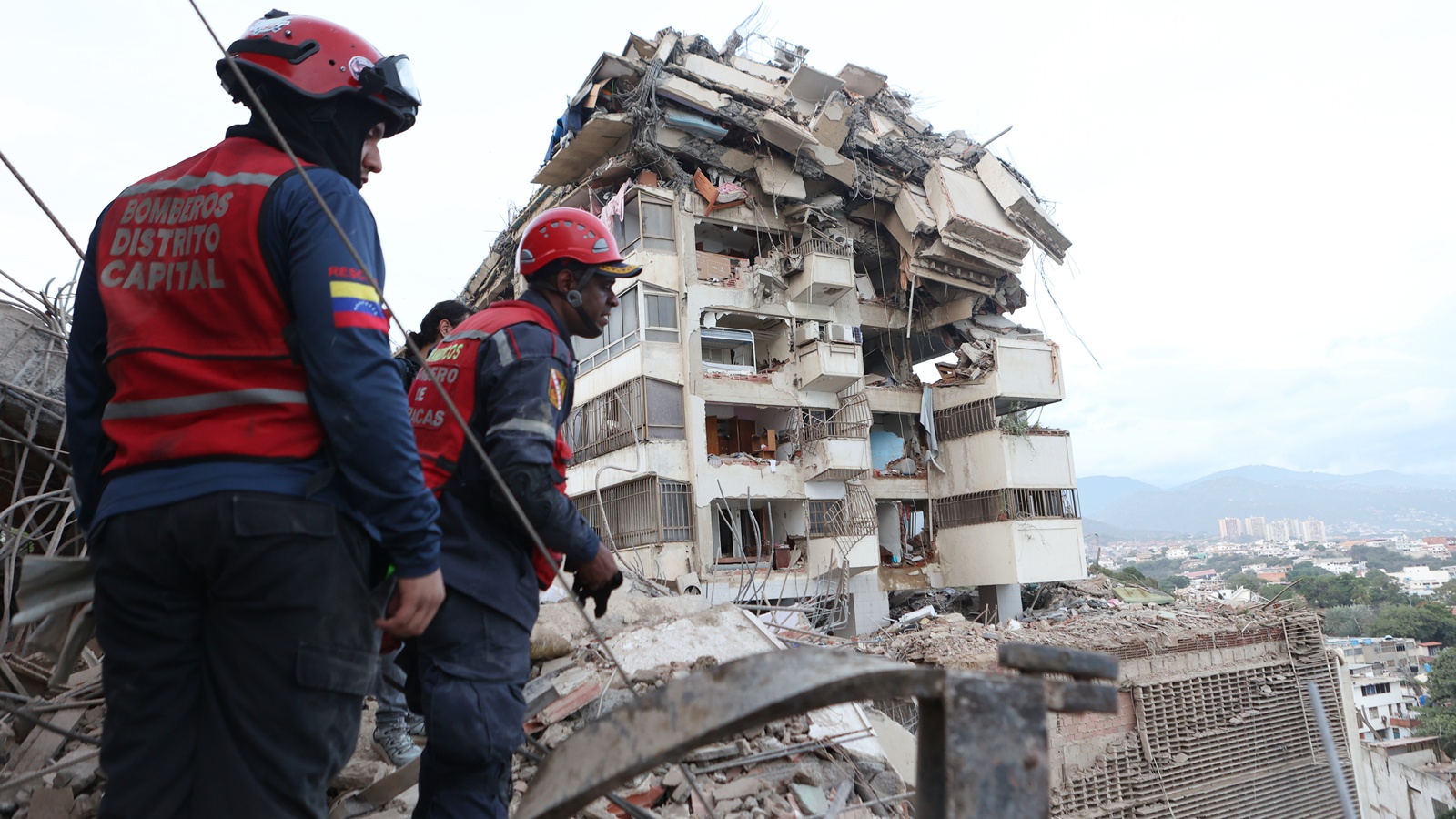
The timeline of human survival under structural collapse is governed by a deterministic decay function, not a series of miraculous anomalies. While media narratives often focus on outliers pulled from the rubble after weeks, urban search and rescue (USAR) operations must rely on rigorous physiological and environmental modeling to allocate finite assets. The survival window of a trapped individual is a variable dependent on four intersecting vectors: metabolic depletion, environmental thermodynamics, trauma pathology, and structural stability.
Optimizing rescue operations requires breaking down these vectors from broad survival statistics into quantifiable constraints. This analysis establishes the operational limits of human endurance in entrapment scenarios, mapping the physiological bottlenecks that dictate the transition from rescue to recovery.
The Rule of Threes as a Dynamic System
The traditional survival heuristic—three minutes without air, three days without water, three weeks without food—fails to account for compounding environmental variables. In a structural collapse, these timelines compress or expand based on measurable physical constraints.
Phase 1: Oxygen Deprivation and Asphyxiation (The Minutes Window)
The immediate threat to life is the mechanical restriction of respiration. This occurs through two primary mechanisms:
- Atmospheric Compromise: Dust clouds generated by collapsing concrete introduce high concentrations of particulate matter ($PM_{10}$ and $PM_{2.5}$), leading to acute respiratory distress syndrome (ARDS) or mechanical airway obstruction.
- Structural Asphyxia: Direct physical compression of the thoracic cavity by structural elements prevents the expansion of the lungs. If the diaphragm cannot contract or the chest cannot expand, hypoxic brain injury occurs within four to six minutes, followed by irreversible cardiac arrest.
Phase 2: Dehydration and Renal Failure (The Days Window)
Assuming an intact airway, the secondary bottleneck is fluid dynamics. The human body requires a minimum of 1000 to 1500 milliliters of water daily to maintain baseline metabolic functions and clear nitrogenous waste through the kidneys.
- The Ambient Temperature Variable: In temperate climates (15°C to 22°C), an inactive individual loses approximately 400 to 600 milliliters of water daily through insensible perspiration and respiration. In hyperthermic environments (above 30°C), this loss accelerates exponentially due to thermoregulatory sweating, shortening the survival window from days to hours.
- The Pathological Feedback Loop: As circulating blood volume decreases due to dehydration, the body enters hypovolemic shock. The kidneys attempt to compensate by conserving water, concentrating urine, and eventually shutting down. This leads to acute kidney injury (AKI), accelerating death via hyperkalemia (toxic potassium accumulation) or metabolic acidosis.
Phase 3: Starvation and Autophagic Depletion (The Weeks Window)
Nutritional deprivation is rarely the primary cause of death in structural entrapment, as the timelines for dehydration and trauma terminate life long before caloric exhaustion occurs. However, in rare instances where water is accessible—such as ruptured domestic plumbing within the collapse void—metabolic adaptation determines longevity.
- Glycogen Depletion: The body exhausts its hepatic and muscular glycogen stores within the first 24 to 48 hours, shifting from carbohydrate metabolism to gluconeogenesis.
- Ketosis and Proteolysis: The metabolism transitions to utilizing adipose tissue for ketone production while simultaneously catabolizing skeletal muscle to derive amino acids for glucose synthesis. Survival in this phase is a function of initial body mass index (BMI), ambient temperature, and the absence of infection.
Trauma Pathology and the Crush Syndrome Bottleneck
The presence of physical trauma fundamentally alters the survival equation, introducing time-critical medical emergencies that must be mitigated prior to or immediately during physical extraction.
Exsanguination and the Lethal Triad
In civilian trauma, uncontrolled hemorrhage remains the leading cause of preventable death. In an entrapment zone, hypovolemic shock is exacerbated by the "lethal triad":
- Hypothermia: Core body temperature drops as a result of decreased perfusion and environmental exposure, impairing the coagulation cascade.
- Acidosis: Poor tissue perfusion leads to anaerobic metabolism and lactic acid buildup, further inhibiting clotting factors.
- Coagulopathy: The blood loses its ability to clot effectively, creating a feedback loop that accelerates blood loss even from minor lacerations.
The Pathophysiology of Crush Syndrome
Crush syndrome represents a major operational hazard for rescue teams. It occurs when skeletal muscle is subjected to prolonged compression, leading to rhabdomyolysis—the breakdown of muscle sarcolemma and the release of cellular contents into the systemic circulation.
Prolonged Muscle Compression
   │
   ▼
Ischemia & Sarcolemma Rupture
   │
   ▼
Release of Myoglobin, Potassium, & Histamine
   │
   ▼
[Physical Extraction / Reperfusion] ──► Systemic Flood of Toxins
                                             │
                                             ▼
                              Acute Kidney Injury & Cardiac Arrest
While compressed, the pressure prevents the systemic circulation of these toxins. The moment the debris is lifted without medical intervention, a process known as reperfusion injury occurs.
- Myoglobin Toxicity: Large amounts of myoglobin are released into the bloodstream, obstructing the renal tubules and causing direct nephrotoxic damage.
- Hyperkalemic Cardiac Arrest: Extracellular potassium levels spike rapidly. When serum potassium exceeds 7.0 mEq/L, it disrupts the electrical conduction of the heart, inducing ventricular fibrillation or asystole within minutes of decompression.
Environmental and Structural Variables
Survival limits cannot be calculated based solely on human physiology; the structural anatomy of the collapse dictates the microclimate and mechanical hazards.
Void Space Architecture
The type of structural collapse determines the volume and stability of survival voids.
| Collapse Type | Mechanics | Void Viability | Primary Hazards |
|---|---|---|---|
| Pancake Collapse | Structural floors fall horizontally onto one another. | Minimal. Voids are rare and highly compressed. | High crush injury rate; rapid asphyxiation. |
| Lean-To Collapse | One wall fails while the opposite wall remains intact, creating a triangular void. | High. Rigid structural elements protect the space. | Secondary collapse during shifting debris. |
| V-Shape Collapse | An interior floor fails in the center, creating two distinct triangular voids against the outer walls. | Moderate to High. | Unstable center gravity; high risk of shifting loads. |
The Microclimate Factor
The interior of a collapse void quickly decouples from the external weather patterns. In cold climates, enclosed concrete structures can shield victims from wind chill, but the cold conduction from concrete slabs can accelerate hypothermia through direct contact. Conversely, in warm climates, the lack of ventilation within a confined concrete pocket creates a greenhouse effect, raising humidity to 100% and disabling the body’s evaporative cooling mechanisms.
Tactical Asset Allocation in USAR Operations
Because the probability of survival decreases non-linearly over time, rescue commands employ structured triage protocols to optimize survival outcomes. The international standard follows a five-stage extraction strategy designed to maximize lives saved per operational hour.
Stage 1: Reconnaissance (Surface evaluation)
   │
   ▼
Stage 2: Primary Surface Search (Locating visible victims)
   │
   ▼
Stage 3: Exploration of Voids (Technical search via acoustic/optical tools)
   │
   ▼
Stage 4: Selected Debris Removal (Targeted breaching of voids)
   │
   ▼
Stage 5: General Rubble Clearance (Transition to recovery)
   │
   ▼
[Operational Deadline: ~72 to 120 Hours]
The Technical Search Bottleneck
Rescue teams utilize three primary modalities to locate live targets before the dehydration threshold is reached:
- Acoustic Sensors: Seismic and acoustic arrays detect micro-vibrations or scratching sounds produced by conscious victims. The limitation is ambient urban noise, requiring periods of absolute silence across the disaster zone.
- Endoscopic Visual Cameras: Technical search cameras are inserted through drilled pilot holes to visually confirm void viability and victim status.
- Canine Scent Detection: Trained search dogs utilize olfactory cues to detect live human scent markers. A critical limitation of canine assets is olfactory fatigue and the inability to differentiate between live scents and early-stage decomposition odors after prolonged periods.
The Transition Protocol
The operational mandate shifts from rescue to recovery when the statistical probability of locating surviving individuals approaches zero. This transition typically begins between 72 and 120 hours post-event, matching the acute dehydration threshold for individuals without water access in compromised environments. The decision to deploy heavy machinery for bulk debris clearance is driven by structural safety priorities for rescue personnel, as prolonged operations increase the risk of secondary collapse from aftershocks or shifting loads.
To maximize survival yields, field operations must integrate medical teams directly into the technical search teams. Deploying advanced medical interventions—specifically intravenous fluid resuscitation and calcium gluconate administration to stabilize cardiac membranes—prior to lifting structural loads is the only viable method to mitigate crush syndrome deaths during extraction. Treating extraction as a combined medical and engineering problem, rather than a simple clearing operation, remains the critical variable in shifting survival outcomes from statistical anomalies to repeatable operational successes.


