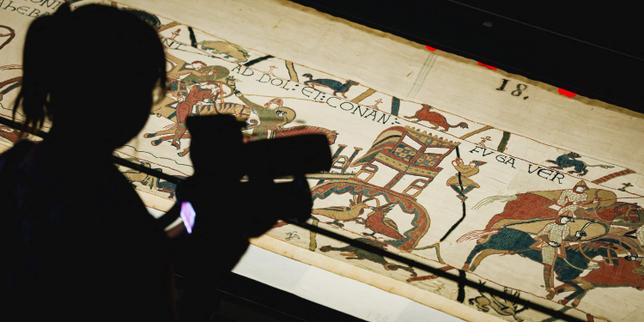
The physical artifact cannot breathe. In exhibition halls designed for nineteenth-century foot traffic, twenty-first-century mass tourism acts as a slow-motion wrecking ball. When the British Museum recently moved to prohibit visitors from capturing photographic or video records of the eleventh-century Bayeux needlework during its rare loan exhibition, the decision was framed as a conservation necessity. Thousands of bodies pressing against fragile linen day after day generate heat, humidity, and microscopic particulate accumulation. Yet the shutter clicks tell a deeper story about contemporary cultural consumption. The ban is less about light degradation and more about the psychological pathology of modern crowds. People no longer look at heritage objects; they harvest them.
For decades, cultural institutions treated attendance numbers as an unmitigated triumph. Turnstiles clicking faster meant validation, state funding security, and relevance in a crowded entertainment economy. But museums are now confronting the physical limits of their own success. When an ancient embroidered band chronicling the Norman Conquest becomes a viral checkpoint, the friction between preservation and public access reaches a breaking point. The lens replaces the eye. A visitor stands inches from centuries-old vegetable dyes, holding a glowing rectangle overhead to prove an existence rather than to absorb a history.
Conservation scientists have quietly warned about this tipping point for years. Every human body introduces moisture, carbon dioxide, and sodium from skin contact into a controlled vitrine environment. Multiply that by thousands of daily visitors lingering in bottlenecks to frame the perfect smartphone shot, and the micro-climate inside the display case begins to fluctuate wildly. Fluctuations cause expansion and contraction in organic materials. The linen weakens. The wool thread fractures. Museums built to house stone and metal suddenly find themselves managing fragile textiles that behave more like living organisms than inert monuments.
The shift toward photography bans exposes a glaring vulnerability in the museum business model. Institutions spent the last two decades democratizing their spaces, tearing down velvet ropes, and encouraging social media sharing to lure younger demographics. Curators became content creators. Galleries became backdrops for selfies. When visitor metrics became tied to digital footprints, institutions invited the flood. Now, they are desperately installing sandbags.
Curators face an impossible mandate. They must monetize the past while protecting it from the present. The Bayeux loan debacle highlights how fragile the bridge has become between public heritage and commercial tourism. When every traveler carries a high-definition recording studio in their pocket, the museum ceases to be a sanctuary of contemplation. It becomes a theme park ride where the primary objective is capturing proof of attendance.
History demands patience, silence, and stillness. Modern tourism demands speed, documentation, and noise. Until major institutions find the courage to prioritize structural integrity over gate-count vanity, more bans will follow. The artifacts are speaking, but the crowd is too busy recording to listen.