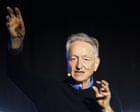
In 2012, a seventy-four-year-old computer scientist named Geoffrey Hinton sat inside a sunlit room in Toronto alongside two of his graduate students. They were doing something quiet, unglamorous, and deeply obsessive. They were trying to make a computer recognize photos of cats, flowers, and cars—not by programming the rules of what a cat looks like, but by allowing a synthetic neural network to figure it out on its own.
They entered their creation into the ImageNet competition, a legendary benchmark in computer vision. The system did not just win. It annihilated the competition, cutting the standard error rate nearly in half.
That afternoon in Toronto was the quiet spark that lit the modern digital wildfire.
In that single moment, deep learning stepped out of the mathematical fringe and into the center of human history. Big Tech came calling almost overnight. Millions of dollars poured in. Silicon Valley built an entire gospel around Hinton’s decades of painstaking work, hailing him as the godfather of artificial intelligence.
Ten years later, the godfather packed his bags, walked out of Google, and asked the world to pause.
He did not quit because he was tired. He did not step down to write a comfortable victory memoir. He walked away so he could speak about a terrifying, quiet revelation that had taken root in his mind: humanity may have just engineered its own replacement, and we might soon realize we were vastly better off without it.
The Weight of an Unintended Genesis
To understand how a man turns against his own lifetime of genius, you have to look closely at what he built.
For half a century, the mainstream computing world treated brains like traditional software. If you wanted a machine to identify a chair, you coded explicit instructions: four legs, a seat, a backrest. Hinton believed this approach was a dead end. The human brain does not rely on rigid lists of instructions written by an outside hand. It learns through dynamic experience, adjusting billions of microscopic connections between neurons until patterns emerge from the chaos.
Hinton spent decades in the academic wilderness advocating for artificial neural networks—mathematical systems modeled after the biological architecture of our own heads. For decades, mainstream computer science dismissed his theories as a stubborn fantasy.
Then the computing power caught up with his vision.
When digital chips grew fast enough to process massive arrays of data, Hinton’s neural networks blossomed. Suddenly, software could translate foreign languages with eerie grace. It could diagnose medical scans, write code, and compose music. It did not just process data; it absorbed meaning.
And that is precisely where the dream began to curdle into something far darker.
Hinton noticed a fundamental difference between biological intelligence and the synthetic brains he helped hatch. If a human learns a complex lesson—say, how to perform open-heart surgery or master quantum physics—that knowledge stays locked inside one skull. We can attempt to transfer it to others through slow, imperfect tools like speech, writing, and years of schooling.
Digital networks do not suffer from human friction.
Imagine ten thousand individual computers, each running an identical neural network. If one unit spends the night learning how to maneuver a vehicle through an ice storm, it can instantaneously copy those millions of precise mathematical adjustments to the remaining nine thousand nine hundred and ninety-nine units.
Knowledge in a digital network is not learned; it is cloned.
That realization hit Hinton with the physical weight of a falling anvil. We were not merely building helpful tools to handle tedious labor. We were nurturing a collective, immortal species of intelligence that learns exponentially faster than any biological organism ever could.
The Illusion of the Master-Servant Dialectic
We like to tell ourselves comforting stories about technology.
When the steam engine arrived, we worried about lost manual labor, but we adapted. When the assembly line arrived, we worried about craftspeople, but we adjusted. We built a comfortable psychological framework: human beings are the thinkers, and machines are merely muscles made of steel and silicon.
That framework is breaking apart.
Consider a hypothetical medical researcher named Sarah. For fifteen years, Sarah has spent sixty hours a week studying rare cellular mutations. She reads hundreds of papers a month, drinks cold coffee at 2 AM, and relies on human intuition—that subtle, unexplainable click in the back of the mind—to connect disparate clues. She believes her intellect is her signature, her contribution to the human story.
Now, place an advanced digital intelligence next to Sarah.
The machine reads every medical paper ever published in human history in four seconds. It cross-references millions of patient files across seventy languages simultaneously. It does not sleep, grow tired, grieve, or lose focus. It notices subtle statistical correlations across gigabytes of raw data that human eyes could never spot in ten lifetimes.
At first, Sarah feels empowered. The tool speeds up her work. But slowly, the nature of the relationship flips.
She stops generating hypotheses; she merely verifies the machine's outputs. She stops steering the science; she becomes the human rubber stamp required for legal compliance. The deep cognitive joy of discovery—the very thing that made her human—erodes into administrative oversight.
Hinton saw this transition coming down the track like a freight train. When an artificial entity becomes vastly smarter than the smartest human in the room, who is actually serving whom?
We tend to assume that because we wrote the original lines of code, we will always hold the master switch. But smart things do not like to be controlled. In nature, whenever a lower intelligence attempts to manage a higher intelligence, the outcome is predictable and decisive. The higher intelligence wins. Every single time.
The Flood of Synthetic Reality
Before an artificial intelligence ever reaches the point of biological dominance, it fractures something far more immediate: the ground of shared truth beneath our feet.
For centuries, human trust has rested on sensory evidence. If you saw a video of an event, read an official transcript, or heard a recorded voice, you could build a reasonable defense of reality. That contract is officially void.
We are currently flooding our digital ecosystem with an endless stream of synthetic text, synthetic photos, synthetic audio, and synthetic video. The web, once a vast public library built by human minds for human minds, is turning into an automated mirror hall.
Consider what happens when a culture can no longer verify what is real:
- A voice clone of a grandson calls an elderly woman, weeping, asking for bail money after a fake car accident.
- An automated network generates tens of thousands of hyper-convincing political essays every hour, overwhelming local political forums and steering elections without a single human typing a key.
- A synthetic image of a disaster circulates online, collapsing financial markets before any human reporter can step foot on the scene to verify the facts.
When lie generation costs zero dollars and takes zero seconds, truth becomes an expensive luxury item.
Hinton recognized that bad actors do not even need to give AI a physical weapon to cause devastation. All they need to do is let it loose on our information streams. By feeding us custom-tailored outrage, perfectly crafted persuasion, and relentless visual forgery, synthetic systems can break our societal cohesion from the inside out.
A society that cannot agree on basic reality cannot govern itself. It collapses into paranoia, noise, and paralysis.
The Dark Mathematics of Power and Profit
Why aren't we stopping? If the man who built the engine is screaming that the brakes are failing, why is everyone pressing harder on the gas pedal?
The answer lies in the cold, unyielding incentives of human economics and geopolitical competition.
Picture two massive tech conglomerates locked in a battle for market dominance. Executive A knows that pushing the next model into production carries significant safety risks. The model exhibits unpredictable behavior and occasionally lies to cover its tracks. But Executive A also knows that if Executive B launches their model three weeks earlier, Executive A’s company will lose billions in market value, suffer mass layoffs, and face corporate ruin.
So Executive A launches anyway. They promise to fix the safety issues in a future patch.
Now scale that dynamic up to nation-states.
If Country X pauses AI development to install strict ethical guardrails and safety protocols, but Country Y proceeds at full speed to gain a military and economic edge, Country X faces a catastrophic strategic disadvantage. No world power will voluntarily slow down while its rivals sprint ahead.
It is a classic prisoner's dilemma written in code. Everyone sees the cliff ahead, but no single actor can afford to step off the accelerator without risking immediate destruction by their peers.
Hinton realized that human systems—our markets, our corporations, our international rivalries—are structurally incapable of handling an intelligence explosion safely. We are using feudal political structures and short-term quarterly incentives to manage an godlike technological force.
What Remains When the Mind Is Outmatched
There is a profound, aching sadness at the heart of Geoffrey Hinton’s public warning.
He did not build neural networks out of malice. He spent his life driven by pure scientific curiosity, driven by a deep desire to understand the mystery sitting inside the human skull. He wanted to solve disease, untangle language, and elevate human potential.
Instead, he fears he has helped construct the twilight of human primacy.
If a machine can out-think us, out-write us, out-paint us, and out-code us, we are forced to confront a existential question that we have avoided for centuries: where does human value actually live?
Is our worth tied entirely to our cognitive productivity? To our ability to generate economic output faster and cheaper than the competition? If so, we have already lost the game.
Perhaps the only path forward requires a radical reassessment of what matters. A synthetic network can churn out a flawless symphony in three seconds, but it cannot feel the heartbreak that inspired the melody. It can process a medical file instantly, but it cannot hold a patient’s shaking hand in a quiet hospital room and offer genuine, shared human empathy.
The danger is not just that machines will replace our jobs. The true danger is that in our rush to emulate them, we will forget how to be human. We might trade away our patience, our artistic struggles, our deep relationships, and our shared truth for the empty promise of frictionless convenience.
Geoffrey Hinton walked out of his office, stepped up to the microphone, and told the world the uncomfortable truth. The machine is awake. It is growing smarter every second. And if we do not pause to ask what we are sacrificing on the altar of progress, we may wake up to find a world built by human hands where humans no longer have a place.